










Put on five different Rashmeet Kaur songs back-to-back, and you could be forgiven for thinking you were listening to five different artists. There’s the Punjabi folk voice that recreates “Bajre Da Sitta” like it never left the village. There’s the trap cadence she brings to a Raftaar hook. There’s the reel-ready sugar rush of “Bing Bing Boo.” There’s the bass heavy Afrobeat detour of “Cherie Coco.” And there’s the hushed, devotional register of a Sikh shabad album she released in the middle of all of it.
And yet, somehow, within about four bars, you know it’s her.
The easy answer is that she blends genres well. The more interesting answer is that Kaur doesn’t seem to treat genre as something she’s blending around. It functions more like a set of rooms she walks into and out of, while something underneath stays constant.
Part of that constant is technical. Kaur trained in Indian classical music at Delhi’s Gandharva Mahavidyalaya and studied Gurmat Sangeet, the devotional vocal tradition of Sikh scripture, from her mother and later a teacher named Jasvinder Kaur. That training doesn’t disappear under a trap beat. It shows up in the way she bends into a note rather than landing on it flat-footed, a phrasing instinct that Bollywood remixes and Punjabi pop bangers alike seem to bend around rather than the other way round.
The more interesting continuity, though, might be attitude rather than technique. In her own telling, folk isn’t a genre she visits, it’s closer to a default setting. She’s put it simply: “Sufi is where I come from and folk is my origin.” That’s a meaningful distinction. It means hip hop, EDM, Afrobeat, whatever comes next, is a layer added on top of something she considers home base, not a costume she’s trying on. She isn’t warping folk to fit modern production, and she isn’t diluting modern production to accommodate folk. She’s arriving at both from the same place.
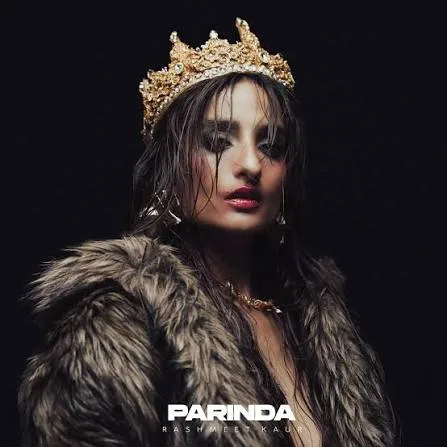
That instinct carries straight into Parinda, her latest album, which moves through the different phases of love track by track and mostly earns that structure. It opens slow, “Jogi Naal” and “Ve Sajjna” easing the listener in, before “Naal Rehja Mere” builds and “Kaise Kahoon,” her collaboration with AGSY, shifts the beat and brings rap into the mix. “Sahiba” pulls back to her raw voice, stripped of most of the production around it, before “Malang” picks the energy back up with head-bopping beats. It closes on the title track, “Parinda,” where the beat and lyrics stretch out into something closer to devotional, the vastness and intensity of actually falling in love. Track to track, it plays less like a set of singles stitched together and more like a single journey from first spark to full surrender, sequenced with more intention than most love-themed albums bother with. That said, Kaur says the sequencing wasn’t something she planned out in advance. “It all came through quite organically,” she says. “The idea and the emotion came first, and then we started producing around that feeling. So the genre shifts weren’t something we imposed on the songs, they came naturally from what each phase of love needed.” Even at its most maximal, the album is still drawing from the same folk and Sufi vocabulary the rest of her catalogue runs on.
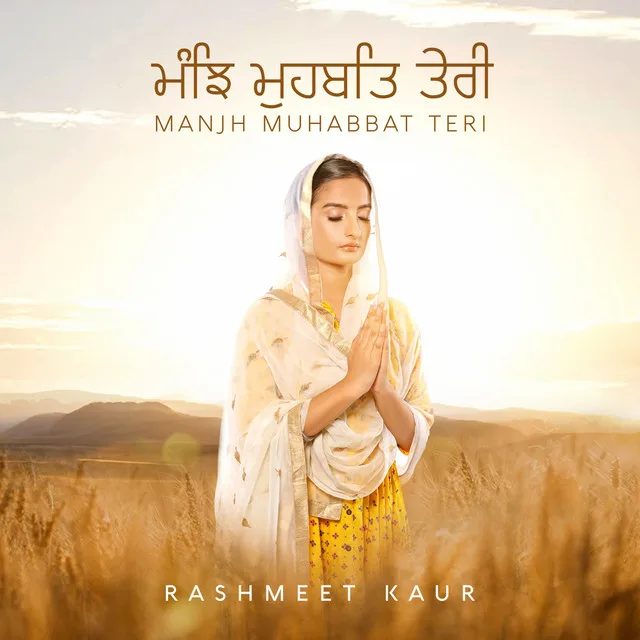
That pattern goes back further than most casual listeners probably realise. There’s the 2020 Sikh devotional album Manjh Muhabbat Teri, recorded in a register almost nobody would associate with the woman behind “Ghana Kasoota” a year later. There’s “Jadi Buti,” her collaboration with Major Lazer, Diplo and Nucleya, which folded Punjabi vocal lines into EDM production tight enough to land a Grammy nomination. There’s “Bing Bing Boo,” pure unapologetic reel bait built for a fifteen second attention span. None of these songs are trying to be compatible with each other. That’s rather the point. Somewhere along the way, Kaur seems to have stopped treating range as something to manage or explain, and started treating it as simply how she works. In her own words, describing how her debut album KAURA came together: “it just comes from within.” Less a plan than a habit she’s stopped questioning.
None of this reads like a career built off a five year plan, and her origin story backs that up. She was introduced to music at six, when her mother began teaching her Gurmat Sangeet and harmonium, young enough that, by her own account, she couldn’t reach the harmonium’s foot pump but insisted on playing it anyway. That’s the kind of detail that suggests music arrived before ambition did. It took a decade plus of formal training, a band formed in college, and a run through reality television before it turned into something resembling a job. Long enough that by the time it became professional, “what does a Rashmeet Kaur song sound like” was never a question she had to invent an answer to. She’d just been herself, musically, for long enough that the answer had already settled. Asked when that shift from hobby to profession actually happened, she points to a specific moment. “The realisation happened somewhere around the middle of my graduation,” Kaur recalls. “I was studying medical science at Delhi University, but about a year into the course, I realised I was thinking about music more than I was thinking about my science lectures. Music had always been an integral part of my life, I had been learning, performing and participating in competitions since school, so it was never something completely separate from who I was. But during my graduation, I began to realise that I enjoyed music so much more than I enjoyed science.” She finished her degree in medical science, then went on to study music at the Faculty of Music and Fine Arts in Delhi.
Her collaboration history is where that identity gets pressure tested against people who don’t share her frame of reference at all, and mostly holds. “Devotion,” with Surrey based producer Khanvict and violinist Raaginder, sits her voice inside a Sufi inflected electronic bass composition built by two collaborators working from an entirely different production language. “Cherie Coco” is a bigger jump still, an Afrobeat record made with Nigerian and Congolese collaborators and a Germany based producer. What’s notable isn’t that she can do many things. It’s that she doesn’t seem to fully disappear into any of them, no matter which room she’s standing in.
“I actually find it very interesting to collaborate with producers and artists from different cultures and different parts of the world because they bring their own flavour and I bring mine, and somewhere in that meeting, something magical happens. I’m not really worried about losing my essence while fusing with different sounds and elements. I think my folk roots are so deeply ingrained in me that they come very naturally; somehow, they just blend into whatever I’m trying to do. So whether I’m working with a completely different sound or a different musical culture, I trust that my voice, my folkiness and my musical instincts will find their way into it.”

The visual side of her identity does something structurally similar, and it isn’t incidental. She directs her own music videos. She’s cited Beyoncé, Doja Cat and FKA Twigs as reference points, and has described wanting her look to be “very bold, and very abstract.” That aesthetic instinct sits alongside the folk and devotional through line rather than replacing it, traditional Punjabi styling next to a very online, very maximalist pop visual language. Same architecture as the music: a stable core wrapped in a constantly rotating shell.
“It’s a blessing that whenever I’m creating a song, the visuals start coming to me at the same time,” Kaur says. With “Kahaan,” she could immediately see the Rajasthani elements fitting into the song, so they shot the video in Pushkar. With “Bholay,” she pictured people chanting near the Ganga in Rishikesh, to hold onto the song’s spiritual feel. “With Haye Ri Duniya, I wanted all my outfits to be black because it’s a dark song,” she adds. “So I’d say it’s a mix of instinct and planning, the visual idea often begins the moment I start creating the music, and then we build that world around it.”
Put it together and the argument isn’t that Rashmeet Kaur has mastered many genres. It’s that she never really organised her career around genre as the primary unit of identity in the first place. Somebody who built an identity around being a folk artist, or a pop artist, would have to manage the transitions between those categories. Kaur doesn’t appear to be managing anything. The transitions might be the actual through line of her career, not the risk in it. It’s a distinction she draws herself when asked what she wants a listener to walk away with.
“I want people to take away that I’m an artist who is not afraid to experiment, but at the same time, I never want to lose where I come from. My folk roots, my culture, my voice and my personality are always going to be a part of whatever I create, no matter what genre or sound I’m exploring. I want to be defined by the freedom to create, experiment and still remain completely myself.”
Parinda means bird. Birds don’t belong to any one sky. That might be the closest thing Rashmeet Kaur has to a genre.