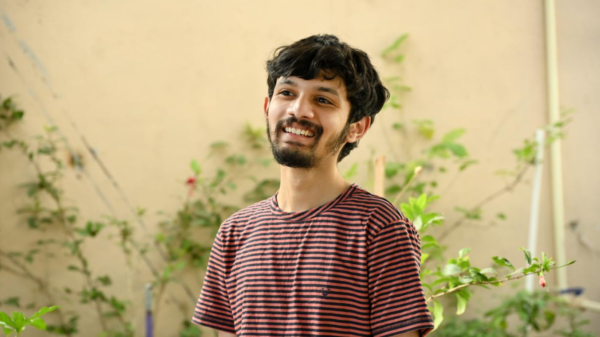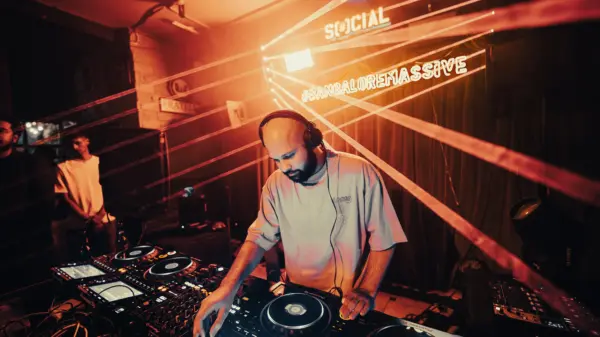

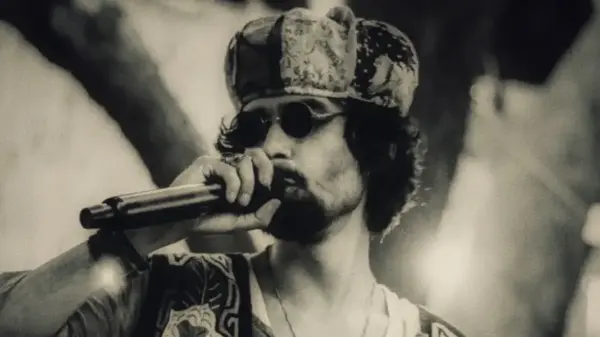

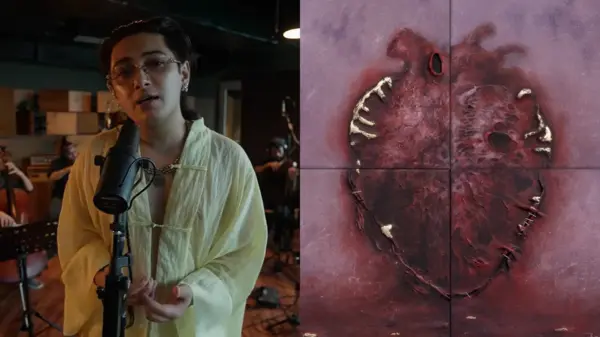
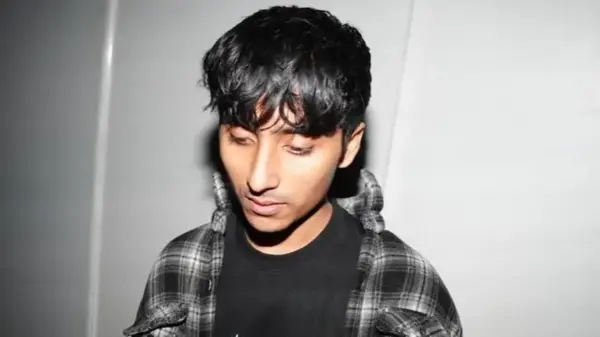


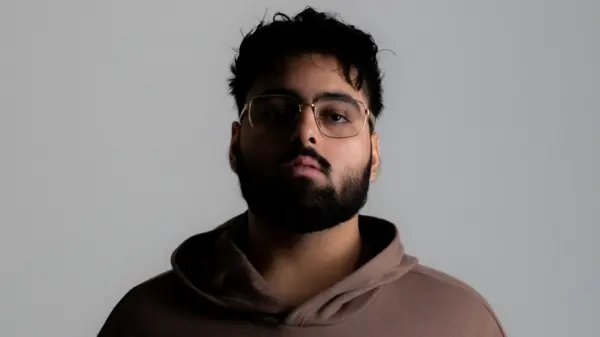
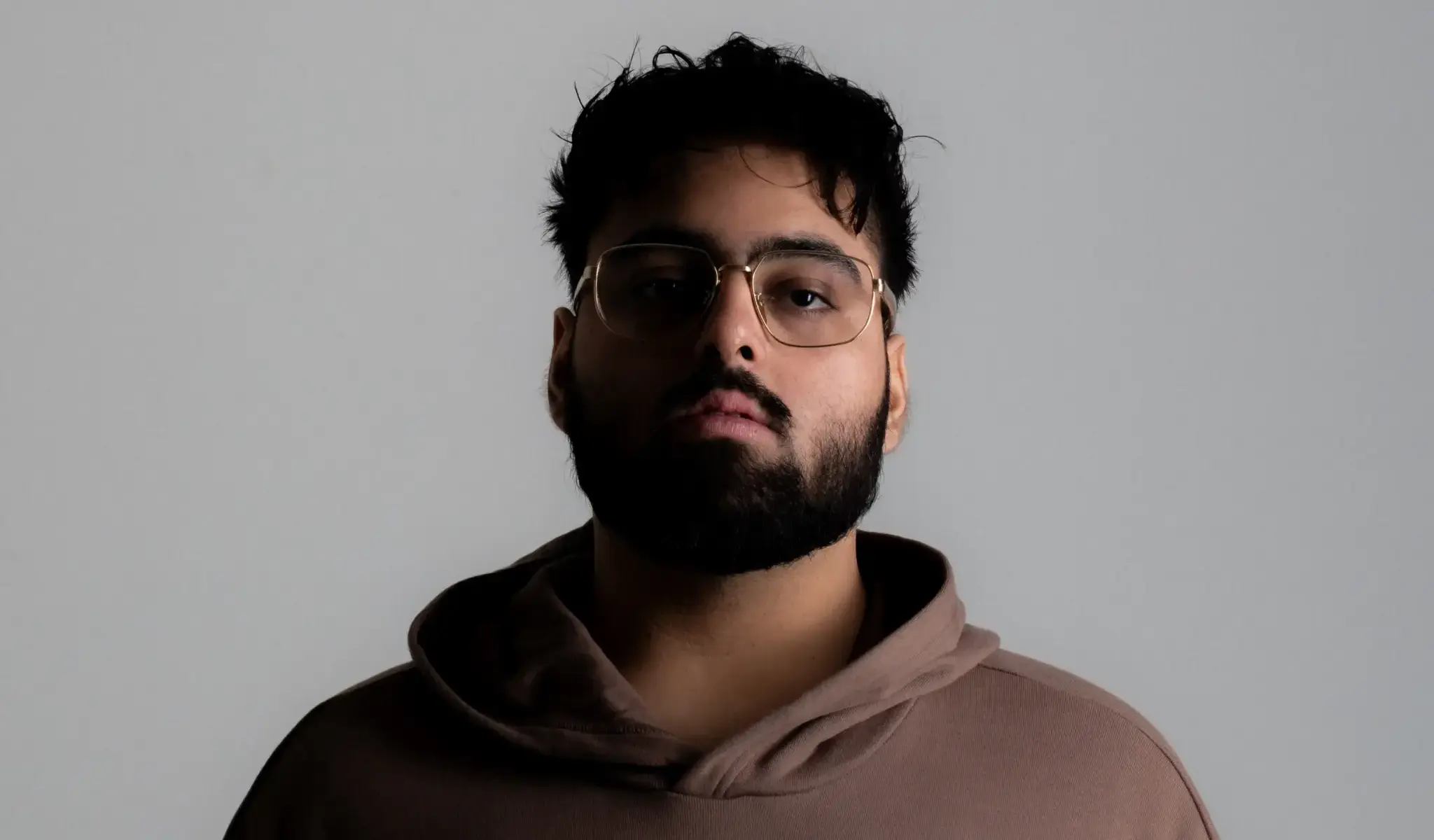

Punya Vashist, known to most people in music as pixlpxl, learned how to hold an air gun in the first grade and grew up on the shooting range, where he went on to win multiple gold medals in close-range rifle shooting, and the patience and repetition that world demanded of him stayed with him when he moved into music. Today the Mumbai-based mixing and mastering engineer and record producer has a catalogue of more than 2.5 billion streams, with credits that range from Sidhu Moose Wala, AP Dhillon and Anuv Jain to Future, Ski Mask The Slump God and Kenny Beats, and he was the first engineer from India to be featured in Apple Music’s “The Engineers” series.
For this edition of In Conversation With, we spoke to him about what the range taught him, why he now cares far more about being a good person to make music with than about gear or credits, and the Indian artists he’s been listening to closely, along with his advice for anyone mixing in their bedroom right now and wondering whether this could actually become a life.
Q: You were shooting competitively before all of this, and I’d love to hear what that world was actually like for you, and how music eventually came into the picture.
A lot of how I approach music today is shaped by the years I spent competitive shooting. Learning how to shoot is a transferable skill that teaches you patience, discipline, the art of repetition and the importance of technique. I remember learning the correct form for how to hold and aim an Air Gun when I was in the first grade
because my dad (who was in the Air Force back then) thought it was an essential life skill. Looking back, he was probably pretty ahead of his time on that front.
I eventually started competing, and that world was incredibly immersive. There was no access to media, no communication with the outside world, and so much emphasis on doing the same thing over and over again, so eventually even the smallest movements became instinctive. You couldn’t rely on motivation, so you had to build a process, put in the hours and trust it- I think that mindset stayed
with me.
Q: When did you first fall in love with this, and by “this,” I mean the mixing itself: sitting with a song, moving things around, and shaping it into something that feels good to listen to?
It happened over time. The more I worked with artists and producers, the more I realised how my favorite couple of moments would be witnessing them react to the mixes. Seeing a mix give them hope for a record, watching them suddenly start talking about the video, the marketing, release dates- it would make me so happy.
There’s something so beautiful about that spark that creative people carry with them, it’s almost infectious. Helping artists and producers see potential in their own work and get excited about their own music all over again makes me feel so grateful about the fact that this is something I do for a living. It’s incredible.
Q: What did learning look like in those early years, before there was any money in it and you were just figuring things out on your own?
Like it still does!
There’s never been a solid roadmap for how to become a successful engineer, so I would constantly listen to podcasts, watch a ton of videos, build & break chains, presets, templates, techniques – all so I could figure out how things truly affected my emotional perception towards a song. I’ve always had an incredibly strong inner emotional guide that helps me discern what’s working for a record and what
isn’t.
That’s still how I learn today because there’s so much to learn from so many different sources, you never reallly know where the next useful idea is going to come from. For example, about a year and a half ago I came across a former software engineer who was then starting out as a mixer, documenting their journey on Twitch. They showed me a really interesting approach towards file sync and automated data duplication that I still use their recommended practices in my studio.
You never know what you’re going to learn next or who you’re going to learn it from, so I think you have to remain open to all forms of expression within your craft at all times.
Q: Is there something you believed about mixing five years ago that you’ve completely stopped believing now?
I think about this all the time. I severely under-estimated how much my role as an engineer is about camaraderie. Being a supportive, patient teammate is far, far more valuable than having the most expensive gear or the longest list of credits – those things tell you something about an engineer’s experience, not what it’s like to work with them.
When I started out I was focused on what makes someone a good engineer. Now I’m far more interested in what makes someone a great person to figure out music with.
Q: What’s a record you’re particularly proud of, and what did you do to it that you don’t think most people would ever notice?
There’s a lot of records that come to mind but Eem Triplin’s “a love song for u” takes the cake. There’s something I did on that mix that I’m sure even most mixers wouldn’t immediately clock, especially because it’s so subtle.
Instead of instantiating an instance of Oxford Inflator on an aux parallel to the entire mix like I was supposed to, I accidentally hit Opt on the keyboard and instantiated it across all the tracks I had selected: which happened to be all the parallel Aux tracks in my session, namely Drums + Bass, Music & All Vocals.
What followed was a spell of brief frustration (if someone at Avid is reading this can we please get more flexible undo options?) followed by surprise as I realised how empty and lacking the lower mids felt when I took those instances of Inflator off.
There’s this bloom that the record has gained from that accident, this beautiful purple-sounding weight in the low end that I think sounds pretty cool. So I kept it in the record and I keep coming back to that sound ever since.
Q: What’s the hardest part of this job that nobody really talks about?
It sounds so simple but when your entire career depends on your ability to hear, you have to become mindful of protecting your ears in a way most people never really have to be. I don’t listen to music as loudly as I used to, I don’t go out into the city without ear protection, I don’t quite have the same incentive to go to concerts anymore. I’m the guy at camp whose room sounds like there’s nobody in it.
It can get tedious sometimes.
Q: Over all these years and all these records, what’s the biggest thing this work has taught you, about music or otherwise?
A couple things, actually.
I learnt rather quickly that putting in 10k hours is not nearly enough if you truly want to approach having a shot at instinctual mastery over your craft. If you’re going to miss the bus, miss it running. Also, devotion is greater than discipline, and devotion will take you farther than discipline ever could (which is already pretty far along the road), in my experience. I’ve also learnt that focusing on completion instead of perfection truly helps me get unstuck on projects I would normally hold off for
months and years. Also, sometimes maximalism is the answer, as less isn’t always necessarily more.
Q: What are you hearing in Indian music right now that feels particularly exciting to you?
Outside of the pool of artists I regularly work with, (because if I’m working with you frequently I’m truly a fan of your music) I’m really excited by the renewed emphasis on percussion and groove. Adil & sufr, for example, make some really special music when they tap into that side of their sound. I really f*ck with producerpapii (look them up on IG), the Bollytekk stuff (love how they’re unafraid to experiment with Indian-influenced instrumentation within their records without making it feel like a gimmick) and Veyah, who is one of the most exciting artists for me when it comes to Indian R&B.
I’m also really interested in what FTB is doing, I really enjoy how their songwriting makes Hindi sound incredible over classic Trap/Hip-Hop & Club records. Simmy has never missed in my opinion and Rahul’s emphasis on mood-setting within his music (& visuals) makes it an immersive experience the second you hit play. I also really like Kabir Patel’s and thesoundchalkmakes’ music- their melodies, songwriting, beat selection, accent control, everything is so locked-in.
I love how none of these artists is particularly interested in fitting into a box or label, and how there’s so much experimentation with language, rhythm, and genre in Indian music. I’m always on the hunt for new artists and sounds, so if I missed any – my DMs are always open!
Q: Who’s the one artist you want in your inbox, who would it be and what would you want to explore together?
I’m going to cheat and name three: rusowsky, deathtoricky & Ledbyher.
As a mixer, I’m drawn to music that feels immersive, nostalgic and completely its own. “BBY ROMEO” and “neo romeo” by rusowsky, “polo” and “fido” by deathtoricky and “SNOW ON THE TABLE” and “UP TO MY NECK IN U” by Ledbyher all have a very unique, recognisable atmosphere. There’s a strong sense of groove and an even stronger sense of personality in vocal delivery and production that helps me connect to the worlds they’re building almost instantly.
I’d love the opportunity to take what they’re doing and push it even further, to ake it more immersive, more dimensional and maybe a little more otherworldly, without losing that character that makes their music feel special in the first place.
My DMs are always open!
Q: What would you say to someone mixing in their bedroom right now, wondering if this can actually turn into a life?
Pick up The Artist’s Way, put your head down, find your people and never stop. Have faith. Trust in God, trust in the process and understand that the vision you have in your head is a glimpse of a future you’re capable of building. There’s no upper limit to opportunities and there’s more than enough to go around for everyone. Your only real competition is you from yesterday so keep showing up, keep learning, keep making, breaking, re-building things and if you ever need to talk, shoot me a text.
Q: What next for pixlpxl, any new quests you’re thinking about?
I’m keeping my cards close to myself on this one. You’ll see.