



















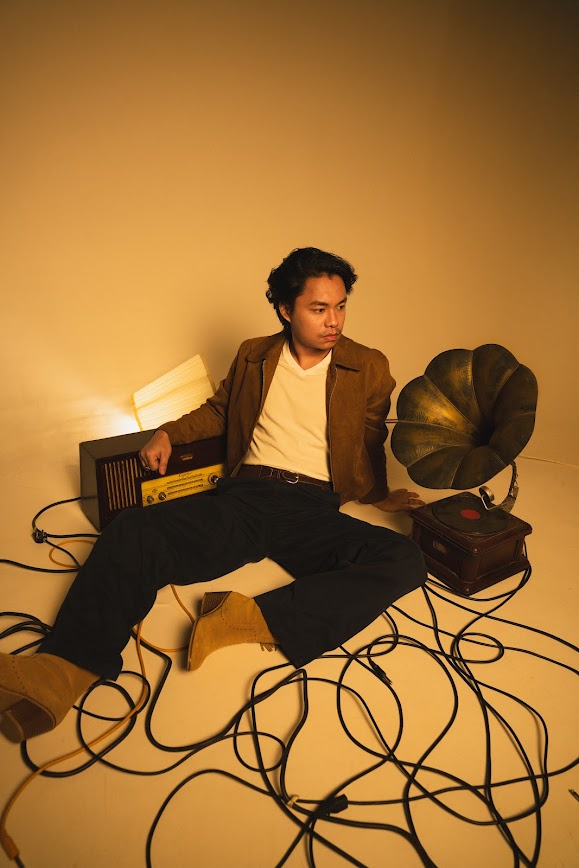
Rito Riba’s name reached most people in 2022, when he auditioned for Indian Idol 13 with “Heer Ranjha”, a song he had written himself, and when he did not make the final cut there was enough noise online that a petition went up asking the show to take him back. It never did, and that turned out to matter very little, because the song was released properly that October with Rajat Nagpal producing and found the audience the show had declined to hand him.
Everything since has been a result of steady work than a dramatic revival. He has crossed twenty songs, sung for films, recorded with Shreya Ghoshal, and last year released Native Notes, a five-track EP in his own language that turned his writing back towards Pasighat. Dilfek, which came out this October through Play DMF, goes the other way. It runs five songs and fifteen minutes, composed by Riba, produced by Tongs Kichu and written with Saaheal and Siddhant Kaushal, and all of it is about love in one state or another.
Vocabulary of the EP
The first three tracks hold the retro half of the record. “Makhmali” opens with a light, funky indie-pop groove and the familiar comedy of a crush, where the singer tries every possible way of being noticed. “Joganiya” brings us further into the eighties, with a flamboyant, dance-ready arrangement that nods to Prince and Michael Jackson without copying either, and “Dilruba Dilnasheen” slows the strut into something closer to courtship.
The thread running through all three is the language. Joganiya, mohini, shokhiyan, jhanjhariya, dil-nasheen, mehbooba, hoor, gulzar. These are words that have more or less left everyday Hindi and survive mostly in old film songs and ghazals, and Kaushal and Saaheal have built the lyrics around them on purpose. The decision that makes it work is that Riba sings them with utmost finesse, the vocabulary fits his voice rigth as rain.

The turn towards Rajasthan
“Zakhmi” is where the EP stops being charming and gets interesting. Riba brings in Rajasthani folk singer Dene Khan, and the song sets his own smooth, contemporary melodic line against a vocal tradition built on completely different rules of ornament and attack. The subject is betrayal, and the folk phrasing gives the hurt a weight the earlier tracks are not reaching for. It is the only real risk on the record, and it is also the track that most obviously wants more room, since the pairing is barely established before the song is over.
“Zikar” closes things quietly. It is slow, sparely arranged and sung with far less decoration than anything before it, and it works as an ending because the restlessness of the first four tracks finally settles onto one person. Riba’s voice has always been better suited to this register than to the funk, and the contrast between the two halves of the EP makes that clear.

What fifteen minutes can hold
The weakness of Dilfek is the same thing as its charm. The three retro tracks sit close together in tempo, mood and intent, and a listener going straight through may find the opening blurring into one long flirtation, which leaves the variety of the record to be carried almost entirely by its last two songs. Fifteen minutes is not much space in which to move through infatuation, nostalgia, betrayal and devotion, and the EP moves fast enough that some of those turns register as a change in arrangement more than a change in feeling.
What it does get right is scale. Riba is not pretending to be an auteur here, and he is making no claims about reviving a tradition. “Dilfek is a celebration of the different emotions that come with being in love,” he said at release, and the EP is exactly that size. He has worked out what his voice does well, found writers who can hand him language worth singing, and gone looking for a sound slightly outside his own catalogue.