















Music, to me, has always been a soft embrace, something that lulls me to sleep, listens to my woes, and offers a steady shoulder to lean on. And having listened to Sambit Chatterjee’s first solo album Letters for Inca, dedicated to his son, it only reinforces my belief, bringing a strong case of music as a form of endearment, one that perhaps we think, only a human can gift us with.
After two decades behind the drums, Chatterjee starts a new chapter as a solo artiste with an 11-track record shaped by a lifetime of musical influences and personal experiences. Designed as a 45-minute “message in a bottle” (as told by him), the album is explicitly not built around rhythm or technical displays. Instead, it prioritises composition, mood, and narrative, allowing percussion to step back in favor of raw vulnerability and experimentation. As the drummer, who has been playing for over two decades now states, “I didn’t want to just create an album. I wanted to leave behind something that speaks to where I come from, what I’ve experienced, and how I hear the world.”

The record moves smoothly across ambient soundscapes, piano, acoustic arrangements, progressive and modern metal, rock, and hip-hop. Rather than feeling fragmented, these varied styles are held together by a single emotional thread. Tracks like Are You There?, Desert, On Your Mark. Get Set. Wait!, and What About Yesterday? lie on the softer side of the album. On the other end, songs such as Walk with me in Eden, ManLovesMan, Peace is Not the Answer, I See Fire, and Revisit, My Friend lean into a heavier sonic space.
The project gains another layer of depth through its philosophical undercurrents. Two tracks, in particular, draw from ideas that have remained with Chatterjee for years. A longtime admirer of Jiddu Krishnamurti, he obtained official permission from the Krishnamurti Foundation Trust to incorporate the philosopher’s spoken words into ManLovesMan, a track that explores the shedding of ego and the conflicts that define human relationships. Peace is Not the Answer, meanwhile, features dialogues from Peter Brook’s 1968 film Tell Me Lies.
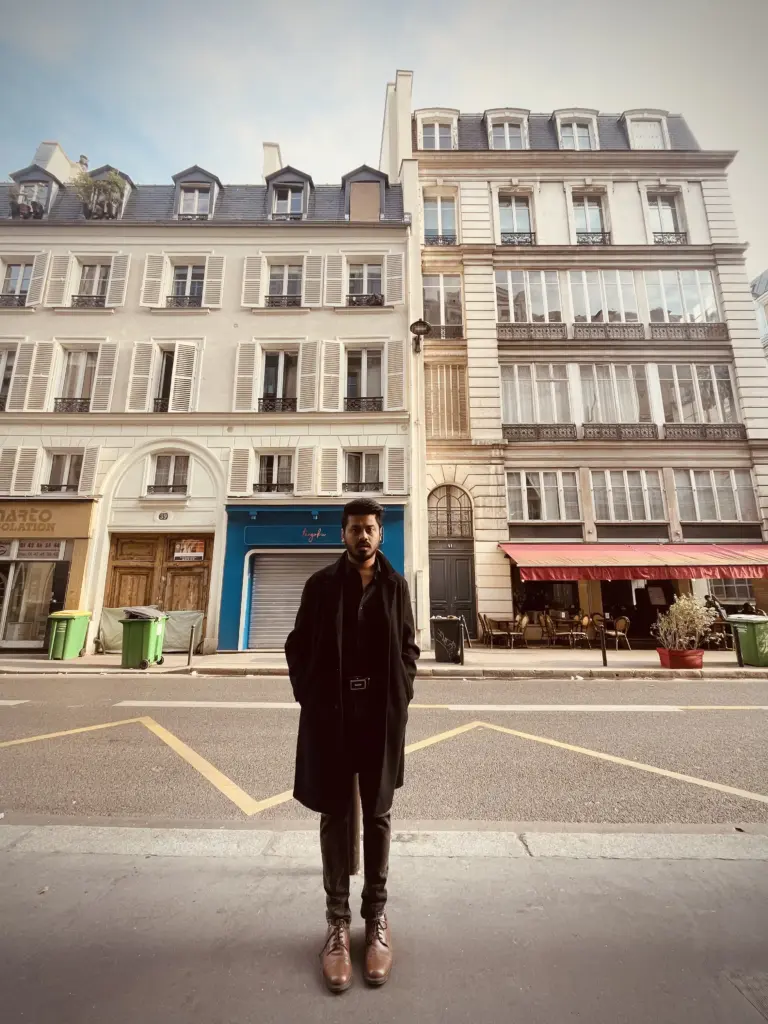
Regarding the overall philosophy of the release, he says, “I am particularly interested in breaking the expectations that come with being a drummer. This project chooses composition over virtuosity and emotion over technique. It leaves space for vulnerability, experimentation and contradiction.” And perhaps that is best understood by listening to Letters for Inca in its entirety. Across its 45-minute runtime, the album refuses to settle into a predictable rhythm. At times, you find yourself unsure of what the next moment will bring, but that unpredictability never feels misplaced. Instead, it becomes part of the experience, keeping you attentive to where the music chooses to go next. In doing so, the album emerges like a labour of love poured into sound.
For listeners drawn to versatility, Letters for Inca offers an expansive range of textures to explore. If you come expecting a single, uniform feel across the tracklist, you won’t find it here as the album intentionally shifts directions rather than settling into one static mode. Yet, given its central purpose as a gift to his son, an underlying softness lingers beneath every genre shift, binding the entire record together with an emotional layer.