









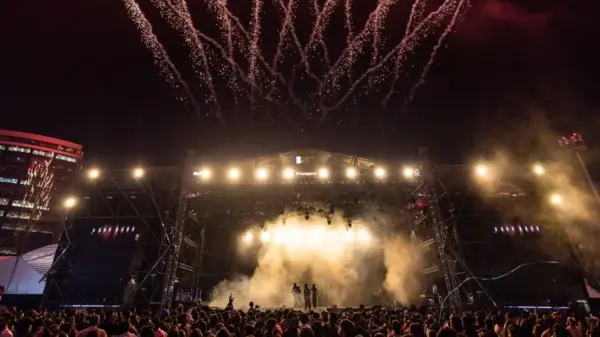

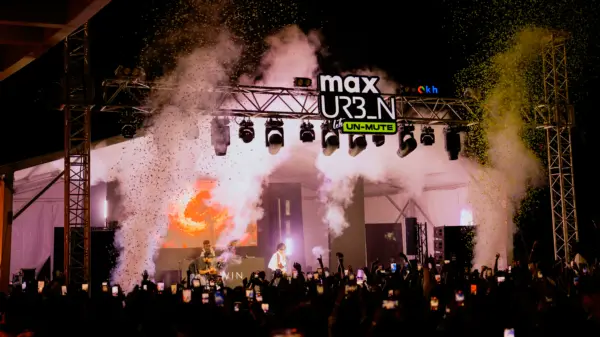

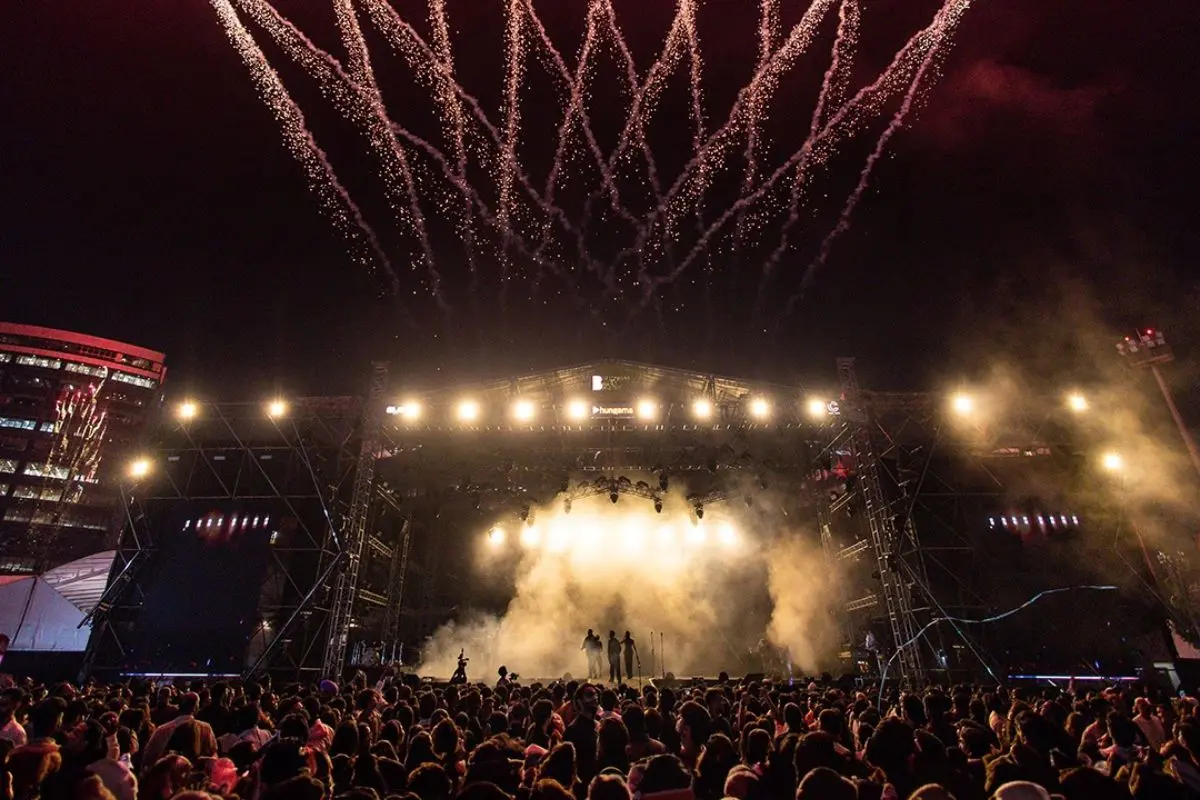

Concerts, even if they look amazing on the surface, come with their own set of challenges. In the recently hosted Bollywood Music Project (BMP) in Mumbai on October 24, 2026, National Award-winning singer Shilpa Rao’s performance became a case study of how quickly those backstage challenges can turn into public outrage.
During her set on the hit track “Chuttamalle”, her microphone and stage lights were abruptly switched off mid-song to adhere to a 10 PM venue curfew. When she stepped up to address and thank the crowd, her mic was cut a second time while an adjacent stage was cued for artist Kutle Khan, preventing her from properly concluding her set.
Festival organisers cited tight municipal curfews and compounding delays from earlier performances. However, attendees quickly called out a glaring double standard when headliner Himesh Reshammiya reportedly performed past the 10 PM curfew, while Rao’s set was terminated. Public backlash also extended to earlier schedule allocations, with attendees pointing out that Anu Malik and Euphoria had slightly extended their sets, whereas other artists on the lineup were forced to compress and adjust their timings on the second stage to make up for the lost time.
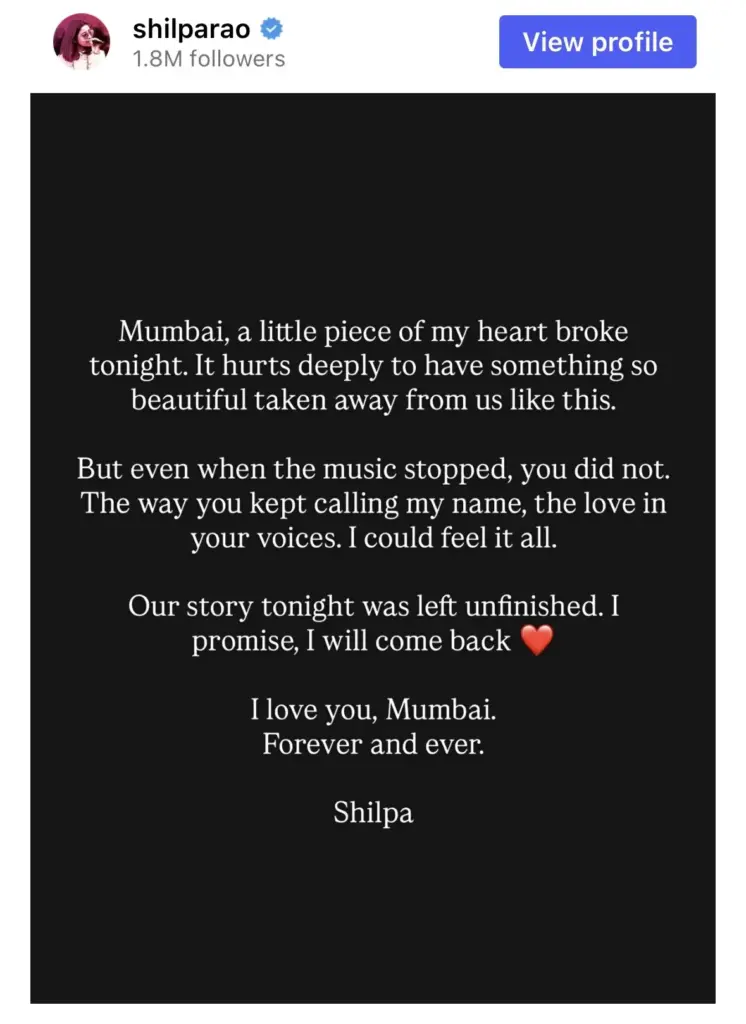
Taking to social media later that night, Rao expressed her heartbreak over having “something so beautiful taken away from us like this,” while thanking fans for continuing to cheer and chant her name after the music stopped.
This pattern of stage mismanagement and production failure spans genres across India’s live event circuit. For instance, In November 2025,Canadian technical metal band Cryptopsy saw their headlining set at the Outrage Festival in New Delhi canceled without playing a single note after unmanaged timeline drift pushed the show past the 10 PM cutoff.
Highlighting how timelines should be managed under strict municipal deadlines, Ritnika Nayan, Founder of Music Gets Me High, points out that strict discipline is required right from the opening act. “In a country like India where we have a national curfew of 10 PM, maintaining strict timings from the first act is very important,” she says. When early delays pile up, Nayan notes that promoters shouldn’t make late-stage performers pay the price and adds, “If the whole event starts late, then usually it’s wise to cut everyone’s set by 5-10 minutes. That way, it’s not just affecting one artist at the end.”
Navigating strict city curfews and technical delays is an operational reality for event promoters. However, how production teams handle those complications on-site marks the clear line between structured stage governance and artistic disrespect.
How It Can Be Solved
Operational breakdowns on festival grounds mostly stem from predictable oversights in stage planning, buffer management, and artist communication.
A key part of addressing these issues is establishing accountability across everyone involved in a performance. Yama Seth, Head of Talent at Level House, believes that artist liaisons, stage management teams and artists’ tour managers must approach their responsibilities with mutual respect. She emphasises that sound checks and set durations are logistical commitments, not privileges determined by an artist’s popularity. She says, “Sound check timings and set timings are not a marker of an artist’s stature but a simple logistical detail. Artist teams ought to have a clear prior rundown of the day’s happenings on stage and ensure that there are no last-minute unauthorised requests and that they stick to the allotted time.”

Seth also points to the culture of entitlement that can sometimes influence how festival schedules are managed, with more established names receiving preferential treatment at the expense of other performers. “In India, unfortunately organisers and crew like to kowtow around famous people and famous people like to throw their weight around. In the past year, I have had multiple instances of relatively new artists that can best be described as ‘internet famous’ figure their way around how to conduct a tight sound check and eat away at another artist’s time,” she adds.
Another often overlooked aspect is the purpose of a sound check itself. According to Seth, many artists and tour managers need a better understanding of what the process involves and how it affects the overall festival schedule. “I genuinely believe that very few artists and tour managers in the country understand what a sound check means. It’s not a rehearsal where you figure parts or try out amp tones. Check your lines, check your levels and make time for your FOH engineers to make you sound good,” she explains.
To prevent such operational challenges from affecting subsequent performances, festival teams also need to anticipate delays and respond to them as they arise. Sainath Bhagwat, Founder of Four32 | Artist Agent and Promoter Representative, believes that while no schedule can account for every eventuality, allowing smaller delays to pile up is where things begin to go wrong. He states, “The bigger mistake is allowing smaller delays to accumulate without addressing them. It’s about staying a few steps ahead, adapting quickly and keeping everyone informed.”
To deduce, in order to prevent reactionary kill switches and preserve artistic dignity, production teams and organisers must embed key operational rules into their festival blueprints, including:
Hard Schedule Buffers: Professional festival blueprints should incorporate unallocated 15-to-20-minute buffer blocks between major stage tiers. These act as shock absorbers for technical hiccups, preventing early delays from crushing late-evening slots.
Standardised Off-Stage Protocols: Stage managers must enforce clear 10-minute, 5-minute, and 2-minute visual cues from the wings. This gives artists the opportunity to adjust their setlists and conclude their performances gracefully, avoiding panic-driven audio cuts.
Inter-Stage Interlocking Systems: On dual-stage layouts, coordinators should operate on an interlocking rule: Stage B’s master audio and lights cannot go live until Stage A has formally cleared its artist and turned over the feed.
Equitable Curfew Management: Timing cutbacks required by local authorities must be applied proportionately across all remaining acts on the bill, rather than forcing a single artist to absorb the entire cumulative delay of the day.
Real-Time Backstage Liaison: Production leads must maintain active communication with artist management teams well before call time, issuing written schedule adjustments so that everyone is aware of changes before the artist steps into the spotlight.
India’s live music industry cannot measure its growth solely by ticket volume, brand sponsorships, or venue scale. Lineups mean very little if the operational backbone behind them fails the performers who make the show possible. Artists spend months in rehearsals and coordination, while audiences spend hard-earned money and travel long distances to attend.
Beyond individual festival schedules, the industry also needs greater consistency in how production teams handle difficult situations. Bhagwat believes that while different teams may have their own ways of working, transparency and clarity in decision-making are essential to resolving unexpected challenges. “What matters is clear communication, transparency and knowing who makes the final call. I’ve seen some incredibly difficult situations resolved simply by being upfront with everyone involved and working towards a solution together,” he says.
Enforcing municipal curfews and adhering to venue permissions are non-negotiable operational constraints in live production, but there is a profound difference between upholding a strict timeline and abandoning basic stage ethics. When festival production teams resort to reactionary kill switches instead of proactive, transparent communication, the fallout erodes the trust between artists, crews, and audiences. Until event promoters and organisers prioritise better stage rules, active communication, and realistic time planning for all acts over quick-fix solutions, India’s booming live industry risks undermining the very creative ecosystem it aims to celebrate, leaving its most vital voices stranded in a space that has yet to grasp the basics of artist courtesy.