

















In the history of music appreciation and criticism, oftentimes records have been rewarded with the term “honest” — in keeping with the tradition of it being the best policy. What is a work of art, if not true to itself? What is an artist, if not feeding the spectator his flesh? Turns out — there is a mediation through the same, on Pinocchio, where Shashwat Bulusu takes on his own confessions through a chronicle of lying and its consequent incapacitating effect on the self.
The press note is intriguing, “For generations, Pinocchio has been remembered as a story about honesty. For Bulusu, it became something else entirely. As a child, the story lodged itself somewhere he couldn’t explain. Years later, after surviving childhood sexual abuse, living through self-harm, and developing compulsive lying as a way of staying safe, he began to recognise himself in the wooden boy because of the desperate hope that one day he, too, might feel fully human.” It is all too familiar, the sentiment : I have near consistently lied my through every social setting to get a laugh, and conjure up a defense against the looming threat of anyone peering in and seeing the decrepit nature of how things really have been. I have also, consistently, found myself fearing complete cognitive dissonance, at odds with the dissemination of fables I have engaged with, unable to reconcile myself with it, or keep track. All of this is to say, I feel kinship on first listen — the performance of humanity is consuming and visceral, and it being sung about for a 59 minute length is comforting.
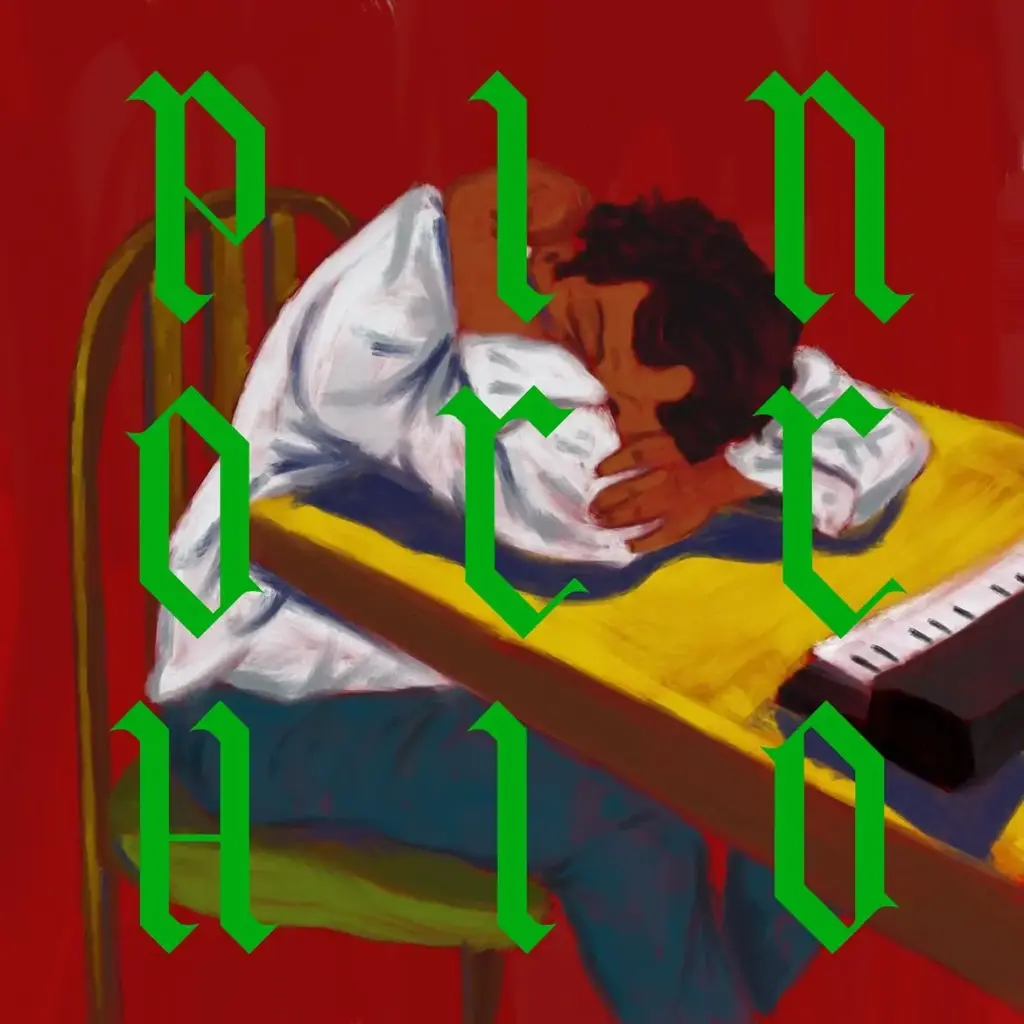
Bulusu’s songwriting, almost consistently, has been knife-like. Double-edged, of course, because the act of revelation always has come with a shared injury — mutual wounds on speaker and listener. On Pinocchio, he is near and known, in texture, and sonics — but simultaneously afar, distant to recognition : in the process of self-evisceration, quite literally, on “Burning Up”. The album is a culmination of every genre, inspiration, and palate that he has aligned himself with over the span of his career : you hear elements that are completely new, and some that are in direct conversation with Fitrat, or Amaltas, or even Sunset by the Vembanad. He goes from using the very classic indie-folk romantic soundscapes to the dissonant, gravel-ly electronica that listeners have grown familiar with him using over his last few projects.
A lot of Bulusu’s songwriting follows a kind of linguistic I have found in Edwardian and Victorian literature, and its extensions in post-colonial English literature in India. In ways, his narrativization reminds me of FH Burnett’s The Secret Garden, Forster’s A Room With A View or perhaps something off of Ruskin Bond or VS Naipaul. The album moves through Bulusu going through the cycles of enforcing self-imposed chastisement he is acclimatized with and working the gentleness he knows he deserves. The twinkling guitars he uses are sometimes in contrast, and sometimes in synchrony — for example Tiny Man, could be mistaken for something from early Landon Pigg records, but you pay attention — and it is the equivalent of a bloodied up geode, or in Lately, where he croons “Maybe I could justify / All of their needs / Before I wither”.
The album is repetitive, droning (with the exception of the sonically upbeat Illusions), and sometimes almost menacing in its grieving and it is something that I am deeply appreciative of. Over the last few years I have reviewed countless records where I could point out the linearity or circularity with a sleight of the hand. It is easy — to create a pipeline, where you start, suffer, make it out, or perhaps the reverse. Unfortunately that is, perhaps ironically, the most disingenuous depiction of any recollection, reflection or even a living of sorts. Bulusu feels compulsion to come clean, metaphorically and physically, as reflected in Holy Water — which also happens to be my most favorite on this record. Sexual abuse, topically, has always been something seen as an issue in the moment solved by punishment or retribution, but rarely engaged with in the aftermath : which one spends years, decades, aeons learning to register, negotiate, and cope with — all while surviving the humiliating debilitation of it all. On Pinocchio, Bulusu creates a landscape that reflects it, instead of the digestible bildungsroman where you emerge free of it all – in the promised cleanse of an advertorial shower.
There is hope, of course, because how could there not be. Not in the brilliant, supernova, all-consuming way, but in the xylophonic emulations in the outro to “Daffodils/Narcissus”. In a way, the record reminds me of a poem by e.e. cummings :
nothing which we are to perceive in this world equals
the power of your intense fragility: whose texture
compels me with the colour of its countries,
rendering death and forever with each breathing
(i do not know what it is about you that closes
and opens; only something in me understands
the voice of your eyes is deeper than all roses)
nobody, not even the rain, has such small hands.