











I discuss Cornershop with my British friend at Chowpatty — someone I do not talk to anymore, but miss from time to time because of our shared adoration towards all things music and my leech-like tendency to develop odd platonic-ism. To my surprise, he has not heard of them — and it makes me balk a little, because A Brimful of Asha is no song of menial value in the land of the lords, especially among the Indian diaspora. Unlike others, I tell him — my favorite album by them is their relatively recent one, their 2011 record Cornershop and The Double ‘O’ Groove Of.
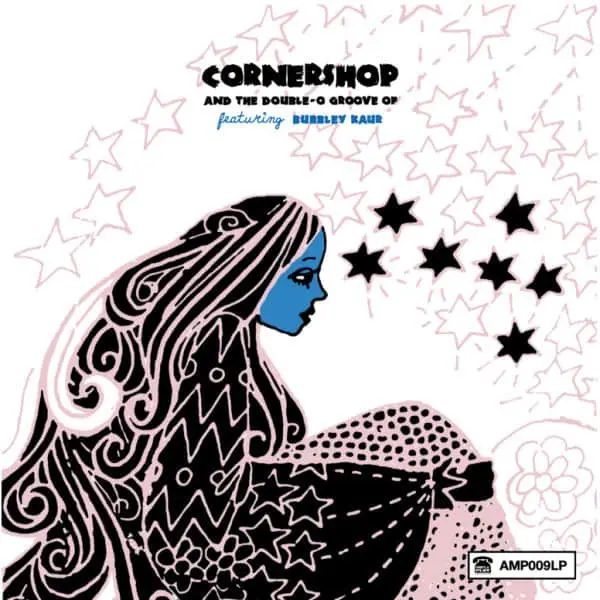
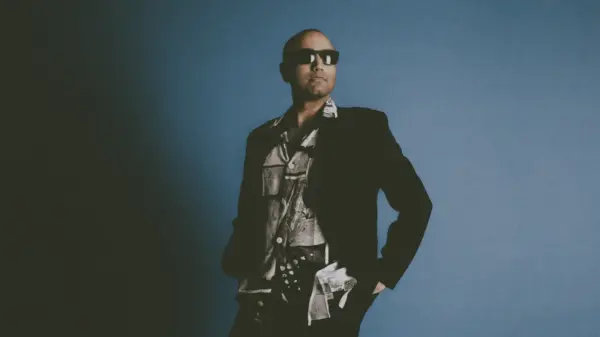
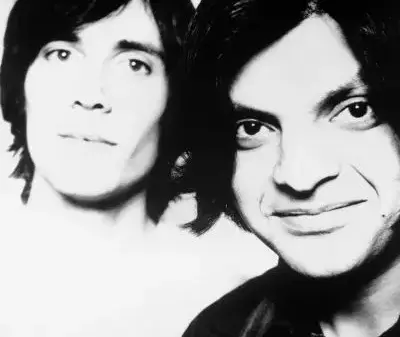
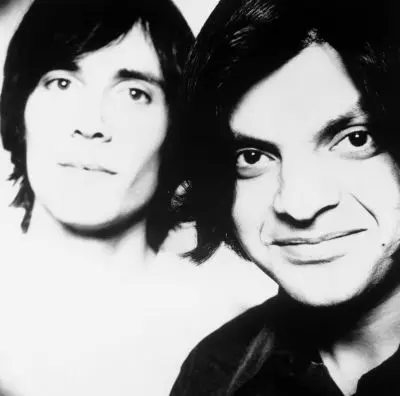
For those unfamiliar, Cornershop (named after the English stereotype of Indians owning small corner-situated grocery shops, were formed by singer/songwriter, guitarist, and dholki player Tjinder Singh and guitarist, keyboardist, and tambura player Ben Ayres after the 1991 breakup of a previous group, General Havoc. The remainder of their initial lineup featured Singh’s brother Avtar on guitar and former Dandelion Adventure drummer David Chambers. The duo also had their own dance-oriented side project, Clinton – among a bevy of musical ventures. Cornershop and The Double ‘O’ Groove Of has always held a kind of darling status for my personal set of favorites — especially because it is completely sung in Punjabi by Bubbley Kaur, a pseudonymous then-unknown-to-any singer, who Tjinder had met through a taxi driver friend, who mentioned to him that she had a fabulous singing voice. Upon meeting, the two realized that they had come to know each other previously at a party — where they had connected on their shared love for Punjabi folk music. Kaur, who has mostly stayed out of the spotlight for reasons of facing backlash from her community in England, was a launderette operative who had been virtually unfamiliar to recording music — co-wrote the lyrics to one of my favorites off the album, Topknot.
Kaur’s voice has an incredible, saccharine like quality that fills you with a kind of wistful joy that when complemented by warm basslines throughout the record, melts your heart without even attempting too hard. The synths on Topknot are fun, light, and do not interfere with the lightness that Kaur’s voice grants to the record. She is flirtatious, and you can hear the smirk in her voice when she sings : “Ki tere piche lag gaiyaan kudiyaan kudiyaan / Tere piche lag gaiyaan kudiyaan / Mauj masti kar le ve / Jitho di jawaani hai sohneya.”
There are several junctures of the album where you realize how much of Indian alternative music has inherited the eccentricities of Cornershop, because of its unabashed mixing of trip-hop, psych, folktronica with elements of giddha music. The undebatable charmer on the album is Double Decker Eyelashes — and I remember the first time I had listened to it, the harpsichord intro had reminded me of Moonlit Sonata used as the sound by some cars while reversing — and this intro forms a separate line which moves in tandem, and yet asynchrony with Kaur’s voice, which is stripped down, and deeper on the track. What Cornershop has always been very good at, is breaking down the semblance of rhythm to the last beat, playing with it — and surprising you, sometimes even in the jumpscare-y way, but there is such an unbelievable tenderness in Kaur’s voice that it almost makes every complementary percussion line sound whimsical. This is only contended by, Don’t Shake It — which has an undeniable section influenced by American folktronica, an easy, digestible score that complements Kaur’s voice, and is possibly the closest one can come to a Cornershop without it dissecting its own track midway.
On the beach in Chowpatty, I tell my friend I do not speak to anymore about the opening track – United Provinces of India, which funnily enough abbreviates to UPI. It almost like starts like the tune for a wedding party — and it is also the most textured of all the tracks on the album, plus a loop that reminds me 2000s cellphone ringtones. This track leans more towards bhangra rhythmicality rather than gidda, and I find it entertaining that it almost feels like you are steering yourself through a crowd towards Bubbley’s voice. I want to make a joke, that the real United Provinces are us — I, a music journalist who will never make enough money to go to the source of the nomenclature of my favorite band, and him, a music producer from England who will probably keep searching for what sounds like him through continents. I do not, because it is too long and too sentimental of a joke to make — in correspondence with the spirit of the album, wherein it is much better to treat emotion with a pair of tongs made of semiconductor material rather than be painfully blatant about it. An inexplicable kind of fun.