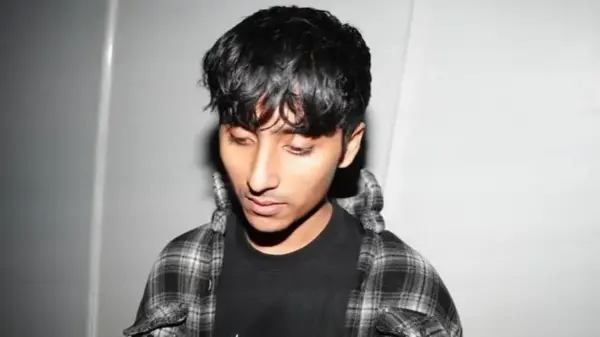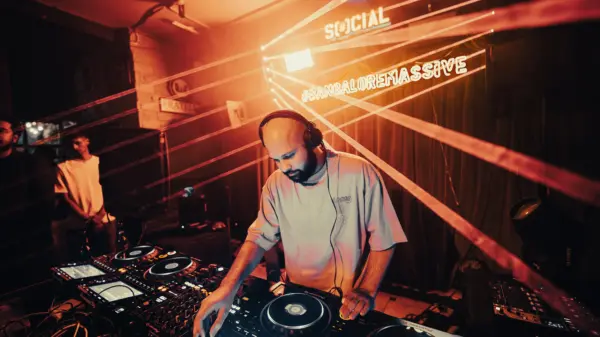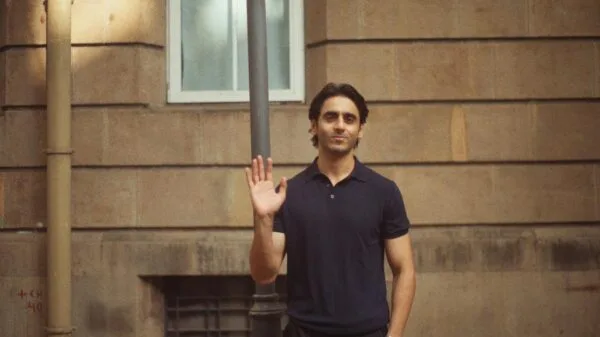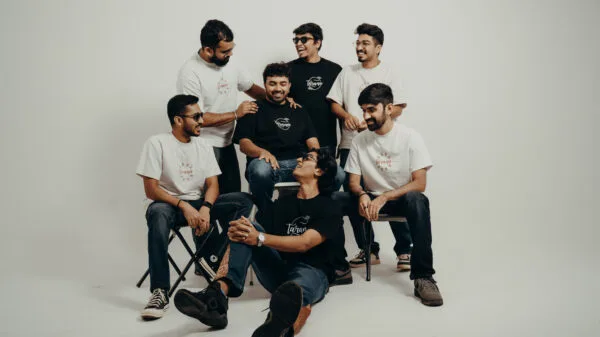



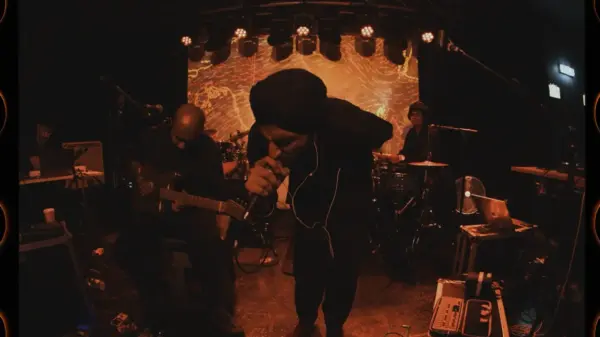








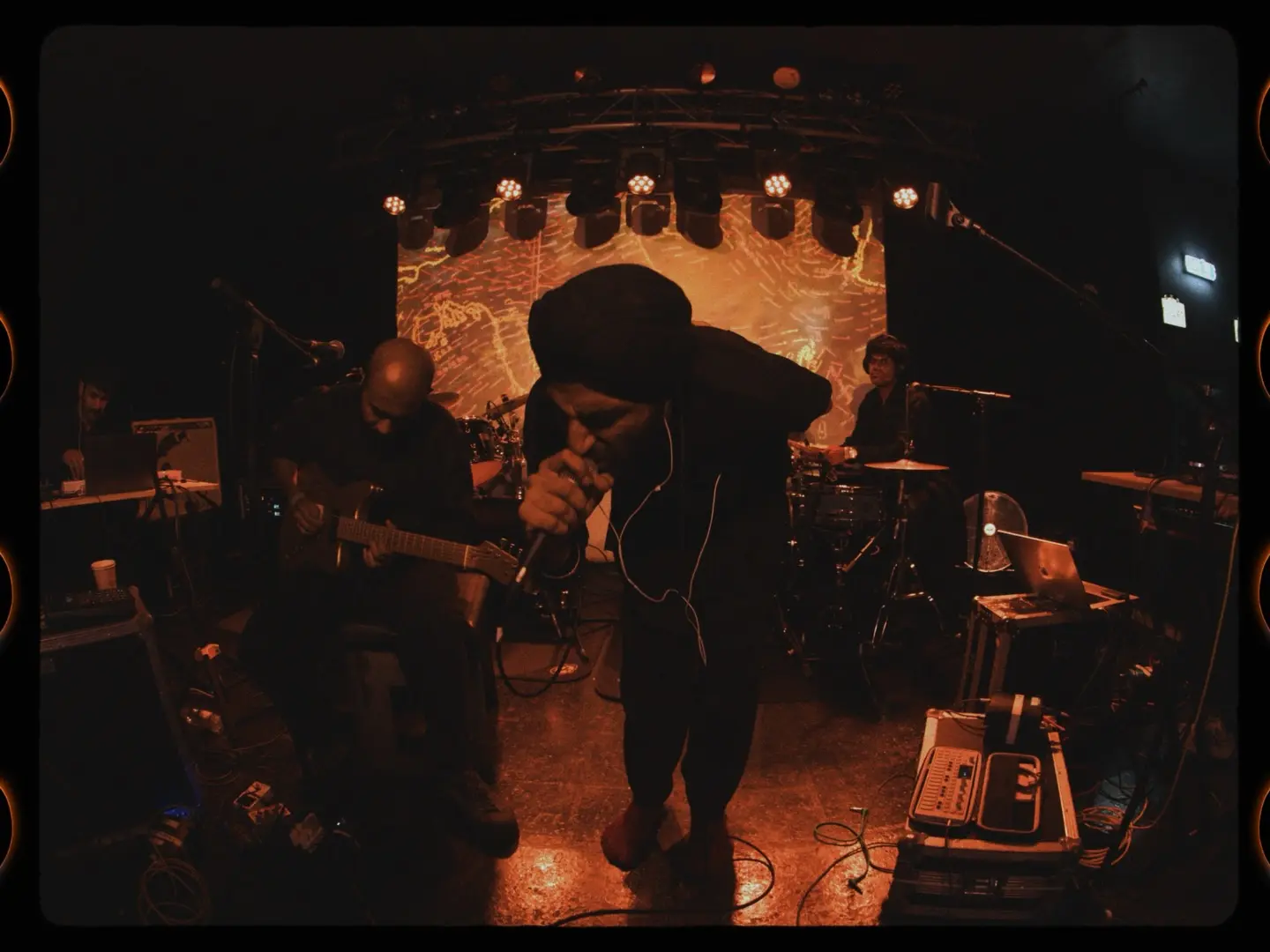

The style-defying, hard-hitting collective EXCISE DEPT came through with their 2nd LP “SHOPNOBHUMI” in October of 2026. Their first release as new signees of Dialled In Records, this marks an important landmark in their career. There is a lot, LOT more to this record than meets the eye, so let’s get into it.
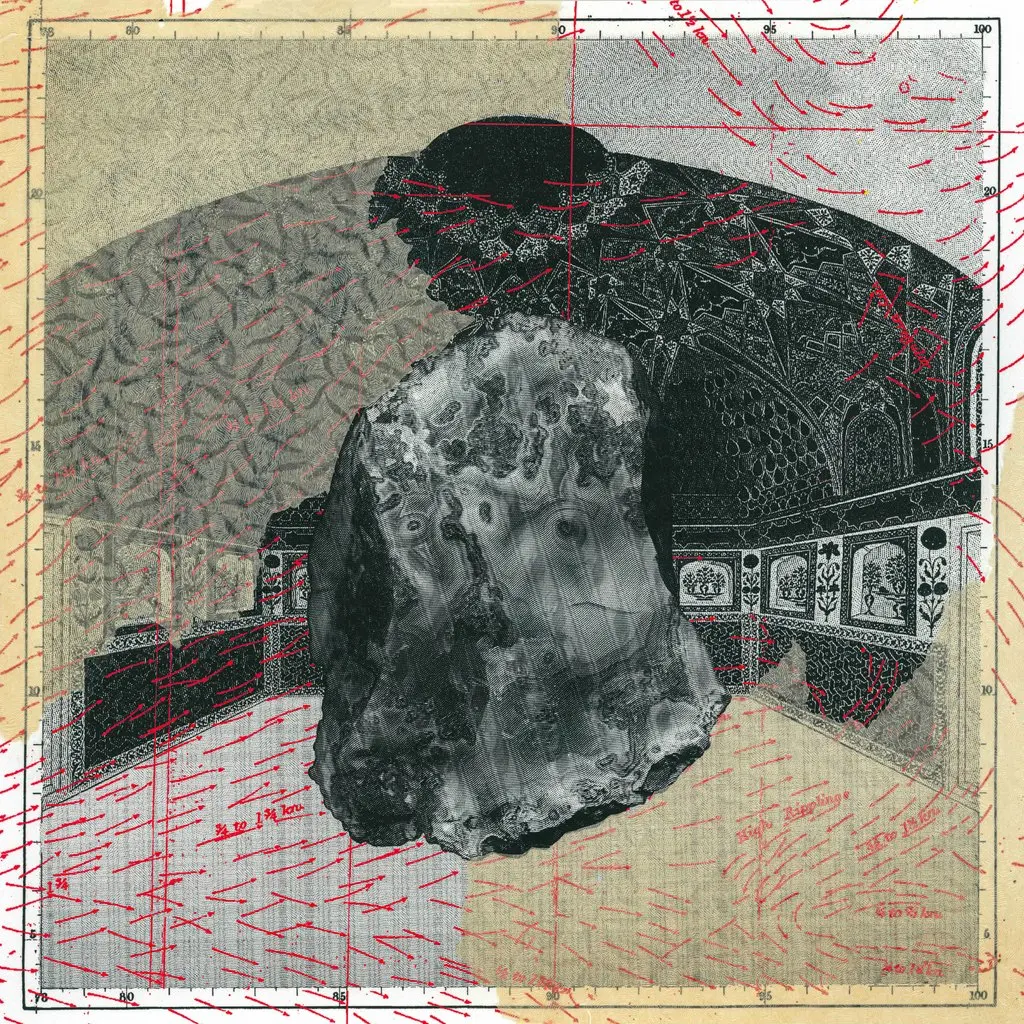
But before that, let’s talk about the website (excisedept.com) first. Originally being shared through exclusive emailers which only people who signed up for it received, the website opens up to a dark abyss, with a plethora of rocks all around it. You can scroll through these and click on each of them. Clicking on a rock feels like going into a whole different world, with each having its own music, clippings of letters, and images (the faces are distorted and/or covered with rocks, illustrating the loss of mementos and in a way, history itself). It acts like a forgotten and desperate recollection of memories, which is the theme that this whole record hinges on.
There is a lot to unpack here. The first being the letters and clippings which I think represents the overwhelming impact of partition on different parts of the country, while also acting like individual voices for the members of the collective, showcasing how it has and continues to affect them.
One of the letters is from someone called Yusuf Uncle, to the daughter of his friend, Jyoti. Scrolling through and reading through the rocks on the website, we learn that Yusuf Uncle and Jyoti’s father were in India during partition. Yusuf Uncle left India, passing through Lahore, Rawalpindi, and England, eventually settling in Glasgow.
In these pages, Yusuf Uncle talks about the first job he had when he came to Wolverhampton, setting up lights for a small photo studio. He talks about how people who came to these studios would light up after receiving their photos, and how it is evidence of something happening. This is where it all starts coming together. Yusuf Uncle likens this feeling to the stories he’s telling all throughout the letters, like the cat named Bijlee that the father brought home, despite his wife (Jyoti’s grandmother) being against it, this eventually leads us to the defining excerpt:
“After a long spell of rain in Lyndraspur one day, we went down to the bank. The water had eaten away at the earth and exposed these river stones. I picked up a small pebble, shaped like an egg.
I cannot explain it now as an adult but I told your father then, that it called out to me. It was warm yellow in color and had splashes of tiny irregular grey patches. The surface looked like a geographical map whose countries had begun to fade.
I reached out into the water and picked another, a small triangular rust-brown stone that looked like the cross-section of a tree stump, concentric rings banding together into a fine point. We spent the entire evening hunched over the bank, scavenging what we could find.
Your father would occasionally scream my name yards away, I would rush over only to find him handing me ordinary black river pebbles, polished by years of being in the water.”
These rocks are very important to this whole album. Let me explain. The partition of India led to a mass migration of people from all over the region, with families often barely making it out with their basic necessities, because of all the violence and change in the region. This is illustrated in one of the letters from 1947, which was also one of the first excerpts sent out as part of the album’s pre-release email campaign.
“The money I had placed in the Punjab Commercial Bank in Lyallpur and the Colony Bank cannot be withdrawn. Payments have stopped.
My legal practice in Lyallpur, which had taken years to establish, has simply ceased to exist. I left my files locked in the cabinet because I believed I might return in a week or two. I still have the cabinet key. Delhi is overcrowded.”
Yusuf uncle also talks about how he doesn’t have his photos, his old school certificates, nothing, it was all left behind. Since people like Yusuf Uncle had no real record of anything that happened at that time, he and his friends resorted to the rocks mentioned earlier, keeping them as remembrances and mementos of those times, since that’s all they really had (This also ties in with the poem “Rock” by Kathleen Raine, which is featured in the very first rock on the website).
A heart-wrenching concept which circles back to everything we’ve seen until now. The rocks contain the stories of partition, how it destroyed families, relationships, the country’s history, and more. Each rock represents the accounts from all those years ago. This comes home in this beautiful lines from the letter:
“Perhaps this is what happens to people who spend their lives in the periphery of history in countries of lack. History is a very large sword and it can only wound at remembering the large things.
It remembers dates, it remembers borders, it remembers speeches, and how many people crossed and how many did not. But it cannot remember where my mother kept the flour, or the smell of wet earth after a rain, or that your father could imitate an Englishman so well I once wet my pyjamas laughing.”
There is a lot more to talk about in these letters, but let’s dive into the record first, and look at the bigger picture at the end.
“NEEND” comes in as a killer intro. The sound of this record is, off the bat, very different, alternative, and spaced out from their earlier work, and that doesn’t come as a surprise, they did say they were taking a heavy left turn from their earlier hip-hop inspired work on their debut LP “SAB KUCH MIL GAYA MUJHE VOL 1” in 2024.
I love these new sonics. This whole album sounds like emotional and attempted retellings of history, from history that ripped away the part of it you wanted, cocooning the feeling they are trying to encapsulate perfectly. The lyrics talk about how the speaker can’t recognize his own reflection, he feels like his fate and face belongs to someone else. Residing in a city with a sea of people who seem indifferent to him and his hardships. The song ends with him falling asleep teary-eyed, since sleep really feels like the only relief in these times. Recorded throughout three days of lashing rain in Mumbai, this track captures that vibe.
“J.C.R” stands for Jhelum, Chenab, and Ravi, three of the five rivers of Punjab, which are mentioned during the refrain of this track. The words of these rivers no longer bring comfort, they hurt to listen to. The whole track is a recollection of simpler times with “Heer”, who keeps showing up in memories, and has forgotten her past and even her mother-tongue. Each stanza ends with the declaration that Heer won’t understand.
“GHONO GHENA” is like a defining track for the whole record. It touches upon themes that form the foundation of it, a country that exists and is built on conversations, discussions, memories, and dreams. The memories of partition still haunt the land, and that is why there is a “Ghono ghenna’r pushpe bhora’ (flowers of dense hatred) all around.
“DO PAL” is one of my favourites, not just sonically, but also because of the writing. Spanning just over 12 lines, it still delivers a huge impact with lyrics about asking someone to wait for “do pal” (a couple of moments). The second verse is about not looking back and moving forward despite the destruction that’s happened around them. The song ends with drowning in the Jhelum river, calling out Waris Shah for help. Waris Shah wrote the iconic Punjabi lament for partition violence with the story of Heer and Ranjha, which ties in with the themes of the earlier tracks.
DARBAAR marks a transition in the album with an amazing instrumental cut that lasts for about 3 minutes. SHAUK is an ode to self-destructive behaviours with lines like “Kaanch pe nange pao chalne ka shauk hai, Pahado ke beech mein pul jalaane ka shauk hai.” FREEDOM contains an audio clip of Rounak Maiti’s maternal grandmother, reminiscing the events of 15 August in 1960, talking about living life in a new, free India, about how her father always gave her a lot of freedom, never putting his hand upon his daughter’s liberty. It ends with the idea of freedom and why it is so important to be truly free, especially for young people.
MEEH features a plea to the river Beas in Punjab, asking it to carry a message to a loved one who is living abroad. It describes a feeling of unconditional love that won’t break, and also the feeling of being pulled to both sides, feeling dead while still alive. SHOPNO MORE NA tells the story of a man who left home, with no one being aware of his whereabouts for a long time, before learning that he has been killed for his love of his country. The song ends with a declaration of dreaming with open eyes, how it feels unlike any other dream ever dreamt before, and how everything else may die, but a dream will never die.
The album closes out with “KAR MILONO CHAU”, bringing Punjabi and Bengali verses together for the first and only time on the album. The whole track is a call and response. The Bengali verse describes empty talk, endless images in the mind all day, looking for their beloved in a tangled and dense forest. The Punjabi verses present a series of questions like “If I come to your border, will you tell me whether you’ll come? If I bring all your letters, will you open them? If I bring Malhar (the raga traditionally associated with rain and longing), will you sing it?”
The record very cinematically wraps up with this track. It’s a beautiful exploration of the very idea and concept of India, told through the lens of partition. It comes face-to-face with ideas and dreams that the nation was built on (hence the title SHOPNOBHUMI), also showcasing the country which lies underneath it all, still carrying pain, resentment, and the traumas of separation in its DNA. One of the most intricately developed pieces of music I’ve come across in a while, the attention to detail and the commitment to make art that truly leaves its listeners with a whole experience shines through. I don’t think it’s fair to call this an album, it’s a highly intricate, rocky, and guided journey through India’s past (or lack thereof), and a confrontation with the reality of the fabric of it, a must-listen.