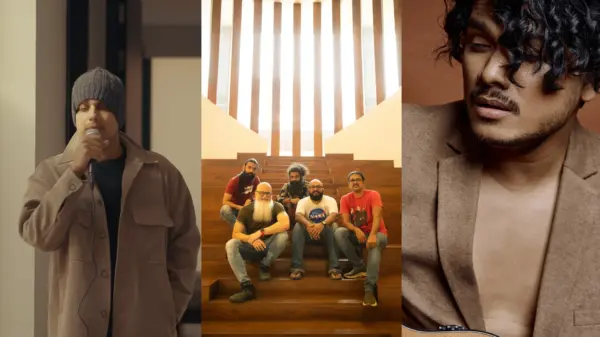

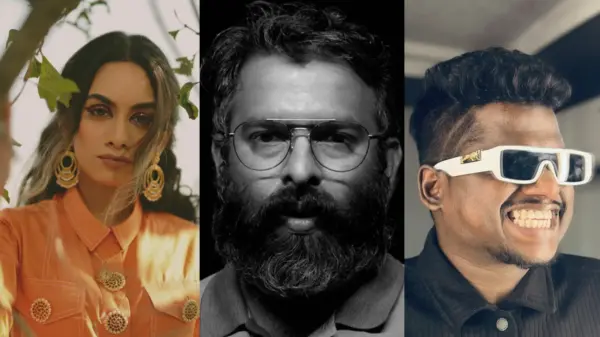




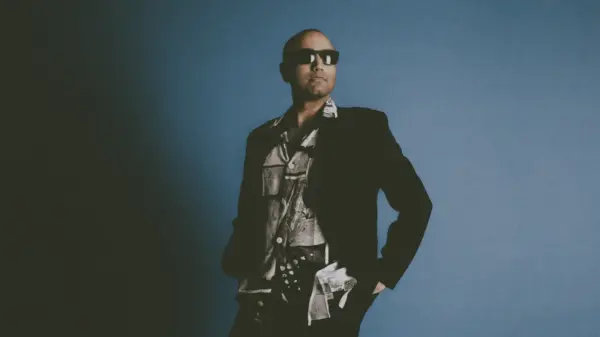







In the summer of 2024, “Big Dawgs” did what no Indian hip-hop record had done before. It charted on the Billboard Hot 100, went multi-platinum, and pulled A$AP Rocky onto the remix. And the mix and master? Done by Chennai engineer Akash Shravan, who had been shaping the artists’ sounds years before the world caught on.
Akash has been producing for over twelve years and mixing professionally since 2018. He taught himself the craft through YouTube tutorials and years of trial and error, and today he works top hits across hip-hop, Bollywood, and films.
We sat down with Akash to trace how it all came together. Over the conversation, he opens up about his early years, earning his way into rooms he never chased, the trust he shares with artists he has grown alongside, and what he would tell anyone trying to make it in the scene today…
Take me back to the beginning. How did you find your way into mixing, and what did the initial years look like?
I started off as an instrumentalist. I used to play a lot of instruments growing up, and eventually started producing. It’s been more than 12 years now. When I started producing, it was all about getting a beat sounding right. I used to give my songs to another engineer back in the day who would mix our tracks, and I always had this keen interest in understanding how it sounded so good, how the songs I was listening to always had that pristine quality.
So I started looking up on YouTube, understanding how mixing works, how mastering works, and it’s been a rabbit hole since then. Most of it came from online resources. Since 2016 I’d been trying to mix, and 2018 is when I started mixing professionally. Since then it’s been tutorials every day, every night, and a lot of trial and error.
If an artist hits you up with a song today, what does the process look like from start to finish?
First, I listen to the demo and understand what the track needs, and also what I can provide. Once that’s done, we ask for the stems. My assistant goes through them and preps them the way I want in my DAW, in my template, according to my colour coding. Then I start the mix straight up. A few days later they’ll have the song. We do a couple of rounds here and there to adjust it to their liking. Pack it, send it.
Was there an early project that made you confident in what you were doing?
I think it was 2018. There was this song by an artist in Chennai. I don’t want to name them just yet. It was a big deal for me because I’d seen that person doing his thing when I was just coming up. And that person hit me up asking me to mix the song. That was one of the first I could think of.
How do you get into the right rooms? People say “network,” but what did that actually look like for you?
For me, I wasn’t in any rooms in the beginning. I was just doing it from where I was. Doing it every day, understanding the taste of Western music and trying to apply it to what we have in the Indian subcontinent. That gave me recognition early on.
And since I come from a producer background, it was convenient to get the right clients. When I worked on a song with them as a producer, they’d get an output that sounded good by their standards, and that translated to: okay, this guy knows the sound, let’s try him for the next mix.
For an up-and-coming engineer or producer, I’d say: don’t go out of your way to be in any rooms. Be comfortable in the room you are in, keep doing it every day, and eventually you’ll be invited to other rooms.
You worked with Hanumankind and Kalmi before they blew up. What’s the difference between working with people you’ve known for years versus a new client?
It’s subjective to the situation, but mainly, if I know the person, if I know their music, it’s easier to understand their language and intuitively get to where they want to be with the song. If that’s not the case, the first song we may or may not hit it off. We’ll still find our footing, probably go a couple more revisions, and eventually we just get it.
If it’s a new artist and a song I have no context for, I try to avoid taking the work. If I can’t bring something to the table, I tend not to work on that song. But if I do, I’ll make sure they have what they want, and I’ll do my homework. And of course, if we mingle and hit it off and find a working relationship, that shows in the mix, it shows in the output of the song.
How was the environment at home? Were your parents supportive?
In the beginning they didn’t understand what I was doing. They just wanted me to finish school, finish college, get a job, and then do what I want. So I did exactly that. And eventually, when I quit the job, they knew: okay, this is a viable thing, he’s getting serious now. They never put any hindrances. They always gave me my space. Very supportive.
How have you grown from your first few mixes to now? What have you learned, and unlearned, along the way?
I definitely learned something called less is more. As time passed and I mixed a lot of records, I understood that doing less actually benefits you in the longer run. The same analogy applies to production, composing, mixing, whatever. The less you do, the more confident you sound. And the more confident you sound, the bigger the song sounds from a mix standpoint.
In terms of creativity, I’m still learning how well a song is written and how you can write a proper song. And by that I don’t mean just the lyrics, I mean the full song. I hope to master it someday.
In terms of unlearning, a lot of life skills, honestly. How to approach people, how to not approach people, how to be quiet when it’s required, how to not speak when it’s required.
Do you have rituals that get you into the zone, or do you look for inspiration day to day?
I used to look for inspiration, probably four years ago. I’d be like, “I need something to inspire me.” That’s something I unlearned, funnily. It doesn’t work like that. I just have my routines, my systems. I wake up, hit the gym, come back, lock in, do the same thing, eat the same meal, over and over. It just works. I just want my day to start right. As long as it starts right, everything else is easy.
What has been your favourite project so far?
I have a bunch, but in terms of fun and how good I felt, definitely the “Big Dawgs” remix featuring ASAP Rocky. We were all listening to him growing up, and just having the files in front of me and going at it was a very magical experience.
Another one is working in movies, because there’s no time for anything else. We had very little time to finish so many tracks. That entire process was really amazing.
Has your life changed after coming into the spotlight?
On a personal level, yes, for sure. It helped me move different. And that’s about it. I don’t see myself through the public limelight lens, ever. I’m just doing the same thing I did four, five years back. Even today, I’m doing the same thing.
What’s something about this profession that someone looking in from the outside wouldn’t expect?
Being very quick. In the beginning, I used to take a week, even four days, to get the first version of a track. Once you get busy, there’ll be weeks or months where you’re doing five to seven songs a week, and you have to be very confident with your skill, very sure about your moves, not overthinking it.
And when you’re working with bigger conglomerates, an ad, a movie, an entity that’s not an artist, timelines get intense. You might be working on a different project and suddenly get a call: “We need the song in a day. Is it possible?” And you should be ready to do that. You can’t start off with these skills in your head. As you keep doing it over and over, you learn all of those things.
What’s your honest take on the current Indian scene for engineers and producers?
I think we’re in a very good space compared to a few years ago. As engineers, as people working in the back end, the opportunities are there. The demand is there, and so is the supply. A lot of engineers and producers are coming up. I’d say there’s nothing to improve as such on a global scale. You’ve just got to put yourself out there. That’s it. The rest will happen.
Who in the scene should people be checking out?
I’ll keep it to the engineers for this conversation. There’s an engineer called eyepatch, an engineer called Pixel, and one called Anxious. I like what they’re doing with the sound, how they’re putting in that extra effort to bring out their taste. Whatever they’re hearing in their head, they’re trying to implement it in a song, and I think that’s really cool. And there are a lot of producers and rappers doing a damn good job. The list is huge.
For someone just starting out, who wants to produce, mix, master, what’s your advice?
Just put your 10,000 hours in. That’s the only advice. How you put it, when you put it, is totally on you. But you need those 10,000 hours. You need them to cultivate taste, to cultivate standards. And when you have both of them, you will be the one people want to work with. You could be a producer, a rapper, an engineer, any fine art basically. Just keep doing it every day. Do it as if you don’t have anything else to do.