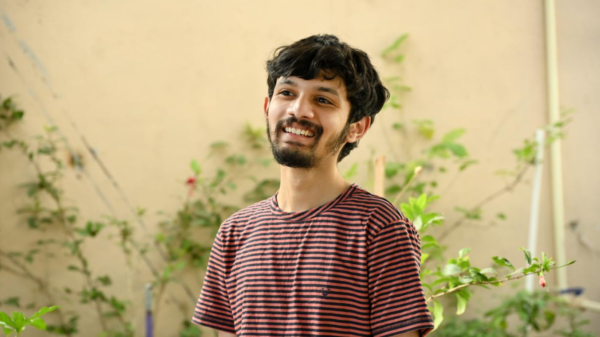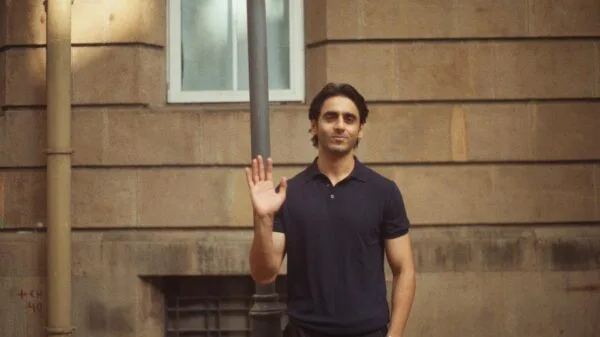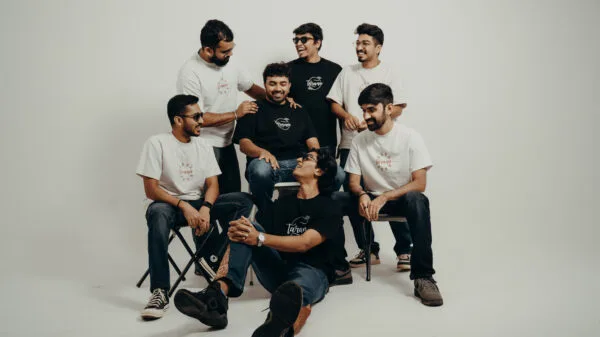

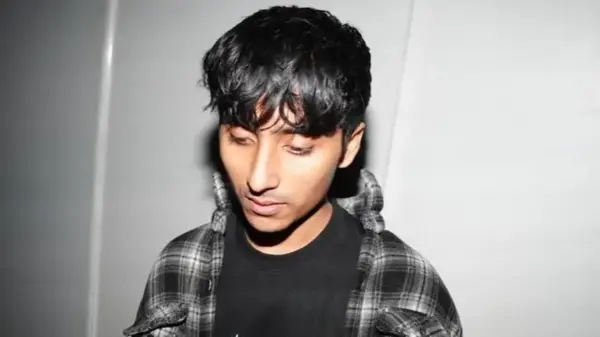

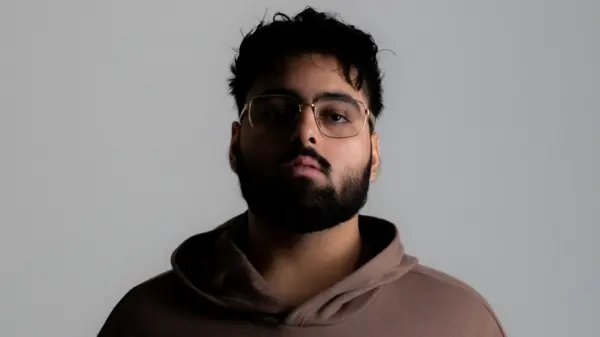
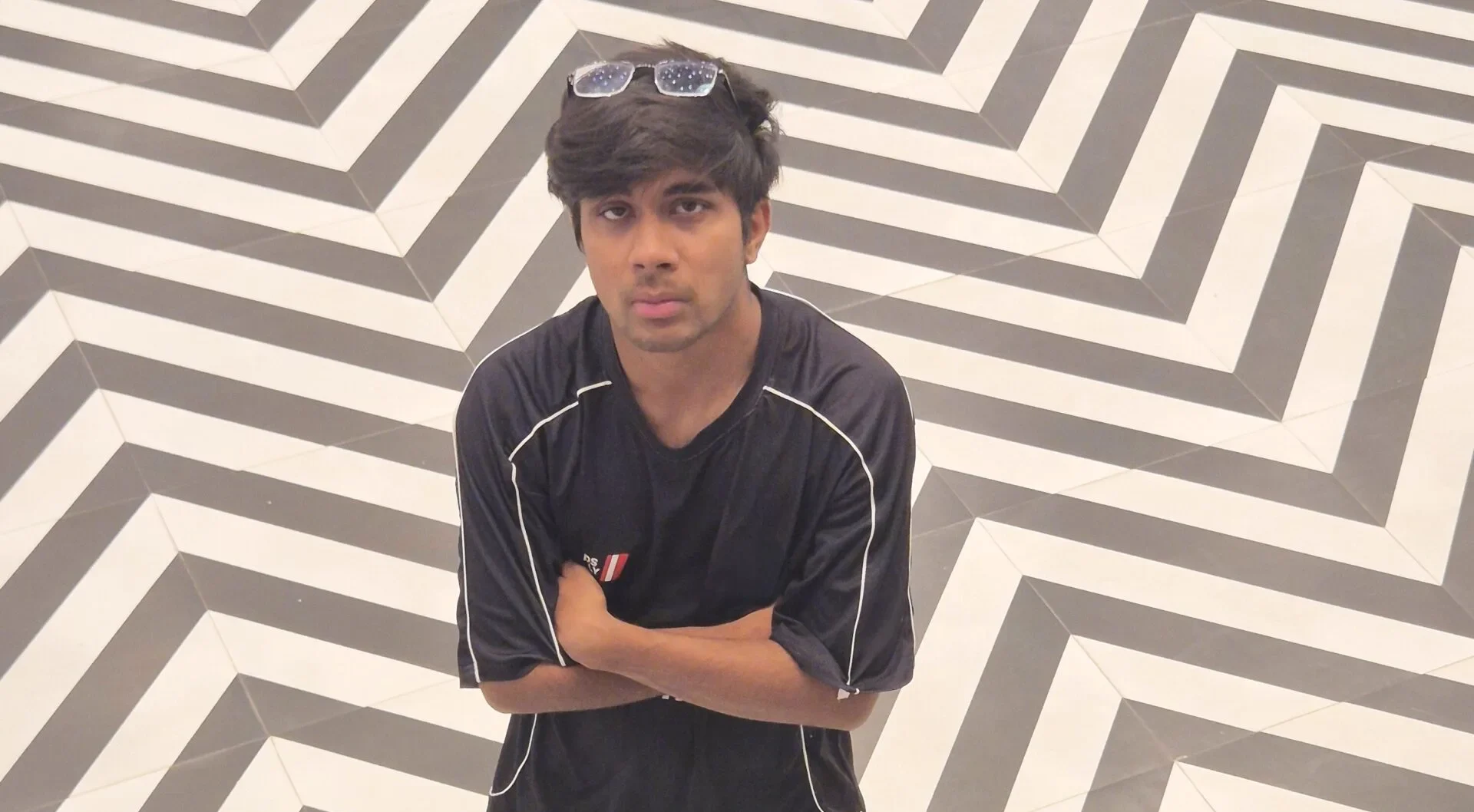

Yung Waris has shot music videos for a variety of musicians though he refuses to box himself as just a MV Director. ‘These days I am into birdwatching’. He remarks almost cryptically. The boy started out with just a group of friends in Lucknow.
Later, he performed in J Block, a collective featuring his friends.
‘I get imposter syndrome sometimes.’ He used to remark when asked about being in the industry. He would point out references from hip-hop to the teachers in film school and they would answer gladly.
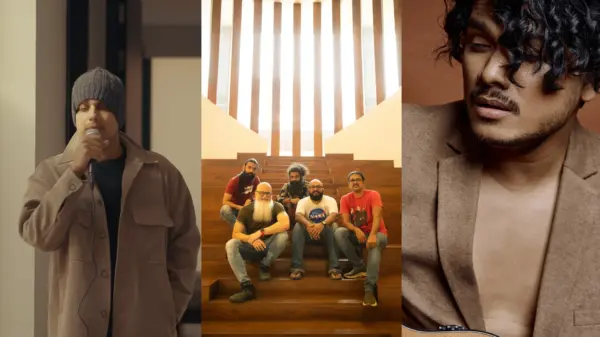
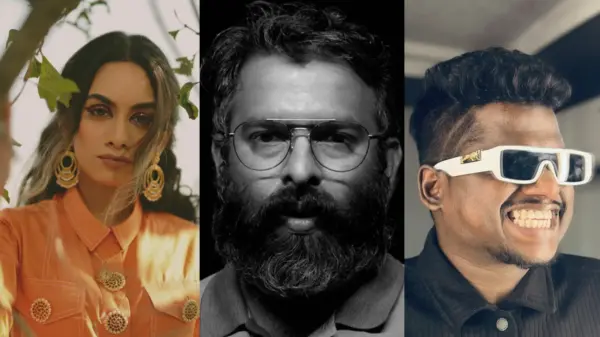
He has directed videos featuring Encore ABJ, The Siege, Arpit Bala, Bharg, Rebel 7, Faizan, Lil Kabeer, J Block and more.
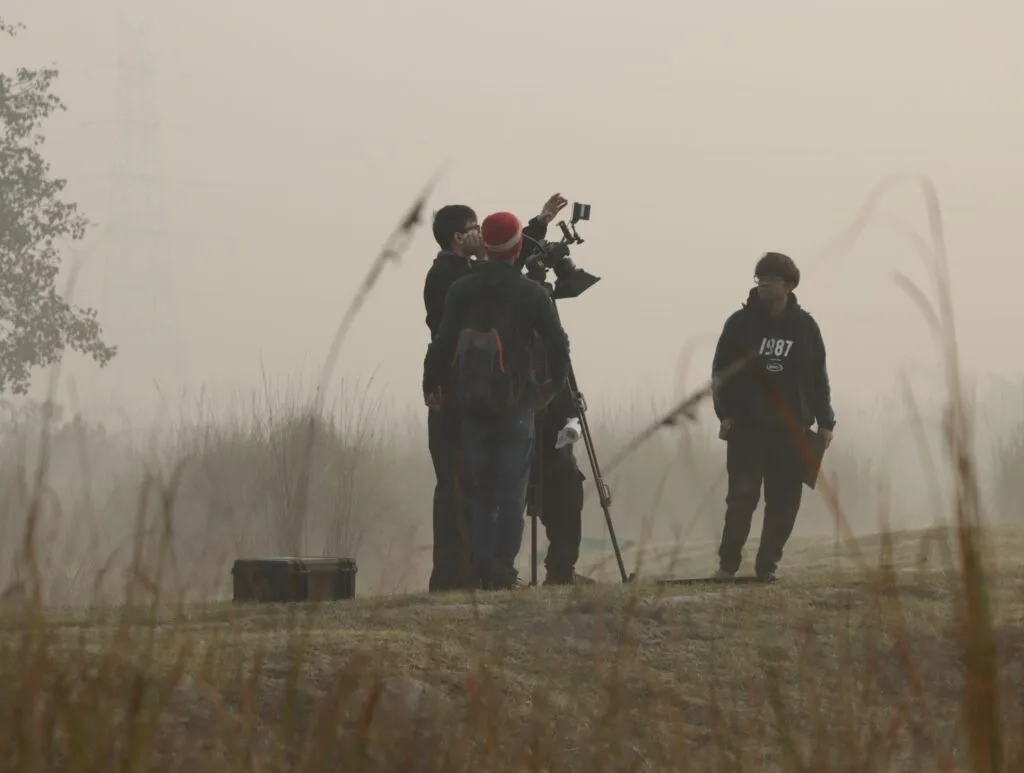
The videos have amassed over 3 million views on YouTube. In this interview, Waris reflects on why he wants to be more than just a music video director, his beginnings as a boy from Lucknow who wanted to work with his buddies and how he is outgrowing a culture populated by people who cosplay as artists…
Q1. How did you get into filmmaking? When did you realize this is what you want to do?
I think I always had an eye for photography; I was fascinated by the idea that a story can be told entirely through how an image is composed rather than through dialogue. While many filmmakers start with writing, my entry point was purely visual. That naturally led me to gravitate to music videos since they lean so heavily into visual storytelling over traditional narrative constraints, offering a sense of freedom you don’t always find in fiction or non-fiction narratives. I love the hybrid nature of this form. You can create something incredibly high-concept and boundary-breaking, even on a limited budget.
Q2. What was your first music video? How did it happen? What was the journey?
My first music video was for Lil Kabeer’s ‘Pracheen,’ a remix of Odd Future’s ‘Oldie.’ I’d made a travel film that somehow reached Kabeer, and he really liked the visual style. At that very time, I’d also been wanting to dabble in music videos myself. We got on a call and decided to meet during a gap just before my last board exam. We shot the video in Lucknow and continued to work together after that, eventually starting a crew called 32OTM. The goal was to put our city on the map, which felt really underrepresented at the time. The journey since then has been quite bumpy, but I’m glad I’ve simply followed my gut and gravitated towards whatever has felt like the best form of expression at any moment.
Q3. What does the process of making a music video look like for you?
For me, the process is about navigating the unique constraints which come with the music video form. Since the visuals of a music video would be based on the expression of someone else, you aren’t always starting from a blank slate; you’re adding your own layer to it.
These constraints make it interesting sometimes. You have to match the wavelength, meeting somewhere in the middle, while still finding room for your own voice. My process relies heavily on design. Beyond the narrative and the edit, I pay special attention to details like the title designs, aspect ratios, colours, typography etc.
Q4. Do artists usually come with ideas, or do you create everything?
It goes both ways, actually. Sometimes I have a clear idea, sometimes the artist brings their own ideas, and sometimes we’re both starting from scratch. It really varies from project to project, but I like to be involved from top to bottom through every stage. I still edit all my films and music videos myself; it pains me to have someone else cut my work. In my formative years I used to shoot all of it as well, but as of late I’ve started to step back from cinematography a bit, but I can’t let go of the cut, be it a music video, film or any other work of mine.
Q5. Who were your early inspirations?
Like a lot of people venturing into music videos, I was initially inspired by the early, low-budget work of Cole Bennett and LoneWolf. I also really love Dave Meyers’ work and his mastery of the visual spectacle. He really excels at world building.
Q6. You’ve worked with many artists. From Encore ABJ & Rebel 7 to The Siege. Which collaborations stand out?
I enjoy working the most with my friends. The most fun is when the artists that you’re working with are really collaborative as well, which is why I love working with Kabeer. We’re constantly bouncing all kinds of ideas off each other – art, life, politics, nature and otherwise. Recently, we also made a short film for his and Rebel 7’s EP ‘NANO’.
In terms of projects that stand out, ‘OTHRSIDE’ by J Block is one of my favourites. It was zero budget, and what started as a simple music video quickly turned chaotic when a ton of people unexpectedly showed up at our place on the shoot day. I was initially really stressed, but it eventually worked out fine. There are a lot of artists’ and friends’ cameos in that music video here and there.
On the edit table, I used the chaotic energy to experiment and figure out a specific visual style. I feel it is that very style which germinated in my later works like ‘Faqeeran’ by J Block and ‘NICENICE’ by Faizan, both of which I love as well.
Q7. What advice would you give to someone who wants to get into making music videos?
People focus on getting big names instead of building their own style. There are artists around you who are great but don’t have people to work with. Find those people.
Working with friends allows one to experiment. If one is looking to work with only brands or labels, there won’t be much room to mess around.
Focus on making your style so you stand out in the crowd. People would eventually reach out to you.
Q8. How important is social media in this field?
As sad as that is, I think it’s extremely important for someone up and coming. It’s the best way to amplify your work, amplify your voice. I, for myself, would want to choose a different way to go about it but I don’t think currently there is anything as effective as social media for someone just starting out. It has democratized the process for artists, educators, activists, and people from all fields of work.
Q9. What was the process for shooting Sundays by The Siege.
The idea was by Siegen himself, which we brainstormed and opened further. It was a very low-budget shoot. We mostly shot outdoors at locations like the Parthasarathy Rocks at JNU and Pagal Records, HKV. Siege is a good friend, as well as a great person to work with. One of the most gifted artists in the music scene.
Q10. Is there an artist you’d love to work with?
Emiway. Any day. I would love to be friends with Bilal Bhai and hang out.
Q11. Has your relationship with the music scene changed over time?
It has significantly changed over time. Initially, from a distance, the scene seems cool, but as you slowly become an insider, the reality begins to reveal itself. I realised I had outgrown a culture populated by people who cosplay as artists but are actually quite shallow; worse, I found myself in circles with people whose values I simply didn’t align with. Working in this world requires a level of social immersion that I eventually found draining. I didn’t want to hang out in those spaces anymore, and I largely outgrew the genre as a listener as well. For me to grow as an artist, I knew that I’d eventually have to step away to focus on my own forms of expression. So I acted on that hunch. Currently, I’m working on things which feel truer to myself, and I hope for the world to see my new work someday. At the same time, I’m also prioritizing the growth of my production house, Dabloo Studios.
Shifting back from Delhi to Lucknow was a conscious choice to distance myself from the scene as well as to pursue these other endeavors. That being said, I’m still close with a select few people I met through music, and we’ll hopefully still collaborate once in a while.