

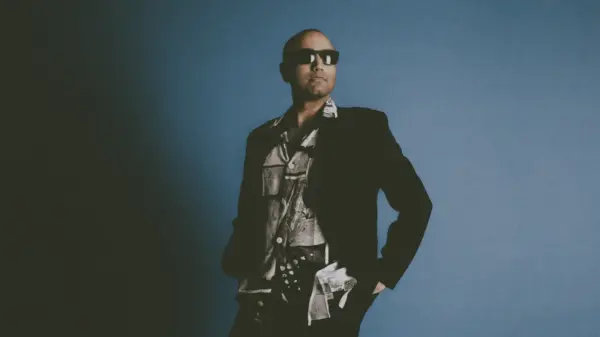


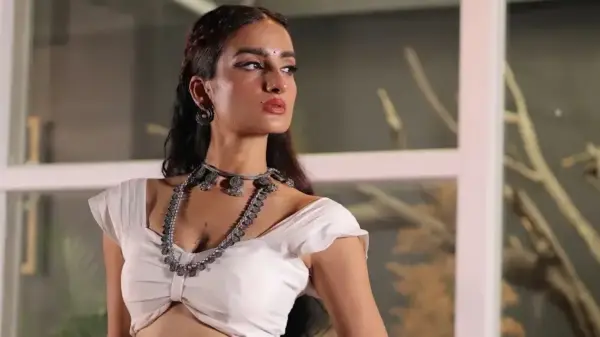


If you’ve been paying close attention to India’s independent scene, you know a chunk of the freshest sounds are coming from artists who experiment with genres. And among these voices, Damini Bhatla has created a space of her own, seamlessly blending Carnatic classical vocals with global genres to create a beautiful conglomeration that defies borders. With her album GOLD out recently, we caught up with her to talk about her music, her journey, and everything in between.
1. You started touring at age 14 after winning hearts on talent shows like Saregamapa Little Champs and Padutha Teeyaga. Looking back, how did that early exposure shape your vocal discipline and stage presence?
Honestly, I grew up on stage. Touring and performing from such a young age taught me discipline before I even knew what the word really meant. It made me understand that talent alone isn’t enough. You have to show up, take care of your voice, take those overnight buses, trains to the small towns in Andhra-Pradesh and Telangana, learn how to present well, rehearse how to talk on stage and connect with the audience. I think a huge part of my confidence on stage today comes from those years.
And over the years, I have also learnt a lot from my shortcomings – One day, I am pitch perfect, One day I am not. One day, I remember all my parts and one day I do not. The experience keeps adding up and I am only getting better.
2. When you start working on a new song, what usually comes first, a vocal melody, a concept or emotion, or a musical composition? Basically, how does a song usually come together for you?
Usually, it’s an emotion. Sometimes it’s a sentence or a little melody that comes to me, but there is almost always a feeling behind it. Once I know what I want to say or feel, the music starts finding its way around that. Every song has its own process, though. That’s the fun part.

3. How did the Bigg Boss Telugu experience impact your relationship with fans and your mindset as an artist?
Bigg Boss made people see a side of me beyond the singer on stage. They saw me as a person, with good days, bad days and everything in between. It definitely made my relationship with my audience more personal. As an artist, it also reminded me that being vulnerable isn’t always a bad thing.
4. How did singing “Pacchabottu” in Baahubali shift the trajectory of your music career?
Pacchabottu was definitely a turning point. Baahubali was such a massive cultural moment, and being part of it gave my voice a reach I could never have imagined at the time. It opened a lot of doors for me and introduced me to audiences across languages and regions. To this day, when people hear that I did sing the song Baahubali, the reactions I get are so heartwarming. Instant familiarity comes in and I flex a little bit.
5. Do you feel blending Carnatic classical music and regional languages with Western genres like R&B, neo-soul, and alt-rock helps carve out a unique identity for South Indian independent music globally?
Absolutely. I think the most exciting thing about music today is that we don’t have to choose between our roots and the world. We can take the music and languages we grew up with and put them into completely new spaces. That combination can create something that feels deeply local but can still travel anywhere. My latest track Seethakaalam Side A and B from Gold were written in Darbari Kanada raaga in an R&B context. The traditional way of doing things would be to box the composition within the scale, which I DID NOT DO.

6. South Indian indie music is undergoing a cultural boom right now. What is your take on the current state of the Telugu indie scene specifically?
I think the Telugu indie scene is in a very exciting place right now. More artists are experimenting, writing their own music and building audiences outside of films. There’s still a long way to go in terms of infrastructure and support, but the hunger and talent are definitely there. I think we’re only at the beginning. We all need a breakout track from Telugu. Something like Kalyani from Malayalam or Amsham.
7. How does leaning into your cultural identity change the way a Western genre feels when you perform it?
It makes it feel like mine. I can sing an R&B or neo-soul inspired song, but the way I phrase something, the language I choose or the musical ideas I naturally bring into it come from where I come from. The last line in my song ‘Say you want me’ from Gold – I sang the english lyric with a Carnatic embellishment. I keep doing that a lot and I intend to.
8. In your opinion, what moves are needed to make a sustainable ecosystem for independent artists from South India?
We need more than just talented artists. We need strong managers, labels, promoters, venues, festivals, media support and people willing to invest in long-term artist development. Independent music needs an ecosystem where artists can actually build sustainable careers, not just have one viral moment and disappear.
9. Your latest release GOLD features voices like Shalmali Kholgade and Ahmer. How did bringing in outside collaborators shape an album that started from an intimate, personal place?
It actually made the album feel bigger without making it feel less personal. GOLD started from a very intimate place, but collaboration brought different experiences and perspectives into that world. Shalmali and Ahmer brought their own personalities to the music, and I love that the album became a little more expansive because of that.

10. GOLD spans five languages, Telugu, Tamil, Hindi, English and Kashmiri. Is singing across multiple languages a genuine, proven driver for expanding your listener base, or is it more about artistic ambition and self-expression than direct audience growth?
For me, it was never a strategy meeting! I genuinely love languages, and different languages allow me to express different things. Of course, it can help the music reach more people, but I think the intention has to come first. You can’t really fake curiosity or love for a language or culture just to chase an audience. I am all in for the cross cultural collaborations.
11. What’s your next move like? Is there a specific sound, genre, or creative direction you’ve been itching to explore next?
I’m definitely in an experimental phase right now. I want to keep exploring sounds that feel unfamiliar to me and push myself as a songwriter and performer. I have a few ideas brewing, a couple of cross cultural collab demos and I’m trying not to overthink them too much. Hopefully, you’ll hear them soon!
12. What is your perspective on where independent music stands in India right now and what is one core piece of advice you’d give to young artists trying to find their own voice in this space?
Independent music in India is growing beautifully. There is more freedom than ever to release your own music and find your audience, which is amazing. My advice would be to spend less time trying to sound like what’s already working and more time figuring out what only you can make. Your voice is not just how you sing. It’s your taste, your experiences, your language, your influences and your point of view (I love to write Women’s POV) That’s what makes people remember you.