






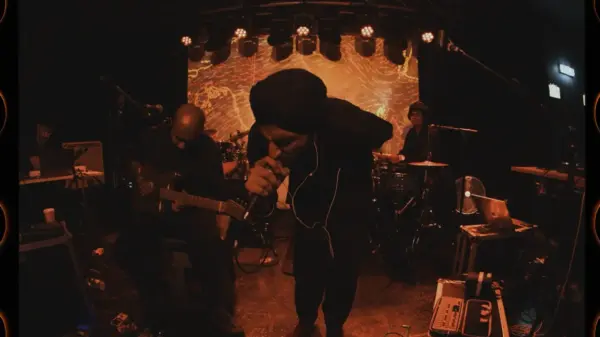










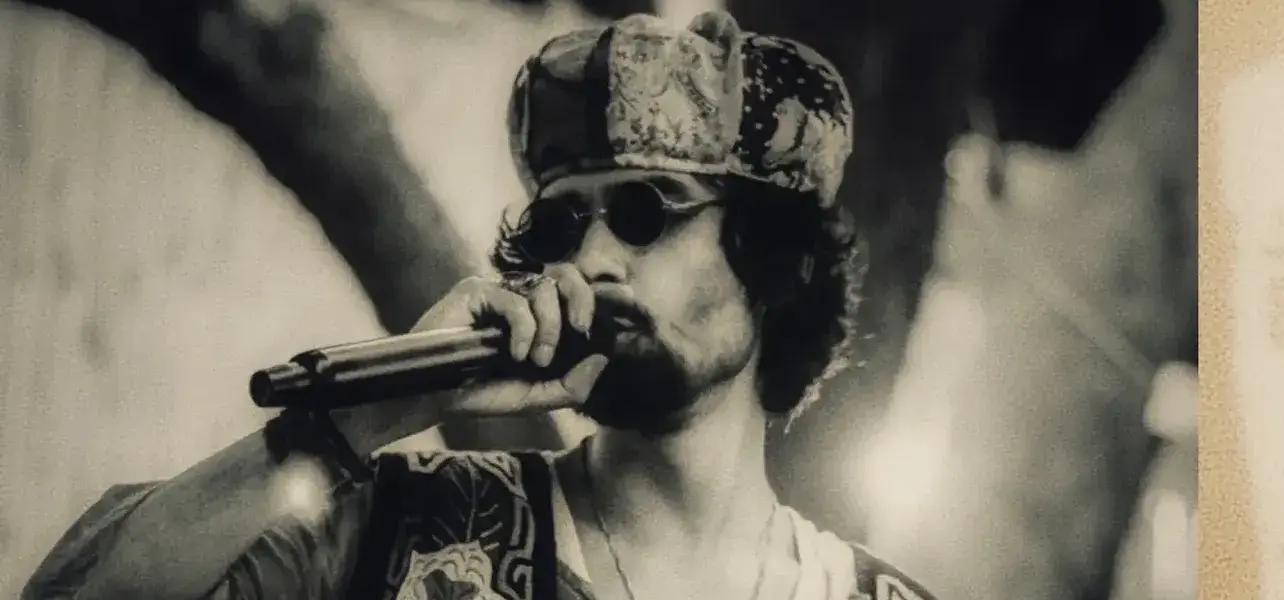

This year, the Indian music scene has kept evolving new sounds, new voices, and more artists willing to take risks with how they say things. Amid all that movement, Albela has been one of the artists quietly doing it his own way.
What makes Albela stand out isn’t just what he says, but how he makes you see it. He takes the small, overlooked parts of daily life and hands them back with fresh weight, and few artists make listeners feel this seen. His writing is observant, his voice is assured, and his delivery is so magnetic that you stay with him from the first line to the last. That is a big part of why his audience stays so devoted.
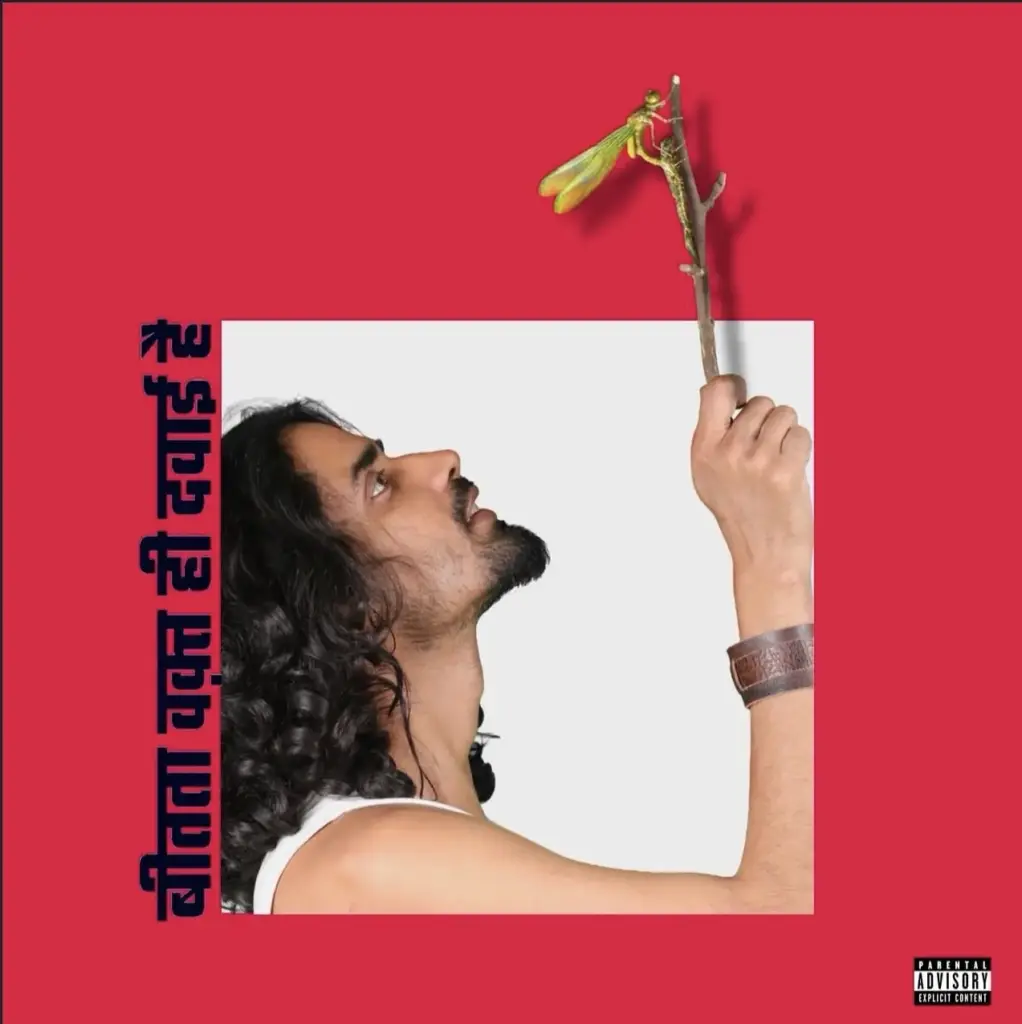
His latest project, Beetta Waqt Hi Dawai Hai, begins with a title that carries a lot of meaning. Most of us grew up hearing that time heals every wound. Albela borrows that familiar comfort, but the title says something more precise: beetta waqt, time that has already passed, is the only cure. Healing doesn’t arrive in the middle of the pain. It shows up in hindsight, as the days go by and the hurt slowly loosens its grip.
Albela shares that the album was inspired by the story of a dragonfly. The insect spends two years in the dark, watery world underneath. When it finally comes out, it has only about four hours to decide: leave its old life behind, or perish. To fly, it has to give up a lot, including its old form and everything it has stayed attached to all this time.
He saw his own life in that story. Old memories and feelings had stayed with him for too long, and he was ready to move forward. The album gave him the space to say everything he had kept buried, and to let it go all at once
That’s the space the project lives in. It isn’t about having healed, but about the stretch before it, where all you can do is let time pass and carry what you’re feeling. It’s an honest premise, and it sets the tone for everything that follows.
What makes the project so gripping is how psychological it is. Intrusive thoughts run through it, and Albela turns them into a push and pull between impulse and restraint, the id against the super-ego You can hear a mind arguing with itself, and he lets you listen in.

It also isn’t about one thing. The project reads like a portrait of a personality with many layers, and each track peels one back. At the centre is a lover who has come undone, carrying heavy pressure and years of mental weight, and who has made peace with being that way. Somewhere along the line, the hurt has taken so much that he has stopped looking after himself, and he sees that clearly and says so. From that place, he questions the world around him: social norms, religion, culture, and the “plastic” people who perform for approval.
The lens turns on himself too, as an artist. Albela knows how artistry feeds on pain: the cycle of falling in love, being heartbroken, and turning that feeling into music. He speaks as someone who knows that pattern well and sees it without any gloss. He looks at being talked about, at mud thrown on his name, at people who worship him one moment and drift away the next. But he also knows that every one of those experiences becomes material. Each emotion and incident goes back into the work and helps him redefine his artistry, so the pain isn’t just endured, it’s used. He says all of it plainly, with no filter, and the result feels less like a performance than a one-on-one conversation.
The journey, track by track
Across its eight tracks, the project unfolds like chapters of one continuous story, an emotional and spiritual journey through love, loss, identity and transformation.
Under the surfaces
“Ek Kadam Dur” opens the story with a hard kind of love: the kind that steps back. The artist keeps one step of distance between himself and what he wants, because some beautiful things only stay beautiful when you don’t grab them.
He can’t hold that line for long. “Pyaar Ka Bikhari” is what happens when restraint cracks. Love stops being a feeling and turns into a habit he can’t break, and the songwriter catches himself on his knees, asking for something that was never really his to receive.
The dark water
By “Rang (Uparwale Meri Madad Kar),” the hurt is too big for any person to carry, so he sends it upward. It sounds less like a polished prayer and more like a muttered plea, with love, pain and faith all talking over each other.
“Kitne Saare Bande?” then lets the walls fall away. One broken heart becomes a crowd of questions about death, ego and how little it takes to break a human being.
After that, the lights go out. “Log Patthar Ke” is a world turned to stone, where people, feelings and even belief sit cold and silent, and the storyteller can’t feel his way back to any of it.
The crack in the shell
Out of that silence comes “Sangeet,” and with it the first small movement. It isn’t healing yet, only a pulse. When everything else has drifted off, music is the one thing that stays, and he holds on to it.
Surfacing
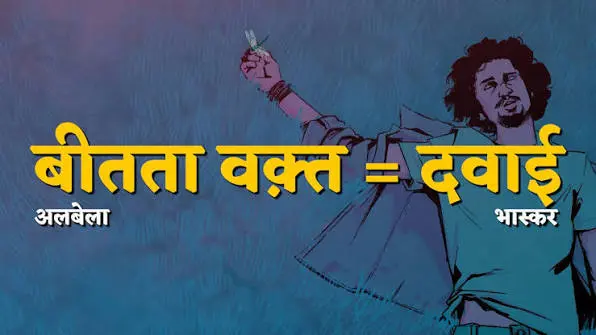
The title track, “Beetta Waqt = Dawai,” is where the artist puts down the fight. He stops trying to outrun the ache and lets the days do their slow work, trusting that what makes no sense now will make sense later.
Wings
And then “Yatra,” the leap. This is the dragonfly’s four hours, and he spends them well: he lets go of the past, the attachments, even his need to be loved. Nobody’s approval is chasing him anymore, and nothing is left to run from. What remains is a lighter, quieter, freer version of himself.
The writing and the delivery
Albela’s writing is full of lines that stop you mid-listen. Every so often he says something so blunt, so unexpectedly honest, that you catch yourself thinking, “Did he really just say that?” They land because they come out of nowhere, in the same plain language as everything around them, and then hit with full force. He doesn’t announce a big line or build a runway for it. He drops it casually, and the shock comes from how little effort it seems to cost him.
His delivery is what makes that work. Albela knows when to let a line breathe, and he holds back where another artist would push. That restraint gives the heavier moments their force, because nothing in his tone warns you they’re coming. His voice carries the weight of what he’s saying, so you believe it before you’ve fully taken in the words. Nothing feels rehearsed for effect. It sounds like someone saying it because it needs to be said.

Music Production And Collaboration
music on Beetta Waqt Hi Dawai Hai was produced entirely by Albela himself, blending Indian classical elements like sitar, flute, sarangi and tabla with modern textures.
The production on Beetta Waqt Hi Dawai Hai leans on melancholic, atmospheric textures. Ambient guitar plucks, airy synth pads and strings, both played and plucked, build a dense, isolated atmosphere that gives Albela’s heavy voice plenty of space. Underneath, a layer of chaos keeps stirring, so the calm never fully settles.
The vocal mix favours intimacy over studio polish. Albela’s delivery is theatrical, closer to a narration than a rap, as if he’s telling you the story from a stage. The sound is kept natural and close, which carries the project’s themes of healing and survival.
The collaborations sharpen the contrast. On the title track, with Bhaskar, a flute runs alongside a hard-hitting tune and raw delivery. On Sangeet,
Encore ABJ brings his own flavour, with strings played throughout the track. The production in both feels almost divine, yet what the artists express is harsh reality: where they come from, and what they hold dear. They arrive from very different places and meet in one purpose, which is music.
The closer, Yatra, featuring Nikkisha, brings Albela’s journey to a natural endpoint. After moving through the project’s unrest, memories, pressure and self-reflection, the track feels like a moment of release. Nikkisha’s vocals add softness without fighting the album’s chaos, creating a balance between noise and melody. Together, they close the project with a quiet sense of letting go, without forcing a neat resolution.
Final Thoughts
Beetta Waqt Hi Dawai Hai doesn’t promise easy healing. It offers something more honest: a mind laid bare, a soundscape that holds both chaos and beauty, and an artist willing to sit with his contradictions rather than disguise them. Across its eight tracks, Albela turns personal turmoil, uncomfortable truths, and lived experiences into a body of work that feels unfiltered and deeply personal. His writing and delivery give these emotions their weight, allowing moments of vulnerability to exist without needing to explain or resolve everything.
What makes the project compelling is its refusal to offer easy answers. Albela doesn’t present pain as something that automatically makes you stronger, nor does he pretend that putting it into music makes it disappear. Instead, he captures what it means to live through it, to carry it, and to eventually find some distance from it. Beetta Waqt Hi Dawai Hai leaves you with the understanding that healing isn’t always a moment of clarity; sometimes, it’s simply the passage of time. And in turning that experience into music, Albela creates something that stays with you long after the last track.