



















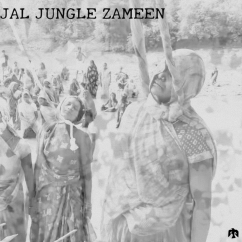
In Aadamkhor Vikas, Kaali Duniya samples an extract from an interview of poet Mahadev Toppo : “yeh dharti ko aadamkhor aur munafakhor vikas nahi chahiye” — constructing an almost-chant, as the latter’s voice distends over a compendium of rhythms and ominous birdsong. The track is a part JAL JUNGLE ZAMEEN, “a 13 track album that brings dubstep and 140 BPM bass music into conversation with tribal rhythms, organic percussion and vocal recordings from Indian and African traditions.” The record is rooted in the “politics of the land”, and more importantly — the cannibalistic nature of modern “development”.
It is a fact known to anyone with a less-than-superficial political consciousness that liberal dissent has recognized Adivasi land and all associated protest and activism as tertiary, only treating it as an asset in its version of anti-establishmentarian praxis. In his latest opus, Kaali Duniya creates a sonic center : of sounds, vocal recordings, speech cuts, that reflect the intensity and the contemporary nature of Adivasi and tribal resistance in the country. One could list name after name for regions where said “developmental” operations have sparked long-winded chains of struggle against business conglomerates and state oppression. In Tijmali, for example, protests have intensified against bauxite mining operations and forest leveling by Vedanta. Or the Ken-Betwa River Linking Project, against which there has been active resistance for years in contention of displacement and unfair compensation and rehabilitation packages — besides obvious environmental travesty. Kaali Duniya, however, is conscientious and intuitive — because he never relies on exemplification, instead taking the listener inside these movements, and the true nature of land violence that they are countering — right from the roots, by opening with a track named Hul Johar, in reference to the Santhal Hul of 1855, while also sampling a speech from Satish Pendam of the Birsa Brigade.
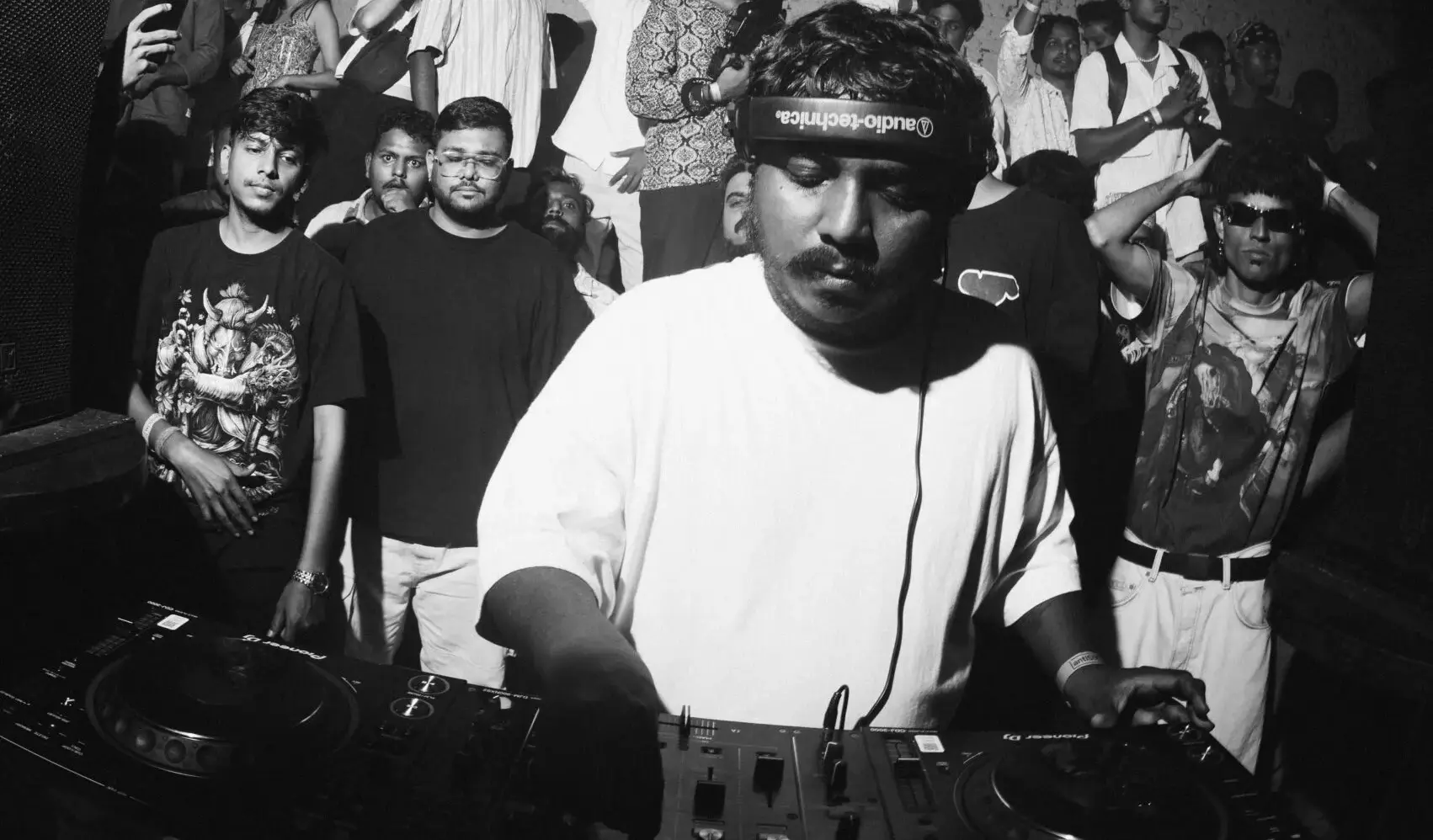
To those unfamiliar, Kaali Duniya, the alter ego of Tushar Adhav — a Mumbai-based producer, DJ, and emcee also known as BamBoy, is intended as an embodiment of resistance, presented through darker, spectral textures while utilizing dubstep’s historic identity of being a vehicle for sonic expressions of dissent. JAL JUNGLE ZAMEEN follows Adhav’s last two releases : LANDLESS CASTE (EP) and BABYLON’S CAMP (ALBUM). Simultaneously, these records have been active, prolific documentations of the politics of our present, unsanitized, without the sheen of familiar commercialization — drawn out by the hands of an artist uncaring of appearing indignant, raging, and frightening to religious fundamentalists and armchair leftists.
The EP is a wonderful study on the use of sound, without disenfranchising it of its meaning. For Adhav, there is no frivolous use of semiotics — everything is used to construct, rather than tokenize. The listener has to educate themselves, and there is no spoon-feeding. The artist picks you up and puts you into a world of percussions and rhythms that are very much inheritances of the myriad different kinds of “tribal music” in India — he places you in proximity with his politics, with the history that this record is located in, and in no way has he created a puzzle, everything is apparent if you take the effort on your own. In a way, he frees himself from the burden of explanation and locates himself in the realm of expression, which enables the record to have the stark quality it does.
The record closes with Bhangsar Thali (Outro), which has the clanging of the metal plate of the instrument used by, here specifically, Konkan adivasis of Maharashtra. In my experience of familiarity with Adhav’s work across all his alter-egos, one thing, I know, is that all his records are built with the rigor of a scholar and delivered with the skill of an artiste. Indian dubstep, and at large electronic music, should always be grateful to Adhav, and Kaali Duniya — for remedying it of its insipid vacuousness, one intervention at a time.