




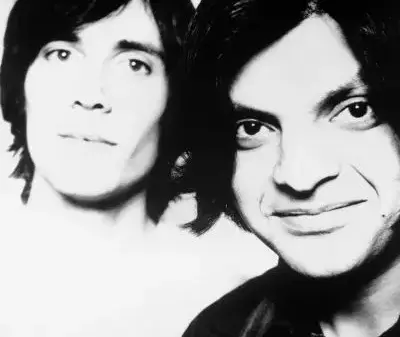
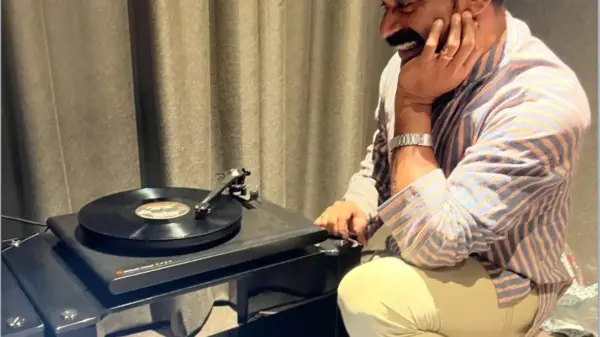



SINASH’s music feels like it’s been unfolding in chapters, each release building on the last while quietly expanding his artistic language. From Baalma to Zamana, and now Bairaagi, there’s a clear sense of movement one that leans into growth without losing its core. His approach doesn’t stay fixed; it shifts, experiments, and pulls from different textures, reworking them into something that feels both personal and constantly evolving.
With Bairaagi, that journey finds a new kind of clarity. It carries forward the essence of what’s come before, while opening up space for what’s next balancing familiarity with change in a way that feels almost effortless. There’s a certain ease in how his sound is taking shape, while still leaving room for exploration. We sat down with SINASH to trace how these chapters have come together, what connects them, and where the road is beginning to lead.

Your sound has always been evolving from your earliest tracks to where you are now with Bairaagi. How has your approach to music changed over time?
Exploring different sounds, working with different artists, listening to different music, all of it contributed, as it does for most people. But the main shift came when I started spending time around rappers. As a producer, I got a completely new perspective. The way they think, the way they translate feelings into words, their approach to writing inspired me deeply and pushed me further in my own music journey. That was my second step.
I always wanted to write what I was feeling, but there was always something holding me back. I won’t call it a lack of inspiration, but more like I needed someone to unlock that part of me. It could come from anywhere, watching someone online, being around the right people. For me, it came from my circle. The rappers I was around were genuinely honest when they wrote. No pretense, no filter. Being around that kind of authenticity opened something up in me. Writing and lyricism gave me an entirely new perspective in my music journey.
Baalma, Zamana, Bairaagi. Each release feels like a natural continuation of the last. Was that always the intention, or did the story write itself?
Honestly, this wasn’t something I noticed on my own. A friend pointed it out. He said that in Baalma, I come across like a teenager, like a completely different person from who I appear to be in Zamana. And once he said it, I couldn’t unsee it.
In Baalma, there’s a teenager figuring out love for the first time. Confused, a little fiery.
“Takta kyun baalma, aakar mujhse sambhalna zalim tu” It’s a sweet little confrontation where he can’t understand what this person wants from him. A small kind of love, but everything about it feels enormous.
Then comes Zamana, and the shift is felt in the music itself. The Baalma music video ends on a perfect loop, and Zamana picks that loop right back up. The beat is cyclic and repetitive, intentionally so, with an Afro-influenced, poppy, almost club-like quality that sticks in your head. The lyrics carry that same emotional thread forward. Khamosh kamre mein baitha akela yun rehta alag zamane se door, aadat si hai tere chehre ki mujhko. Same boy, but now he’s opening up completely. In Baalma there were tantrums. In Zamana, there’s vulnerability.
And then Bairaagi. I’m not talking about a person becoming detached. I’m talking about the mind itself becoming a recluse. Yeh kaisa mann hai bairagi, khudka saga na lagta mera. Jaane na de tujhko par yeh chhod mujhe tere peeche bhagta. A bairagi is someone removed from all worldly things. So when I say my mind is bairagi, it has detached from me and is chasing you. It won’t let you go, but it has left me behind. That’s the arc.
Bairaagi carries so much weight detachment, surrender, wandering. What was the original spark for this track?
I had no plan for this song to become what it is. I hadn’t even found the word bairagi when I started making it.
It was a very bad day. Very sunny, the kind of energy that makes you want to do nothing. But I sat down anyway and forced myself to open the laptop. Some days you don’t feel it, but you show up regardless.
I loaded a pad-based sample and started toplining, completely freestyle. And the first line that arrived was Parkhti na mujhe is baar jaane do. Don’t test me, just let me go this time.
From there, everything started building on its own. I never planned for this to be a conclusion to Baalma and Zamana, but it can work that way. If you’ve been following the journey, it lands like a closing chapter. If you’re hearing it for the first time, it works just as beautifully on its own. It’s not an episode, not an album, not a mixtape. It’s simply music. If you’re connected to what I’ve been doing, you’ll notice the threads. And if you’re not, it will still give you something real.
Take us inside the making of Bairaagi. How did you build the track and bring all those elements together?
The hook came first. I was in a very flowy space, just saying whatever came to my mind. The first thing that stayed was kajal ka teeka, and I built around that. Kajal ka teeka tera sambhala hai aaj bhi, kehte the tu hai mera nazar na yun lag jaye. It’s about protecting something you love. Even if it’s gone, you’re still holding on to that care. Then it goes deeper.
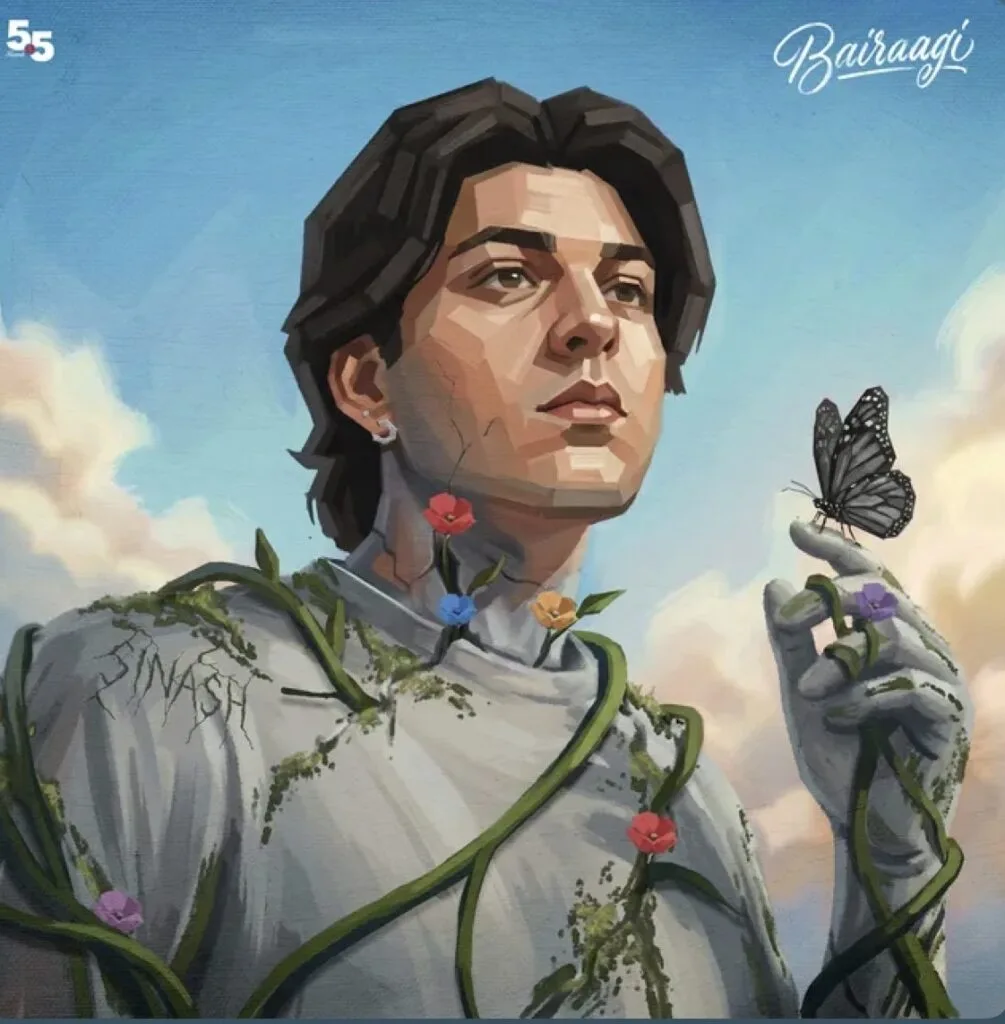
Qaidi sawalon ke, puche tumhe par tum dikhte hi na ho, mubarak azaadi ke. You’re left with questions, but there’s no one there to answer them, so it’s like, okay, you’re free now. After that, the track shifts and the rock section comes in. Big shoutout to Karigaar bhai for the guitars, he also worked on Baalma. That part brings in a raw energy. Gum dono, phir bhi kyun sataye gham kaisa is seene mein khaye. Even when both people are free, the feeling doesn’t leave. Then I added a break with sitar and flute, it gives you a moment to breathe after all that emotion.
After that, I wanted the song to lift a bit. I had used tabla earlier, but here I brought in dholak. It has a more movement-driven groove. The idea was simple, why can’t you move or even dance when you’re sad. You can still feel everything and still be in the moment. Teri choodiyon ki khankan pe yeh raag saari bajti hai, mujhe kuch samajh na aaye jab tu aas paas hasti hai. So the lyrics stay emotional, but the sound lifts you. And in the end, it comes back to acceptance. Bairagi mann, meri raag tu. The whole song talks about detachment, but at the end, he admits he still can’t let go.
Your music has such a signature sound. Is that a conscious choice you make, or does it just happen naturally?
My sound is really just a mix of whatever I’m feeling and listening to at the moment. I actually avoid having “favorites” because I don’t want to get stuck in one style while I’m still evolving.
Before making Bairaagi, my playlist was all over the place I was listening to Ghulam Ali at the gym, then jumping straight into Metro Boomin, Jack Harlow, and underground Indian tracks. There was no logic to it; I just stayed open.
How do your roles as artist and producer intersect during your process?
I usually begin with the beat and let it lead. If it develops an emotional core, I lean into songwriting; otherwise, I let it remain a standalone track. I never force the result.
On days when I’m not producing, I focus solely on writing either from my own life or through “perspective writing,” where I imagine someone else’s reality. My work is essentially a reflection of what I observe and feel.
The key is respecting the flow. I’ve learned that if you walk away mid-session, you risk losing the spark entirely. If a project isn’t clicking, I move on, but if the inspiration is there, I stay until the work is complete.
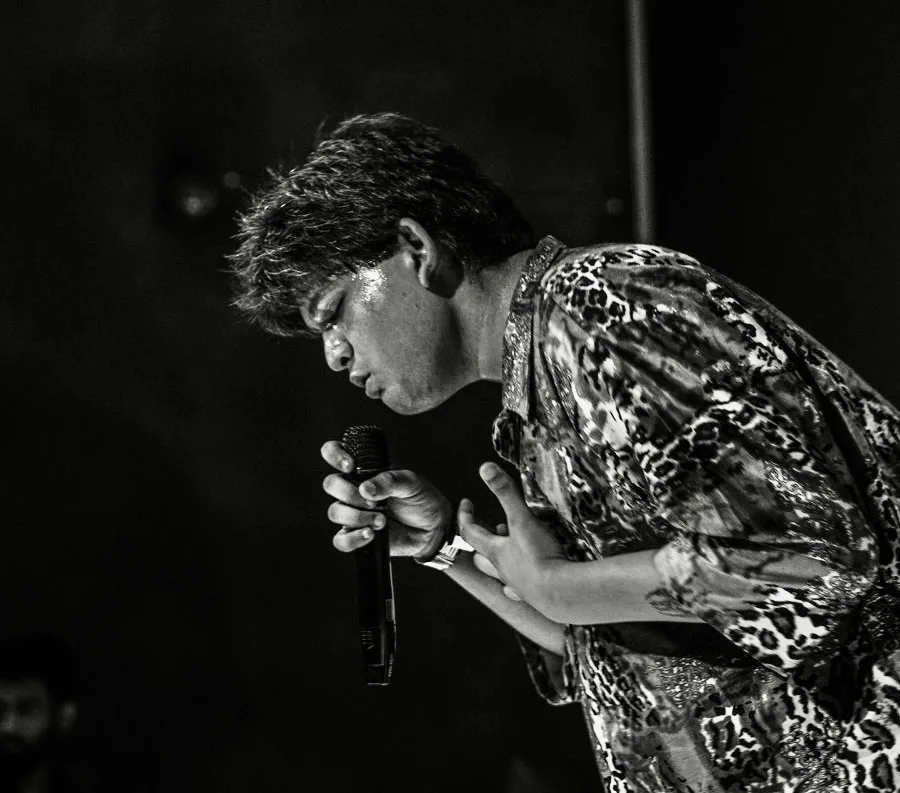
Before the music, before any of this, what was your life like? Who were you before SINASH?
Just a regular person. Basketball, cricket, hanging out with friends, studying. A completely normal life. And then music happened. After that, listening to music became something different for me entirely. It gave me a kind of confidence I hadn’t felt before. Whenever I put my headphones on, something shifts. I get this energy, this sense of presence. It doesn’t matter what I’m listening to. I step fully into the world that artist has created and I live in it for those few minutes. It feels like a superpower, genuinely.
Musicians often talk about a “frequency” that changed their lives. When did you first tune into yours?
It started when I was young and I stumbled upon a track from Ra.One. I played it on loop all day because it made me feel completely untouchable-like I’d found a shield the world couldn’t pierce. That was my first real taste of how music can shift your entire internal chemistry without changing a thing on the outside.But the actual “find” happened in 6th grade math class. My music teacher, Himmat Ma’am, walked in and asked for singers, and I raised my hand before I could even think. She chose me, and just like that, music stopped being something I heard and became something I owned. I still see her on my walks and touch her feet; she’s the one who moved music from the background of my life to the very center.
Your music feels very personal but somehow everyone finds themselves in it. Do you think about that when you write, or does it just find its way there?
I don’t consciously think about how people will relate to what I write. I believe emotions are universal we all carry the same light just If I’m feeling something deeply there’s usually someone else feeling something similar too. Maybe not everyone but that one person that tenth person they exist. And if the music reaches them that’s enough.I just write what genuinely excites me in the moment. I don’t try to make it relatable it becomes that when it’s honest. And when someone tells me a song made them feel less alone I’m truly grateful to God and to them for receiving it that way.
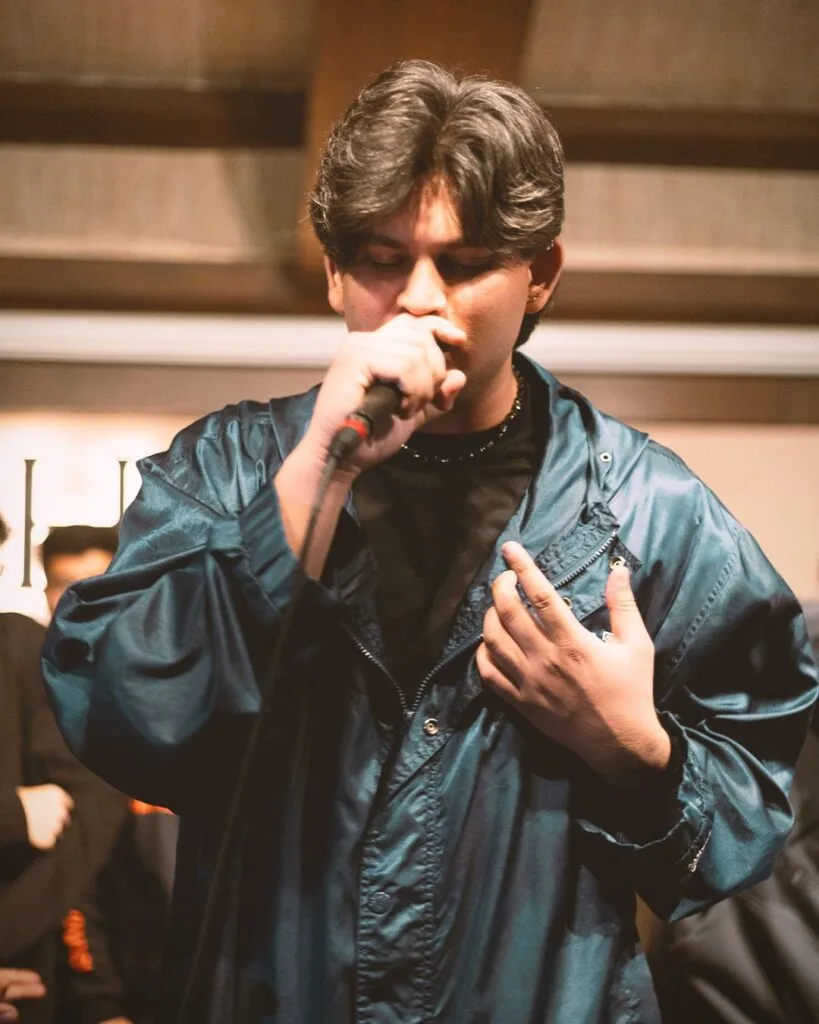
As we wrap this up, where will we get to see SINASH going next?
Honestly, I don’t know. And I mean that in the best way. Baalma, Dhokebaaz, Zamana, Bairaagi, there4u With wamp they’re all completely different from each other. Different feelings, different worlds. None of it was planned. It arrived when it arrived, and I’m genuinely grateful for the energy that comes through every time I make music.
“What comes next is a mystery, even to me. But if you’ve been listening, you already know to expect the unexpected. Stay open, stay ready. That’s all I’ll say”.