












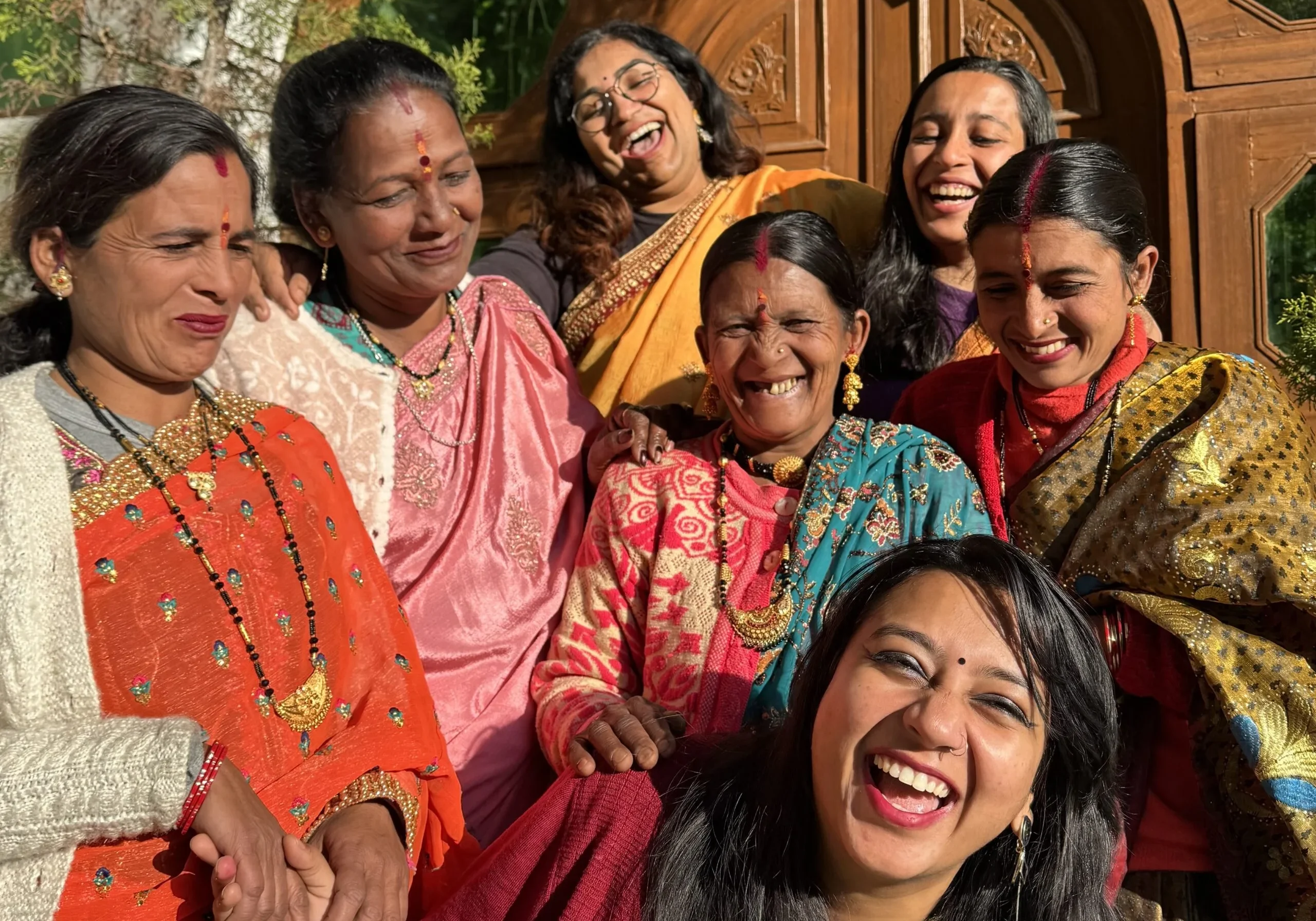

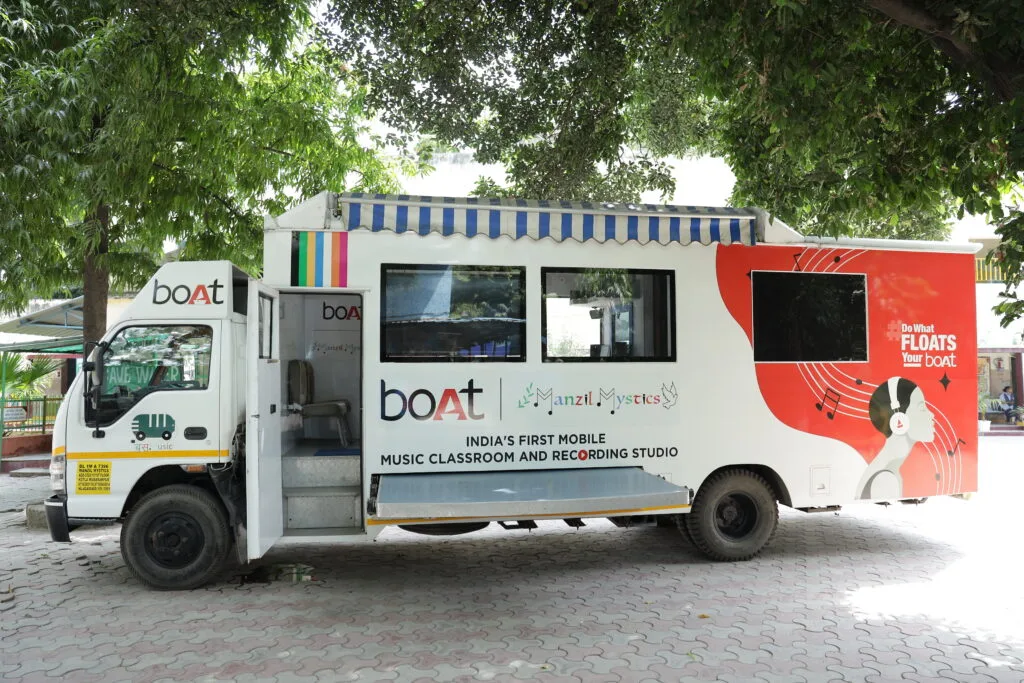
Somewhere across the hills, forests, and villages of India, a bus travels from one community to another carrying more than recording equipment. Inside it is a mobile studio built to create space for women to sing, speak, and be heard. This is Folksoul, a cultural preservation platform dedicated to documenting the songs and stories of women from remote and underserved regions across India, especially women whose voices and oral traditions often go unheard. Through a mobile recording studio housed inside a bus, the team records artists within their own communities while also creating opportunities for collaboration and creative independence.
Emerging from this vision is Sound of Women, a grassroots music project by Krantinaari, also known as Ashwini Hiremath, built around the idea that “hip hop is folk.” After traveling across 72 regions of India and meeting women who were not even allowed to touch instruments, the project slowly evolved into something much larger than an album.
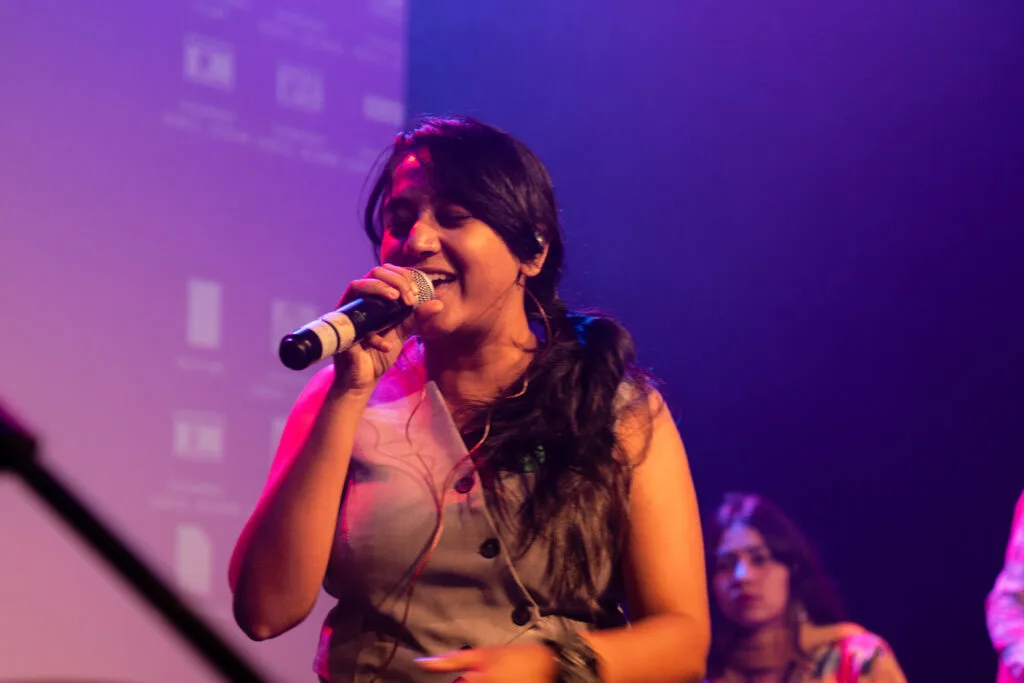
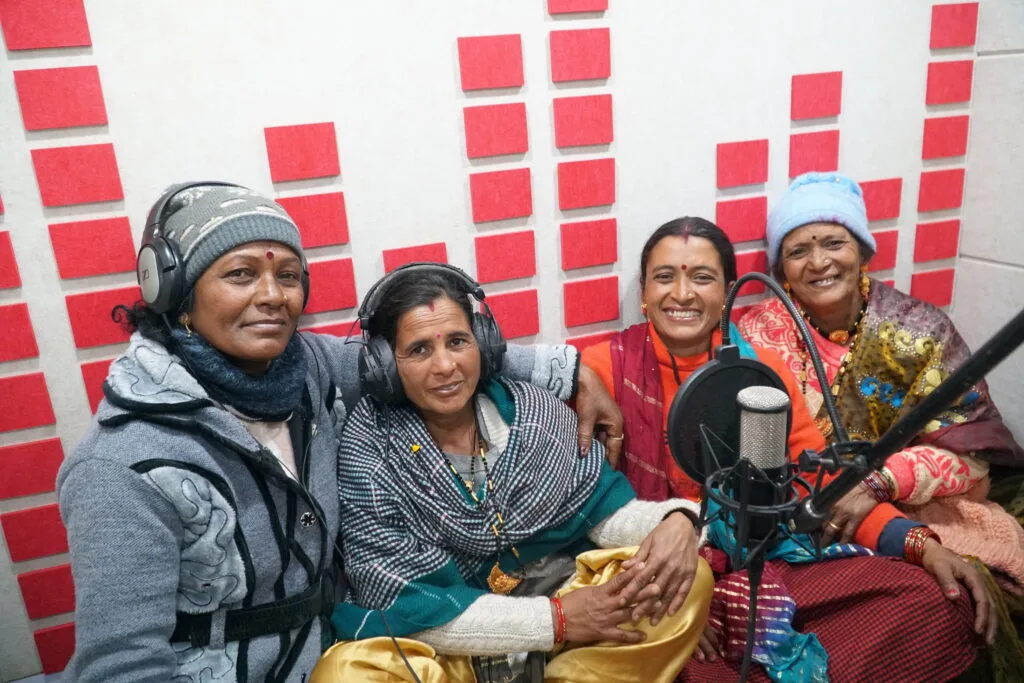
Alongside musician and producer Charu Hariharan, Sound of Women explores how women led folk music can exist within contemporary spaces without losing its roots. The first edition focuses on the Kumaoni region of Uttarakhand, blending folk storytelling, field recordings, and contemporary production. Every track was recorded inside the mobile studio in collaboration with the Manzil Mystics Foundation, allowing the recording process to remain intimate, personal, and deeply connected to the communities themselves.
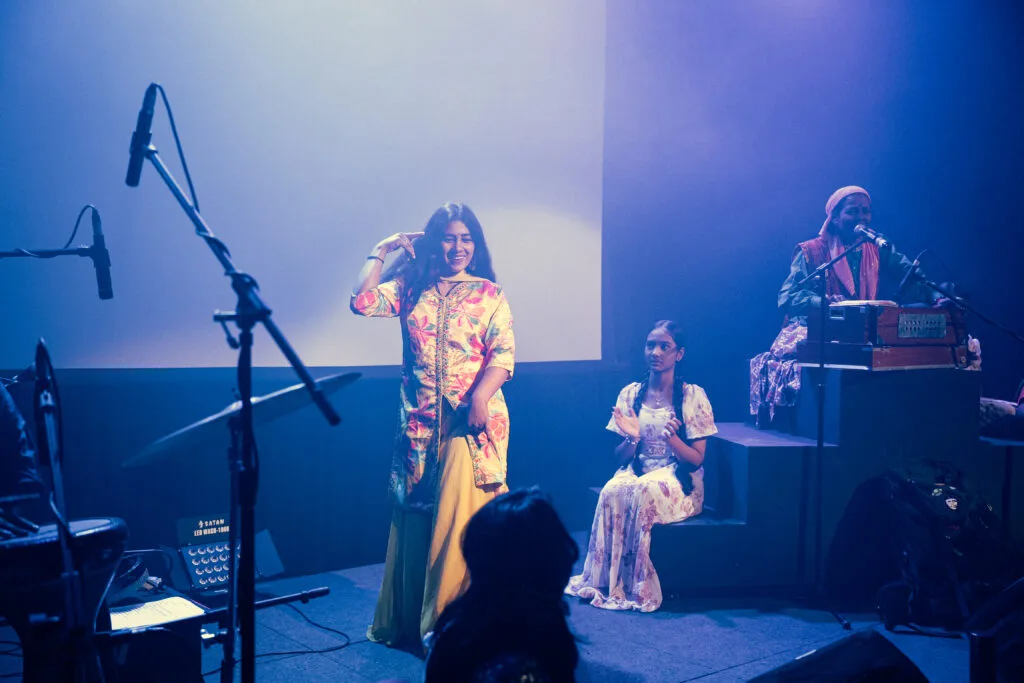
The collective behind the project includes Charu Hariharan, Krantinaari, Hemanti Devi, Ganga Devi, Pushpa Devi Taiji, Khashti Devi, Chandreshekhar Tampta, and storyteller Neha Singh. Together, they create performances that speak about migration, disappearing forests, climate change, labor, loneliness, resilience, and the emotional realities of women’s lives.
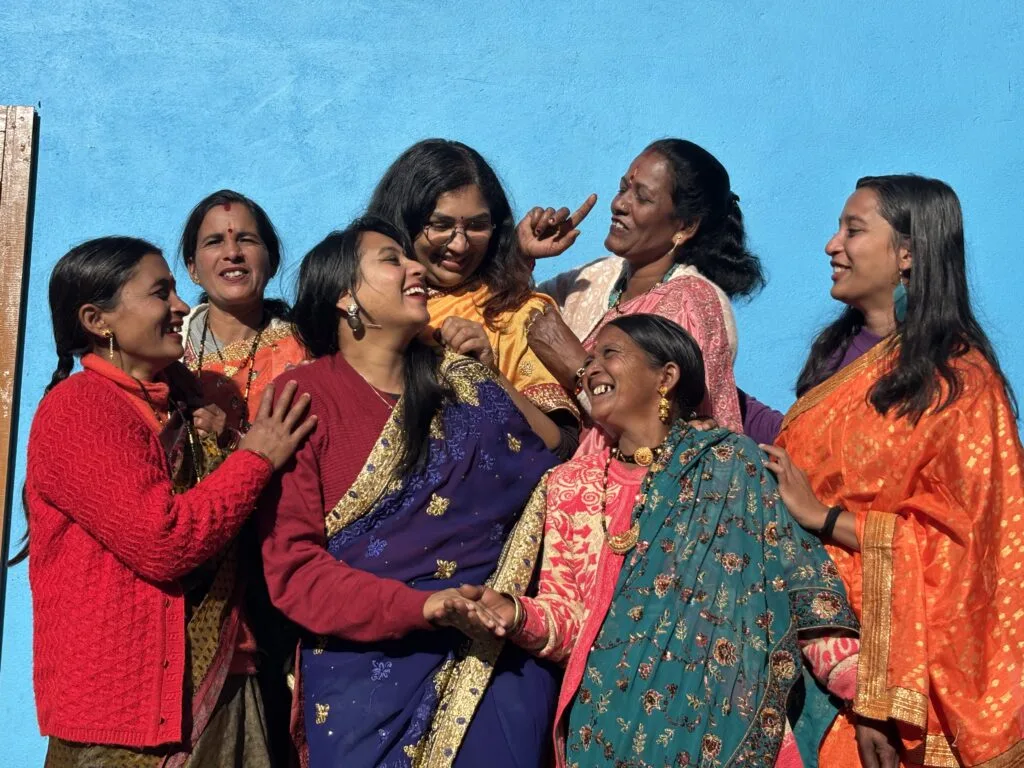
The mobile studio itself was born from a difficult reality. Krantinaari speaks openly about the widespread harassment and discrimination women often face in studio spaces and the music industry. The bus became a response to that problem. It was imagined as a safe and accessible creative environment where women could record without fear or intimidation. But beyond safety, the project is also about preservation. Folk songs carry languages, accents, memories, and ways of seeing the world that are often passed down orally across generations. By documenting these songs, Sound of Women also becomes an archive of endangered cultural memory.
In this conversation, Krantinaari and Charu Hariharan reflect on recording inside the bus, working with women across communities, and the ideas that continue to shape Sound of Women.
Interview with Krantinaari and Charu Hariharan
How did Sound of Women begin as an idea and turn into an actual album?
Krantinaari:
Sound of Women began with a simple but uncomfortable question I could not ignore: why are there so few women in music when women are constantly singing in everyday life?
As I travelled across India through nearly 72 regions, I realised women were always singing while working, raising children, and surviving daily life, but they were never seen as musicians. They did not have access to studios, safe spaces, or even permission in many cases to step into music as something they could own. The issue was never talent. It was access and safety. During these travels, I also heard stories about abuse, objectification, and women feeling unsafe in creative spaces. Many had moved away from music entirely because they did not feel they could exist with dignity in those environments. At the same time, I noticed how deeply labor and migration shaped their lives, and music existed in between all of it, almost like a survival tool. I was also speaking to people in cities who told me they could no longer speak their own languages fluently. That disconnect from culture and memory stayed with me. In many places, music was the only space where language was still alive.
So Sound of Women did not begin with the idea of making an album. It started with listening, building trust, and recording voices that were never documented. Slowly those recordings became collaborations, and those collaborations became something larger. The album feels like a book told through music. It captures migration, labor, gender, climate, and memory as they exist today.
Why did you choose the Kumaoni region for this first edition?
Krantinaari:
Kumaon was where everything shifted for me. I went there trying to understand how a language survives without a script, and I realised music itself had become the archive. Women were singing stories about land, seasons, labor, and memory, but none of it was being documented. It felt urgent. The musicality there is incredible, but access for women is still extremely limited. So it became the first place where Sound of Women could truly take shape.
How would you describe the sound of this album to someone hearing it for the first time?
Krantinaari:
It is raw and rooted, but it moves. It is not polished in a way that removes its origin. You can hear the land in it, the breath in it, and the imperfections in it. At the same time, it travels through electronic production, bass, and rhythm. It feels like something ancient meeting something futuristic.
How did the idea of recording on a bus come about, and were there any unexpected challenges you faced in this setting compared to that of a regular recording studio?
Charu Hariharan:
One of the biggest challenges was simply making the women comfortable inside a studio environment. They were not used to microphones, headphones, or the recording process. I did not want to intimidate them with too much technical information while also making sure the recordings were captured properly. A lot of times I would just press record and sit with them while they sang so they felt relaxed. Sometimes I would sing with them too if they were struggling to express something. I wanted the process to feel natural.
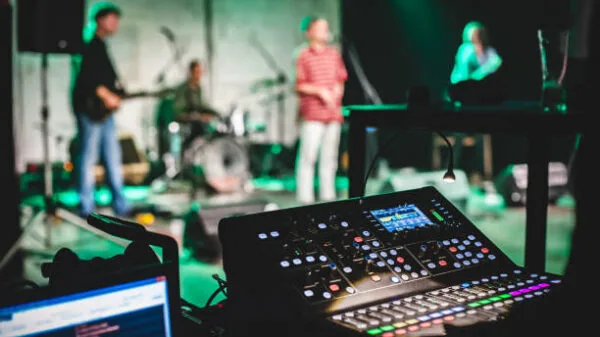
The bus itself had technical challenges. The acoustic panelling absorbed some of the high frequencies of the voice, so the fullness of the recordings felt compromised. We tried recording in hotel rooms and cottages, but that became even more difficult because every tiny sound got captured. Bangles moving, anklets shifting, even adjusting while sitting would enter the microphone. It was also freezing cold inside those cottages, so eventually we returned to the bus and kept experimenting through trial and error. I slightly opened one of the doors so the sound would not feel too tight and the high frequencies could come through better.
But the bus also had many advantages. It isolated outside sound beautifully, and the vocal booth had a window so people did not feel claustrophobic. It became a very intimate and comfortable space to record in.
The idea that “hip hop is folk” is powerful and disruptive. What did you have to unlearn about genre, hierarchy, and authenticity to arrive at that belief?
Krantinaari:
I had to unlearn hierarchy. We are taught that folk is traditional and hip hop is modern, or that one is pure while the other is commercial. But when I really listened, I realised both come from the same place: lived experience. Folk artists document their realities just like hip hop artists do. The only difference is the tools and the platforms. Genres are not separate. They are reflections of people.
Charu Hariharan:
For me, there was nothing much to unlearn because when you look at the origins of hip hop, it comes from struggle, pain, frustration, migration, and expression. I felt it was very similar to these folk songs because many of them speak about separation, hardship, loneliness, and migration. A lot of the Kumaoni songs, especially Neoli, are deeply cathartic. They speak about generational pain and longing. The challenge for us was understanding how to build a story around it and how to bring Kranti’s interpretation into the space without changing the essence of the songs. They did not rap these songs. They sang them in their own traditional forms.
When you first encountered women who were forbidden from touching instruments, was your instinct to document, intervene, or resist? How did that instinct evolve into a long term practice?
Krantinaari:
Honestly, my first instinct was shock. Then it became listening. I did not want to enter communities trying to impose change immediately. I wanted to understand why these systems existed. Over time, it became less about confrontation and more about creating alternatives. That is how the mobile studio came in. If the system does not allow access, we build our own system.
Charu Hariharan:
This question feels personal to me because I myself work in spaces women are usually discouraged from entering. I play percussion, produce music, and compose. I had a supportive family, which protected me from a lot of resistance, and I recognise that as privilege. But while travelling, I saw communities where women were still forbidden from touching percussion instruments because of cultural practices. Initially I felt frustrated and questioned it internally. But over time I realised we cannot walk into communities and aggressively fight traditions from the outside.
All we can really do is create examples. I would tell them that I am also a percussionist and that there are women around the world playing percussion instruments. Sometimes just seeing that opens conversations. I think traditions can evolve slowly while still being respected. Pushpa Devi Taiji is a powerful example for me. After her husband left her, she chose to play the hudka herself despite criticism from the community, and eventually even taught her son how to play. Women like her are already changing these narratives from within their own spaces.
How do you ensure that this does not become a one time intervention but something that continues after you leave a region?
Krantinaari:
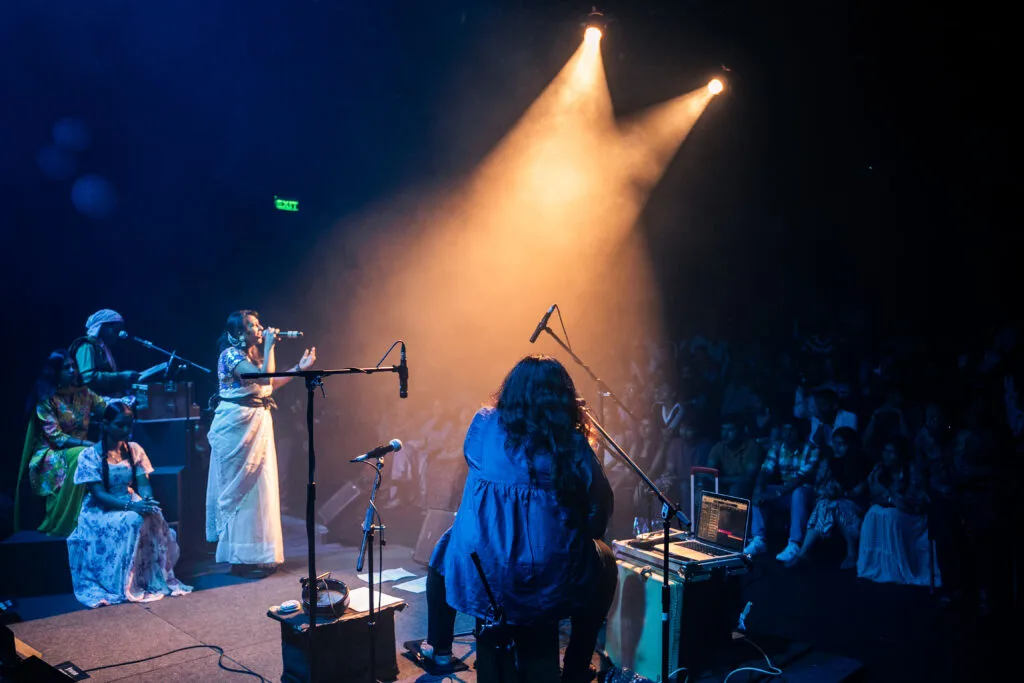
That has been important from the beginning. We do not just record and leave. We build relationships and stay connected for at least a year, sometimes longer. We try to form collectives, create performance opportunities, and now we are moving towards building local studios so the work can continue without us. The goal is to make ourselves less necessary over time.
Charu Hariharan:
For us, the first level of intervention is helping women realise that their voices matter. If they continue singing confidently even without us being present, that itself is meaningful change. The second level is financial independence. If they are able to earn through performances, they feel more confident stepping out and performing publicly because they can support themselves and their families. We also want these opportunities to grow locally, not just nationally. Real change happens when artists begin building recognition within their own regions and neighbouring communities. Initially, Gangadhi’s husband did not allow her to participate. But after seeing the response, performances, and support coming in, his perspective slowly changed. Now he encourages her to continue performing.
What is something you learned from the women you collaborated with that you did not expect?
Charu Hariharan:
Their curiosity, innocence, and joy surprised me the most. I thought the hardships in their lives might make them resistant to experimentation or change, but it was the complete opposite. Our sessions would often continue for more than twelve hours, but they were always excited to keep working. Whenever I asked if they were okay continuing, they would immediately say yes. Their childlike innocence reminded me why music exists in the first place. Even through all their hardships, their joy of singing and expressing themselves remained alive. Every time I work with them, I feel surprised all over again.
What does success for this album look like to you?
Krantinaari:
Success is not numbers. If even a few of these artists are able to continue making music, earn from it, perform, and feel a sense of ownership, that is success. If the album also changes how people listen to folk music, not as something static but as something alive, that matters deeply to me.
Charu Hariharan:
For me, if even one person feels touched by these voices, stories, and honest expressions, that itself is success. Music is not about charts or billboards. If someone finds solace, inspiration, courage, or emotional connection through these songs, then the music has already achieved its purpose.
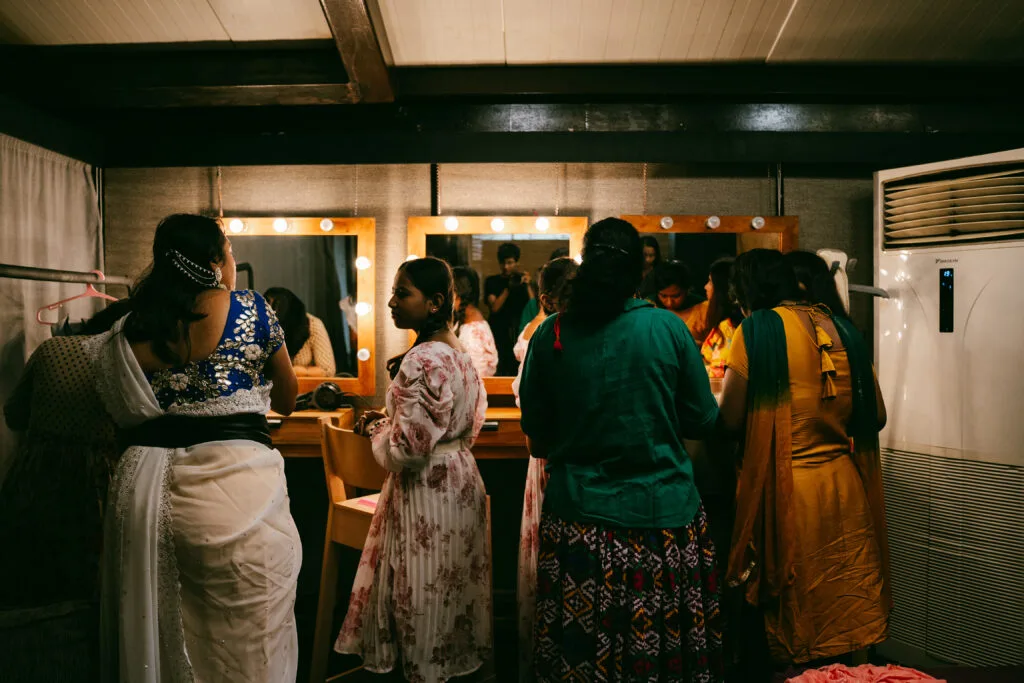
In many ways, Sound of Women is more than an album or a recording project. It is a space where voices that were once overlooked are finally being heard on their own terms. Through songs about migration, memory, labor, love, and resistance, these women are not only preserving traditions but also reshaping the future of folk music itself. Inside a moving studio built on trust and collaboration, music becomes archive, expression, and quiet revolution all at once.