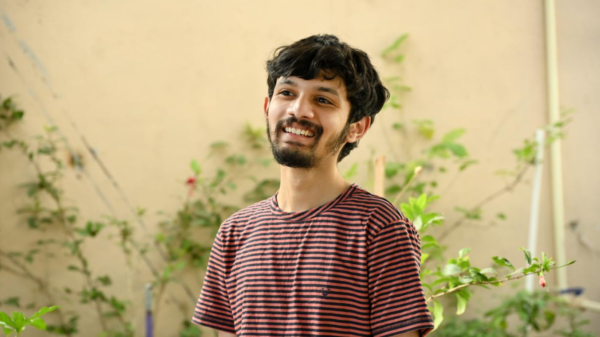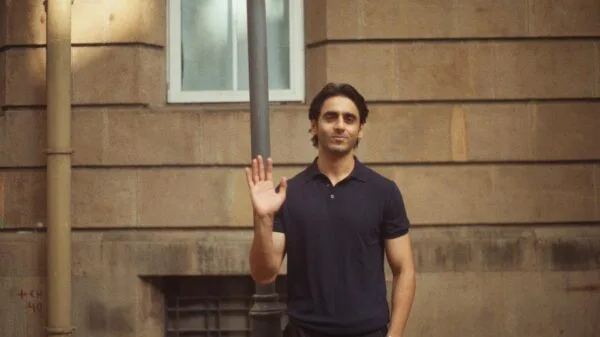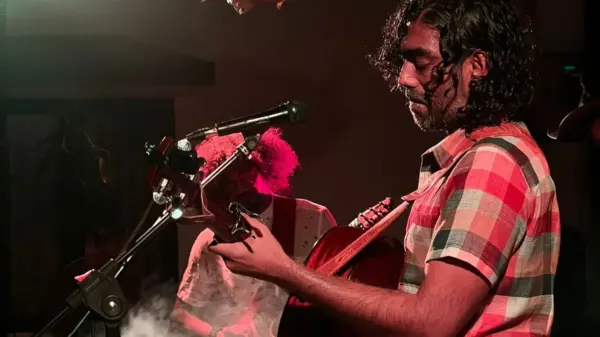




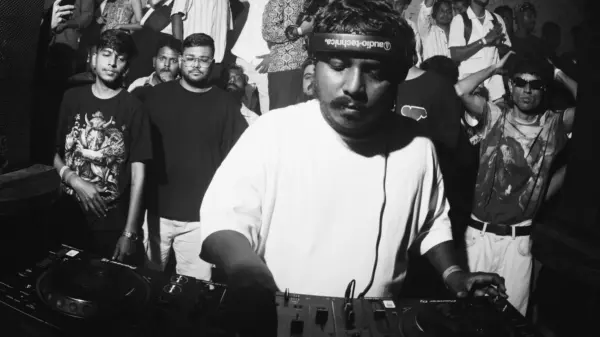











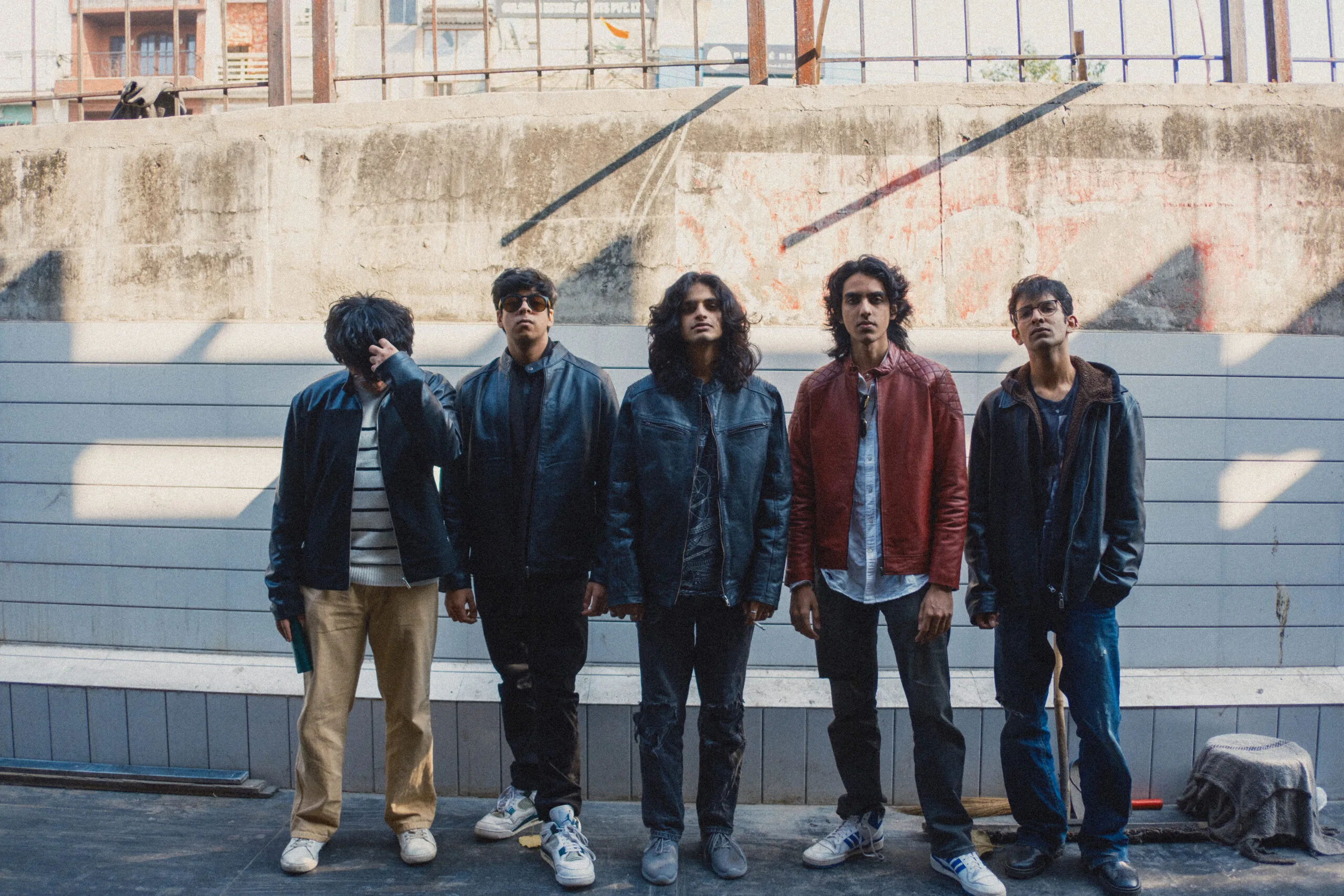

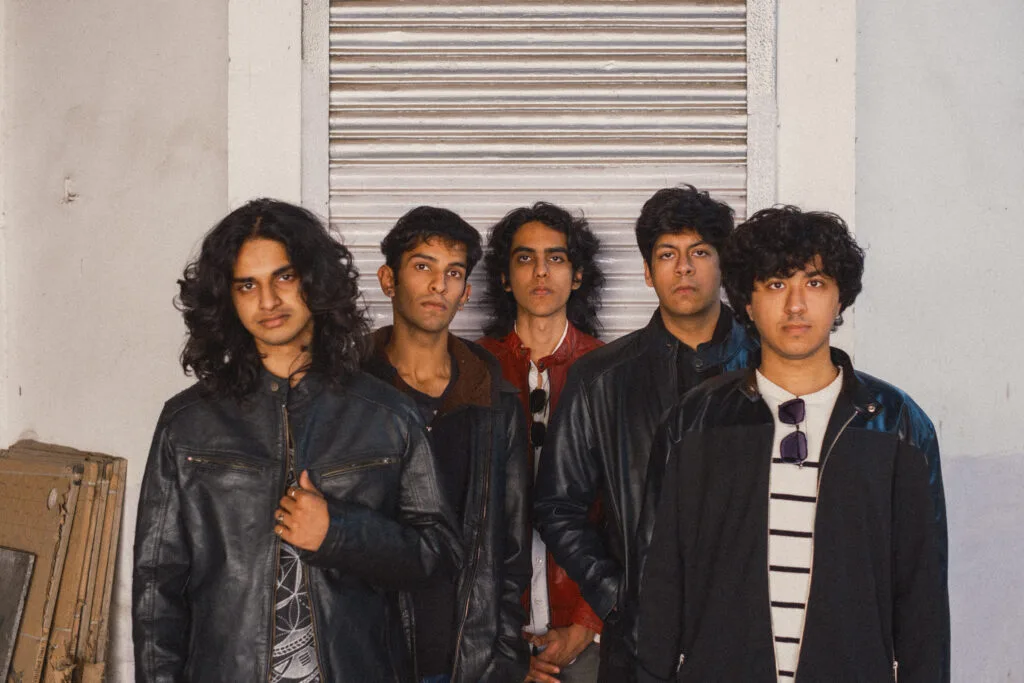
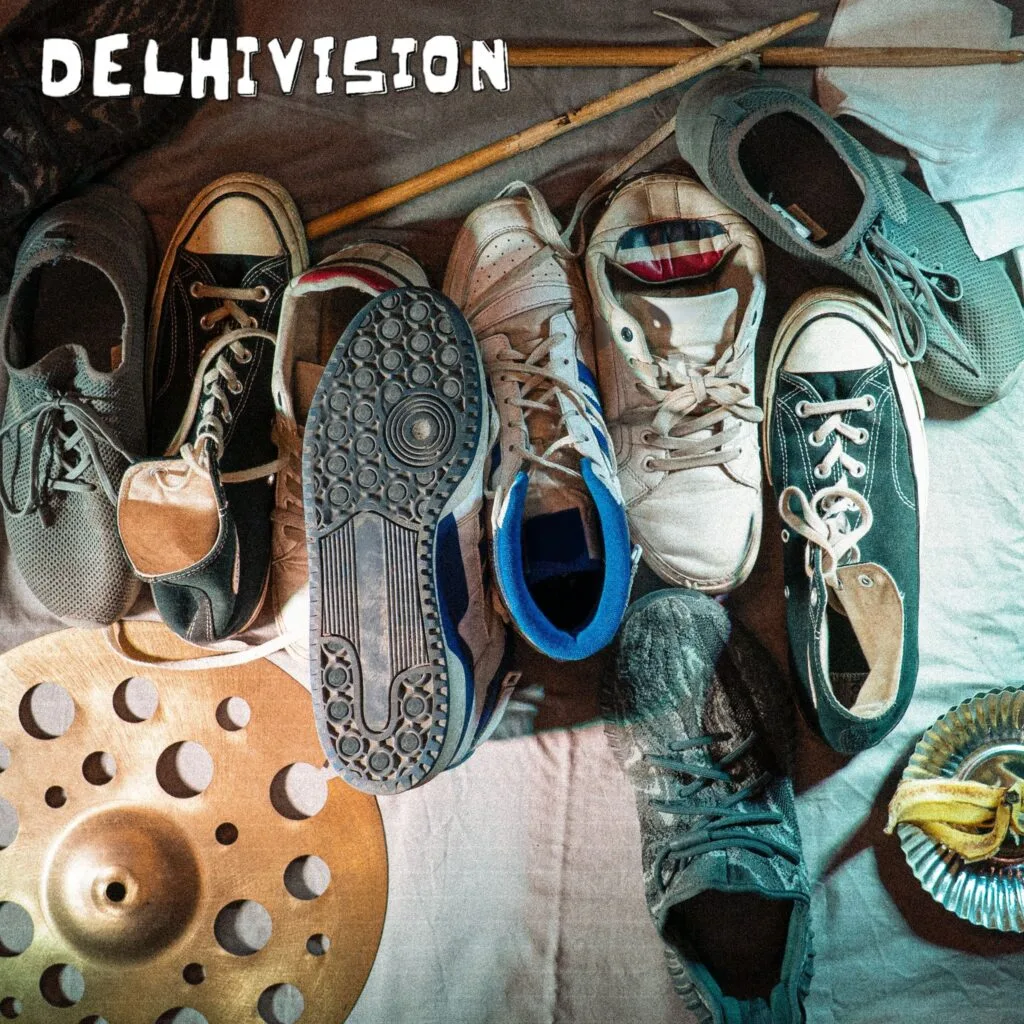
There are some records, which are blatantly, and quite charmingly young. This is not a dig at the artists behind Delhivision’s Day One, who are nothing if not refreshing in the soundscape overridden by newer artists trying to stretch the limits of the imagination of lofi electro-pop [the coattails of Lifafa are long and well-ridden]. This 33 minute, 10 song long album from the desi rock-n’-roll band — comprising Jaiditya Jha, Aditya Sarkar, Aman Suneja, Shubhang Munjal and Keshav Nair — has them attempting to get past the traps of sonic cliches, while charting the territories that come with being dangerously aware and simultaneously alienated by the times we live in.
The lyricism, for most of the album, toes a few lines. The band has its own sense of humor : a little gregarious and biting down on the flesh of its present, while also being disarmingly honest, and direct in its expression. All this, predictably, runs a risk : one could very easily sound caricatural, and even silly. Thankfully, for the most part, they manage to strike and hold onto that balance. A part of that is also owed to perhaps the “Delhi”-ness, which naturalizes the raining on of expletives [and one does get bombed by the occasional Gadhe Ke L*nd], and gets you accustomed to the linguistics of being intentionally outrageous. Chor, the third track on the album, is arguably one of the best examples of this. Near-schizophrenic in narration, where an unsurmisable intruder is moving through what appears to be Jha’s house, and gnawing at everything material and beyond, is fun to listen to – and one can feel the bounce in the arrangements and the incredulity of the situation, without actually wondering what is he talking about?
There are quite a few interesting collaborations on the album, with seasoned DHH veteran making an appearance on Nazaara, which is also meant to subvert your expectation of a rock-n-roll song with a rap feature in terms of sonics. It makes sense for Rawal to be on this record, known for his deliberate and infamous Delhi-ness, and also because the rapper has long established himself for his more toned down, laidback style – which is sharply in contrast with the usually high-octane soundbeds that Delhivision finds itself creating. The guitars are grungy, and Jha’s vocal range is at its best here, and the song has a crescendo to itself with Rawal contributing to the ascendance, rather than its sedation.
The Old Monk Waltz, a mellow, more introspective number that features Raghav Chandra’s beautiful Hindustani violin solo – reminds me of Suhail Yusuf Khan’s sarangi placements on Advaita and Culture Code Landscape’s fusion-rock tracks. The song is a re-recording of the band’s second single, and is meant to be a commentary on “the rich Delhi-boy lifestyle against the backdrop of a lush, waltz-like arrangement”. I find the track’s placement into the album interesting, as it follows the acoustic crooner Anjaani, and is lodged into the slowly built emotional core of the project. The band has grown and evolved in its cynicism, and its lyricism – and yet the earnestness on this track locates them in the changes that have shaped them into the now.
Aag is poignant in its attempt, as it tries to condense the incomprehensible feelings of living through war, and is reminiscent of Blowing in The Wind in its lyricism. Conceived during the 2025 India-Pakistan conflict, this track perhaps clarifies beyond metaphor and allusion the discontent the band feels with the violence of contemporary politics in the country. It is good work, conscientious – and while a little predictable in terms of its contents, it has something to say. It is not that rock acts have made a disappearance in music among the youth – there is just an obvious refusal to speak about things that are not love or something purely located in the realm of emotion. The fact that the band has stepped out of that comfortable bubble of expected neutrality is a step in the right direction towards making music that is not another song regurgitating what works (commercially, at least). Sarkar and Jha’s guitar solos do the song well, dislocating itself to the muted palette of sonics you would usually assign a song written with the purpose this one is — and Jha harmonizing very faintly harmonizing alongside adds to the plane of texture the project lets itself work with.
The album ends on Farewell, which is warmer in tone – singable, acoustic in parts – as the narrator implores himself to forgive and forget, and not cling on to the resentments that the record has expansively gone into. The keys and drums (Munjal and Suneja, respectively) cement into this track the quality you would see in a 2000s movie with the protagonists at the end of their bildungsroman (usually in college). The track is a good breather from the kind of plummeting it does in the tracks preceding – although it is a bit sudden in dissipating the rigor of tension it had so carefully built in the last tracks.
In conclusion, Day One has some of the best work one would see in recent desi rock-n’-roll, especially among their batch of peers. For one, they have honesty, and candor – and the skills to compete with the same. As long as they do not disarm themselves of it in favor of sheen, they are all set to doing things that would be very rewarding – for themselves, as artists, and for us, as listeners. As for the public, they shall catch on.