















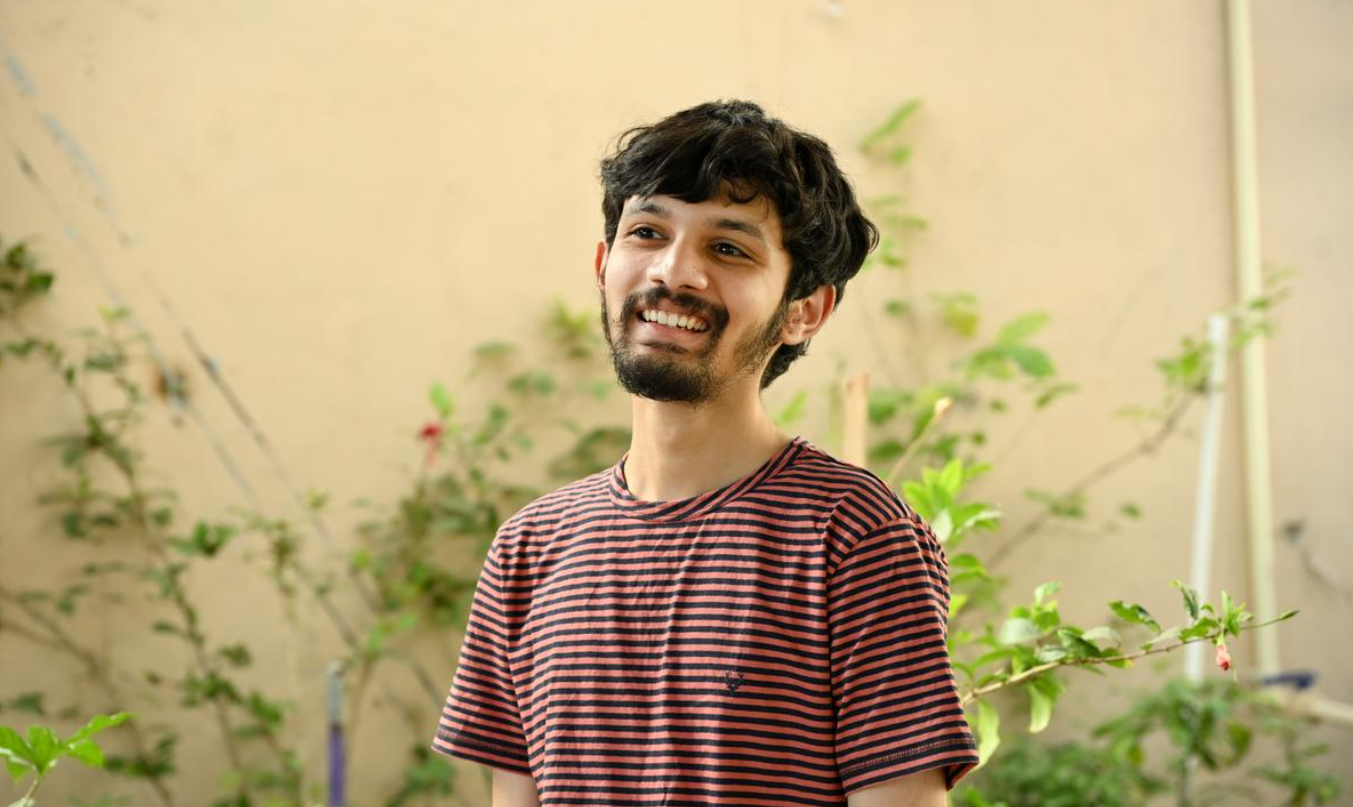

Devotion, whether religious, spiritual, romantic or material — has always resulted in output that has been textured in ways that have a pronounced difference from all that is otherwise. Sumedh K’s massively successful EP, Tulasidala is a proof of that. The EP, released in continuation of the single Tulasi, the artist’s massively resonant hit that is currently travelling through every circle of the South Asian internet — offers the listener a look into his sonic and conceptual world.
There is a sense of simplicity to the EP, in the sense that while it borrows simultaneously from very rich, contrasting traditions of electronic music and Carnatic ragas, a lot of its ethos is rooted in the prostrating of the self – dissolving it in a larger scheme of things instead of micro-managing what is known. On Instagram, the artist wrote, “The music that inspired and helped me make Tulasidala spans across time and genres. From Purandara Dasaru to Imagine Dragons and a lot of fresh influence from Low Roar. In all innocence, an ode.” The ideation, or perhaps the development of the project as an ode helps it — because it helps you locate the artist and how he wants his craft to be perceived, which is in context of everything that has come before him. This is unsurprising, since most classical musical praxis in Hindustani and Carnatic traditions does endow in its practitioners a penchant for surrender to the divine or the learned predecessor — and while Sumedh insists on marking himself as an “enthusiast”, it is not possible that he is peripheral / not privy to the language of thinking in endeavors like this one.
My personal favorite on this project, is Savadhana, where a gas masked figure sits in darkness, and a sense of post-apocalypticism grips you. The lyrics, “The entire civilisation is empty, The world sings a lullaby to it”, while the rest of the track ebbs and flows between choosing the form of a warning and lament — echoes a familiar form of storytelling, especially if you have any acquaintance with how mythologies are narrated. Perhaps the gravitation towards Purandara Dasaru becomes the most obvious at junctures like these — where the artist mostly endows himself the placement or lyricality typical to bards.
The only song where the self is not effervescent are the two tracks Maleya Taare, and Indu, as the artist plays with different scales of reverbing his own voice, distorting it ever so slightly to create conflict : of existence and perception, while also functioning in the realm of devotion and aspiring to align with the larger divine, or at least vaguely jeroic. Sumedh’s arrangements are simple, they do not take you aback — and mostly, you can sense the rhythm of a track very early on. The synths are not overpowering, the percussion lines emulate classical patterns at points — and there are points you wish the EP opened itself a little bit more, instead of being this precise, tightly stitched project where everything flows so seamlessly into one another that you wonder if its too limited? The compendium of textures used could definitely use some expansion, especially in the pockets where faith is replaced with the urge to prophesize.
However, for someone just starting out, this is a weighted piece of work with enough body to it for it to be recognized as substantial, and more importantly, promising.
Featured photo source : The Hindu