




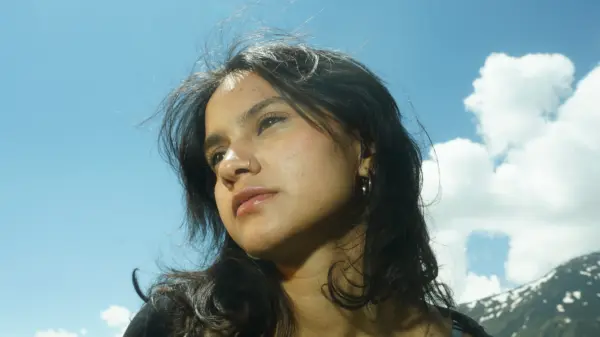

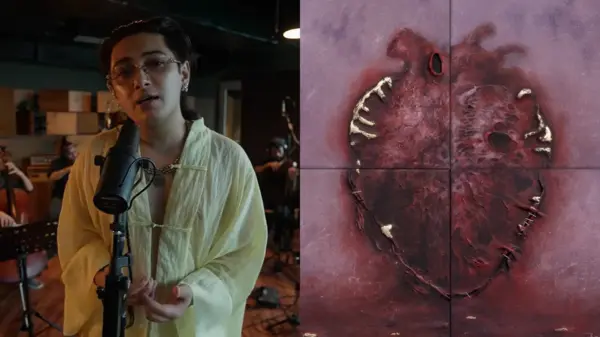









If you’ve spent any time around Kerala’s indie music scene in the last few years, you’ve probably crossed paths with Haniya Nafisa. She’s a singer, songwriter, and producer who has been experimenting with different genres, collaborating with artists on singles in the last two years since her debut. All of that has culminated in her debut album, Vaakkath, which she launched at MIJ Studios in Kochi, with her collaborators, fans, and a good chunk of the city’s indie community in the room.
It’s nine tracks, all written, composed, and performed by her. And it dips its toes into some heavy places like love, self-discovery, rage and survival.
The Name Says It All
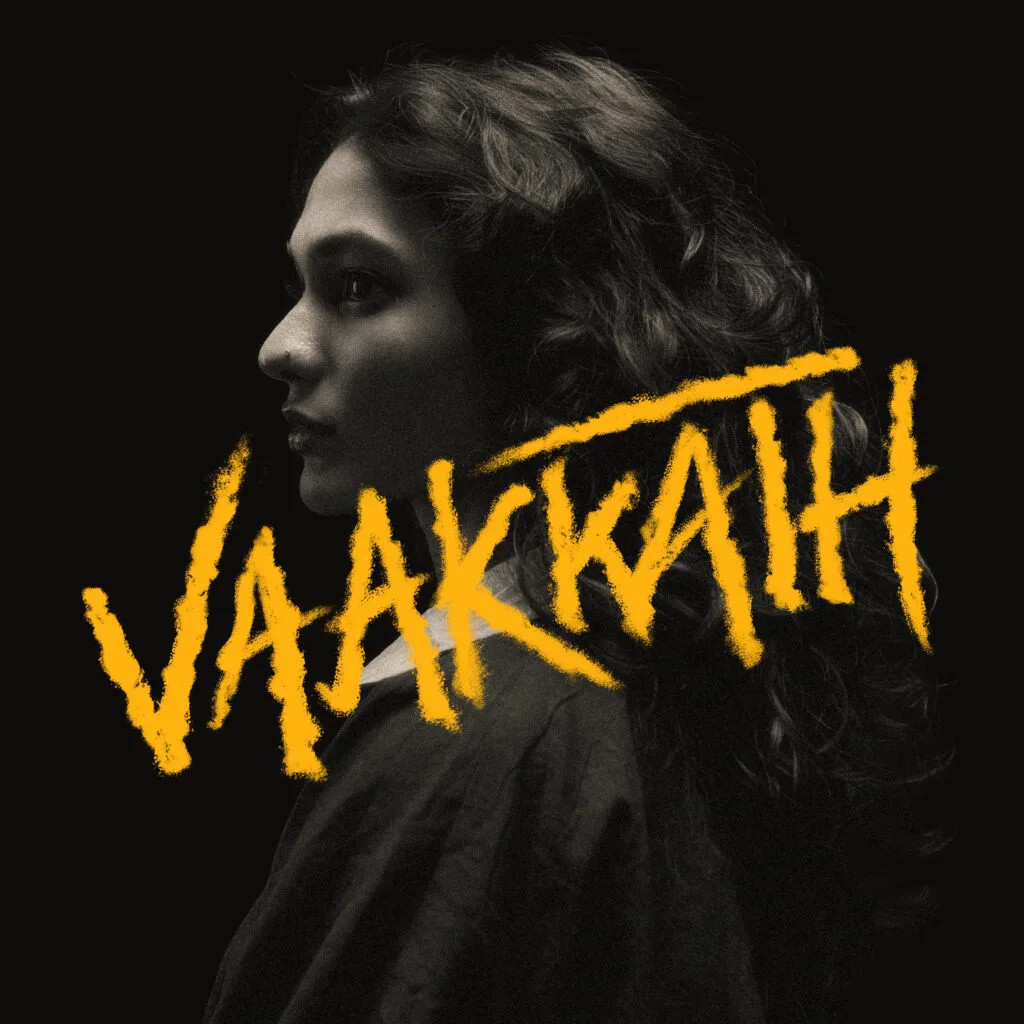
Vaakkath roughly means “on my word,” and that’s not just a nice title. “Each song speaks about something, and each song says something about what I have to say regarding whatever I’m talking about,” Haniya says.
Funny thing is, she never set out to make an album at all. “I wasn’t planning on the album from the very beginning. I was planning on different singles that I was working on simultaneously,” she tells me. “Midway through the process, I was like, okay, why not put this together.”
What tied the songs into one body of work was that every single one of them had a point to make. “There are songs that you don’t really talk much in, you just have fun with. And there are songs where you make them specifically to talk about something. Each song in this album talks about something. That was the common link.”
How It Sounds
Here’s the thing about Vaakkath: the production is good, sometimes really good, but her voice is what carries the whole album. More than the instruments, more than the beats. Everything else is there to hold the songs up while she does the talking.
The opener, Thudakkam, is only a minute and thirty-six seconds long, and there’s not a single word in it. Strings, a deep, low hum, and beats slowly merge into each other. It just sets the mood and gets out of the way. Then Nattamthiri kicks in, and this is where the album really starts for me. Her voice comes in soft and rises with this sturdy confidence, and the chorus is genuinely catchy.
Ullodumbam is a different mood altogether, hushed, close, very Billie Eilish and it has one of my favourite beat arrangements on the whole album. And then there’s Adakkam, which surprised me the most. It’s fast, upbeat, basically a dance number, but there’s something angry sitting underneath it. It sounds nothing like anything Haniya has put out before, and honestly, it works. 1/2 Dashakam is another standout for me.
She Writes Like It Costs Her Something
Because it does. Haniya starts every song from a feeling, and she refuses to water it down. “I hate to be very generic in terms of what I write about,” she says. “Even if the composition turns out to be brilliant, it’s very easy to mess that up with lyrics that aren’t specific enough.”

She thinks most artists flinch right at the moment it matters. “Artists kind of hesitate to write too deeply about something. That’s something I want to get out of my brain. Sometimes I might be sobbing while writing something, but I know that I need it on paper. I’d rather not do a song than not talk about it enough.”
There’s also a system underneath all that feeling, which I didn’t expect. “I play with the emotions, the composition, and the lyric. The ratio of these three elements in the song is very important to me,” she explains. Light, airy lyrics get a more complex composition. A production-heavy track leans harder on the words. “I wouldn’t want anything to be overpowered by the other.”
The People on It
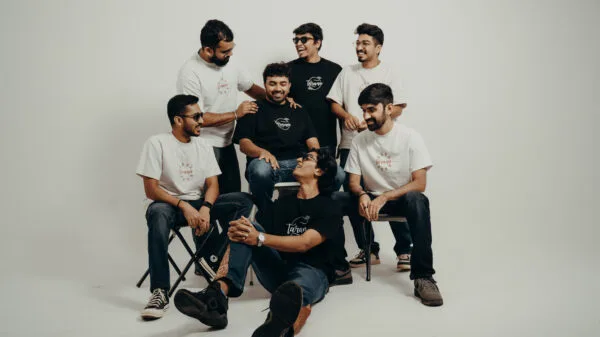
For such a personal album, there are a lot of people on it; Amani KL10, Zail, Wraith V, M.H.R, Raunaq, and Durwin Dsouza all show up across the nine tracks. And every collab has a story. Raunaq and Haniya had already worked together plenty, so “working with him was a no-brainer.” M.H.R ended up giving more than anyone planned. “He wasn’t planning on singing on the track, and he wasn’t planning on composing as well. He sent me a portion that I really liked, and he wrote on it, and eventually he sang with those lyrics.”
Koottam actually started as a production challenge she took on late last year, before Amani KL10 came into the picture. And how that happened says a lot about where she is now. “I’ve listened to their works, but I’ve never imagined their work with a female vocalist or a female independent artist,” she admits. “There’d be a point where I’d be like, wait, why? I am an artist myself. Why not collaborate with them?”
Not bad for someone who used to dread the whole idea. “I was very anxious about working with other people,” she says. “But that’s the whole point of creating independent music, being able to work with anybody who’s in the scene.”
Before and After
Haniya keeps coming back to one line: “There is a before and an after Vaakkath. Being scared of accidentally expressing too much is the enemy of many artists. Now I don’t think I’m scared of anything.”
That took some getting through. The album says things she avoided saying for years, and singing them on a stage left her feeling raw. “I felt really exposed while singing these songs,” she says. “But it felt therapeutic, like a huge weight off my chest. I’d do this all over again.” Her logic is hard to argue with: “According to my idea of creating art, what meaning would it have if it isn’t deeply personal?”
She’ll also tell you this album carries “a kind of rage that I was unable to express or communicate through my previous works” and in the same breath, that her main goal with it was to have fun. Somehow both are true, and you can definitely hear it on the album.
As for what’s next, she’s not narrowing anything down; new genres, new languages, more production, music made alone and with others. “I’m here to create, I’m here to have fun, and maybe I’m here to speak about things that are more than just fun.”
Going by Vaakkath, I believe her.