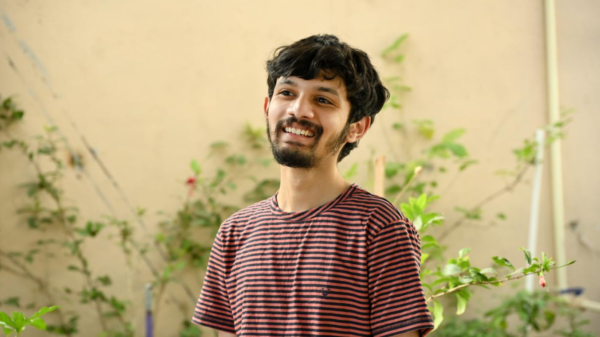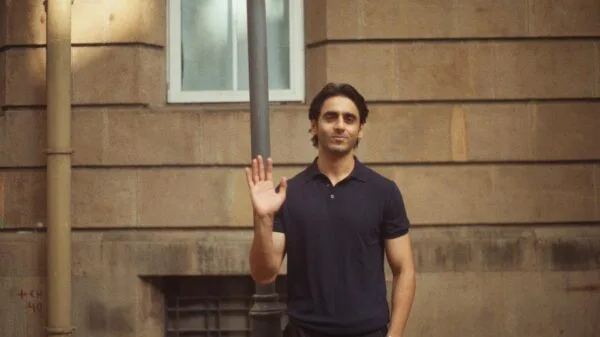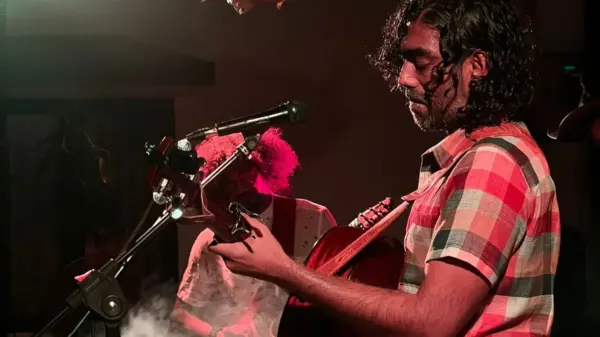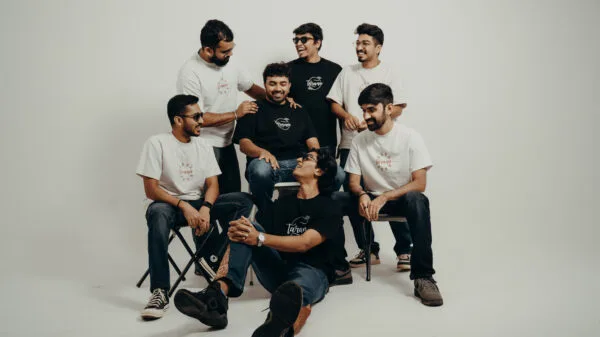


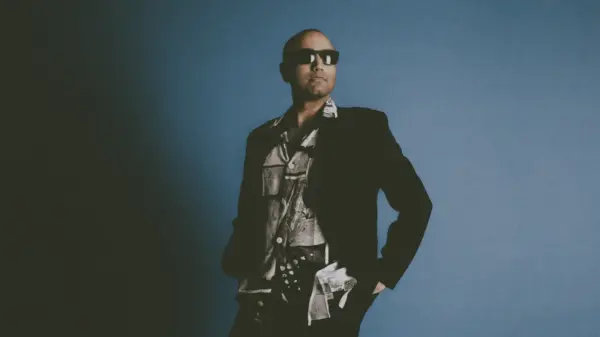
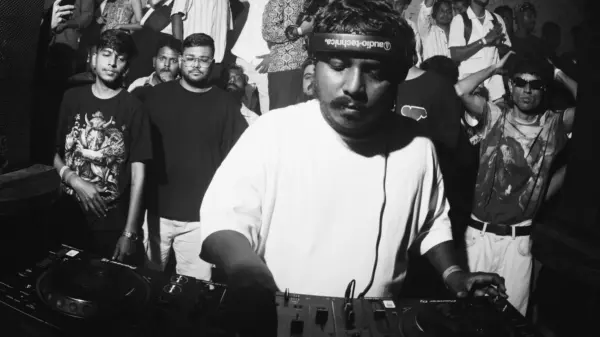
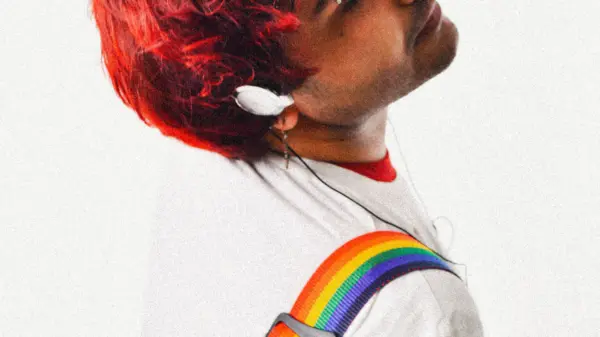




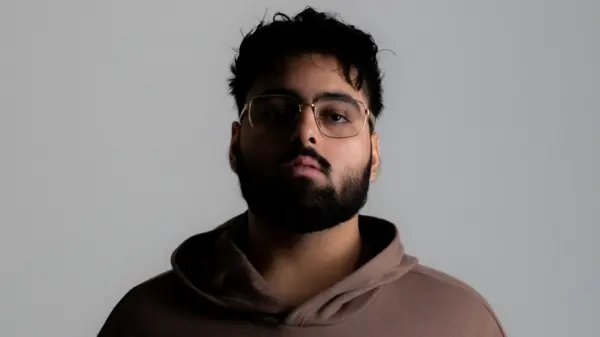
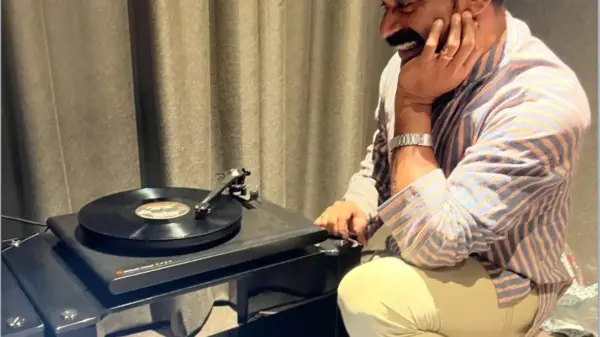

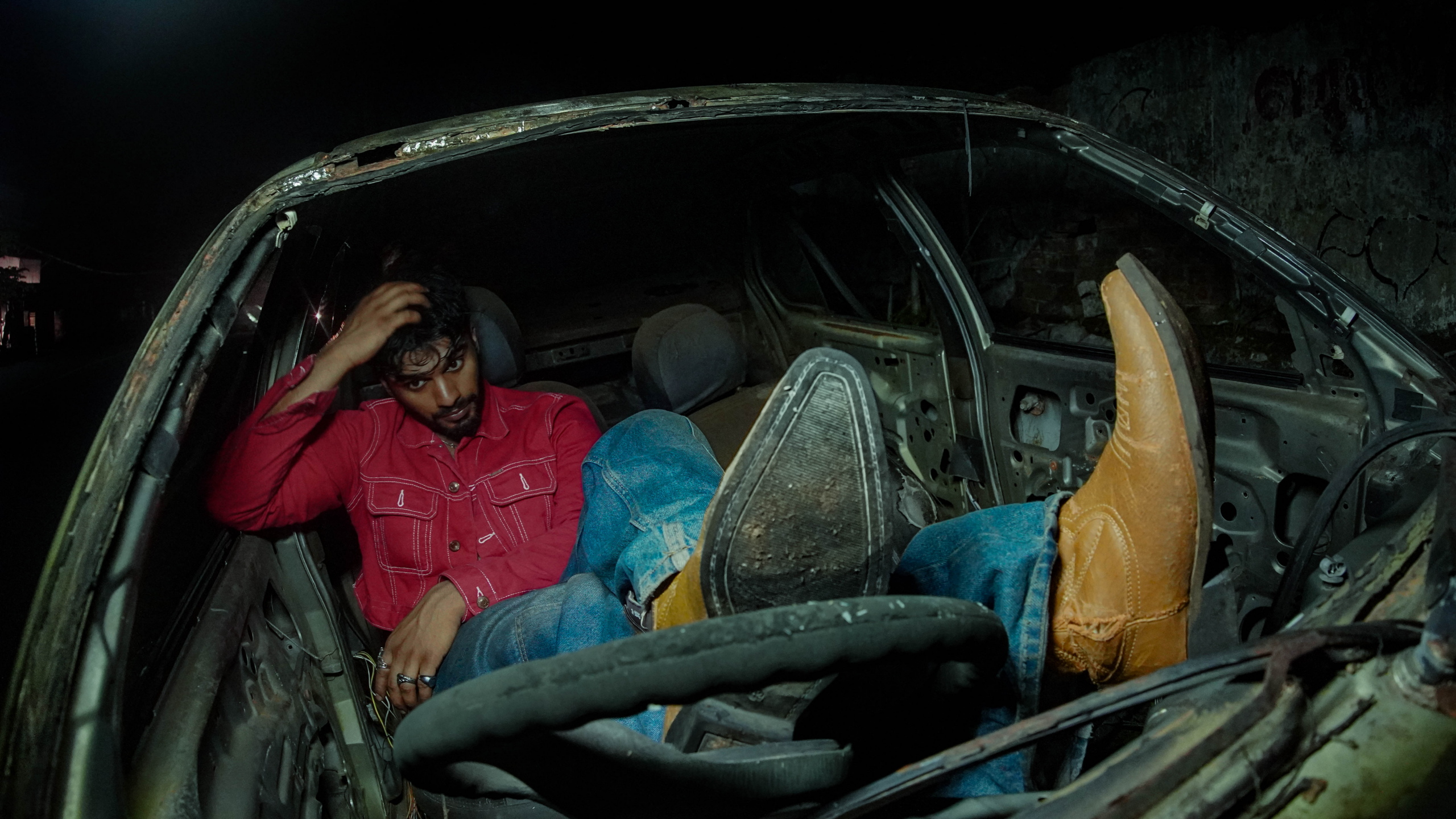

The first thing that stood out to me when I sat down to talk to Hadi was his infectious energy. I could almost see the gleam in his eyes from my laptop screen. He talks fast, doubles back on himself and laughs at his own stories. Nobody in his family played anything, but what he had was a childhood where his mother’s Mappila Paattu played on one side of the house while his father came home from work and turned up the ghazals on the other. Although he didn’t connect with any of it, the question of what would happen if you smashed it all together never left him, and the answer showed up in the eighth grade on a late night drive, when his father switched the radio from the Avicii song he’d been obsessed with to a Malayalam track. “I was like, wait, hang on. This sounds really good together, but I don’t know why it sounds really good together.” He calls himself a problem solver before anything else, and that was the problem that started everything.
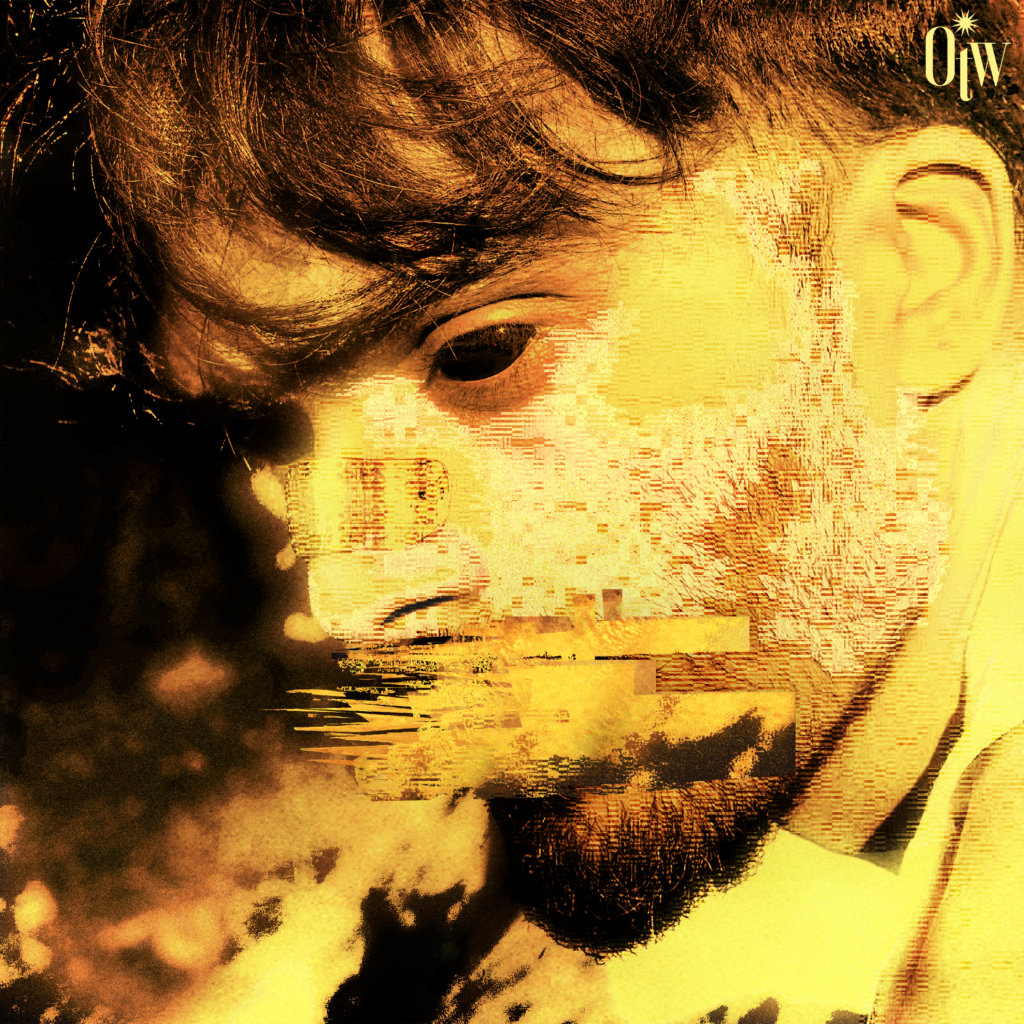
Sound & Sampling Game
If you’ve heard Hadi’s music, you know it doesn’t sound like anyone else’s in the Indian scene, and most of that comes down to where he finds his samples. “I hear sounds in public that I can actually catch a rhythm to. Be it random white noise, be it weird people chattering, I hear loops out of it.” Flume showed him that electronic music could carry real feelings, and JPEGMAFIA showed him that the weird stuff was allowed. “He was sampling the most industrial, weird, weird sounds ever, and I’m like, damn, I do resonate with that more, because I hear those kinds of sounds in my head.”
You can hear that all over this EP. BIG BOUNCA, one of the best songs on the project is built around footage of bass wars in rural Bengal, where lorries stacked with speakers compete over whose low end hits harder, and Hadi took that bass and pushed it until it broke. “It’s going nuts , but it hits. I’m just going to use this.” There’s also a YouTuber’s voice chopped into the track purely because he liked the way the guy talked, and layers of his own white noise resampled, in his words, to a point it’s unbearable. He’d been messaging DHP with beats for years and getting nowhere, and this was the one that finally got a reply within a day.
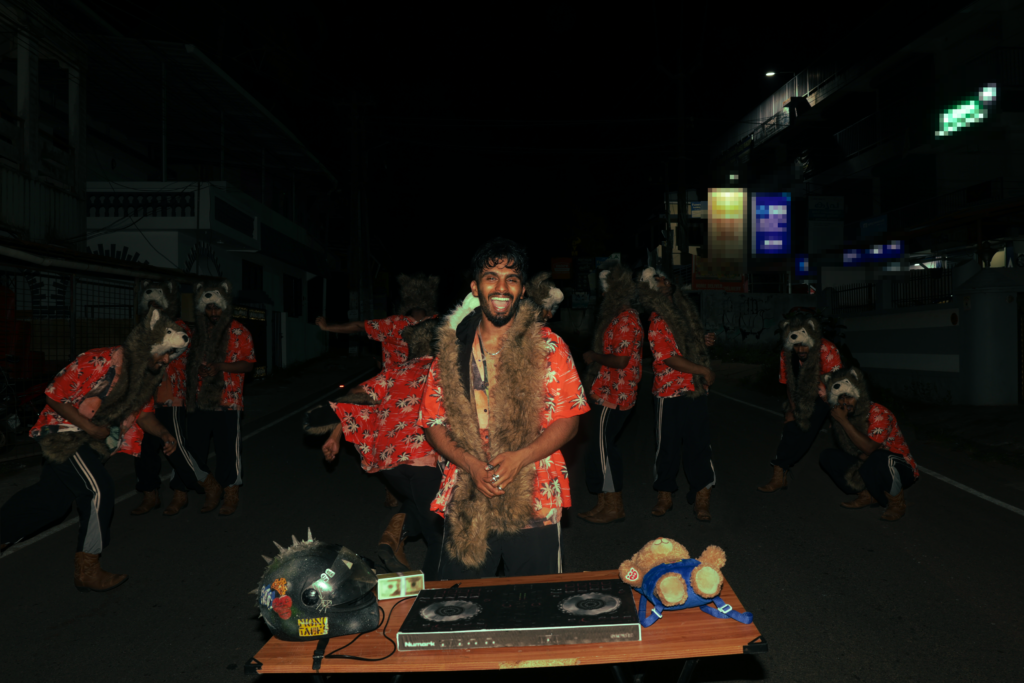
DHOOOOP opens with an Arabic drum sample pulled straight from his Abu Dhabi roots, and the track never lets Circle Tone settle into a comfortable groove, which is exactly the point, because his trigger was complacency. “He literally said the word. He’s like, everyone’s acting nonchalant, I hate the way how everyone’s acting nonchalant.” So Hadi made a song that refuses to sit still, and warned him the way he warns everyone. “Nothing stays normal here. You give me the vocals, I will f*ck it up right now.”
Picking voices like colours
That warning is standard practice for anyone who works with him. “I give them a disclaimer saying I’m gonna push you as far as I can. I don’t care how big you are. This is happening on my terms, we come into a middle ground, that’s how it is.” But there’s a logic underneath the pushing, because Hadi picks voices the way a painter picks colours, caring less about how big an artist is and more about whether they fit. “It doesn’t matter how good of a singer or a rapper you are, if it doesn’t suit the song, it doesn’t suit the song.” On 2REAL, that means Bad$cene’s deep, laid-back delivery, which reminded him of the Suicideboys records he grew up on, sitting against imyraj’s higher, airier voice, a pairing he sums up simply: “it just sounds awfully blended.”
GULDASTA is the one he lights up talking about, and for good reason. It’s the first instrumental he ever built in a room with other people, made at NOUMAD’s flat in London with Amenn Wihaan on a video call, and it opens with a Pulluvan Veena, the single-stringed instrument he grew up hearing in Malayalam films. It also somehow landed in a 7/8 time signature without him planning it. “I heard this and I was like, what did I do? I don’t know how I did it.” When it came time to shape one of the vocal lines, he refused to let the software automate it and rode a knob on his MIDI keyboard by hand instead. “I put my earphones on and I was like, I want to up it now when I feel sad.” The song closes with thirty seconds of just the loop playing out, and when I tell him it feels like breathing room before the finale, he agrees instantly. “Exactly that. I’ve given you the script, now it’s for you to think.”
Give me the first take
Then comes BAADALO SE PYAAR, the closer, and everything comes to a summit. Hadi made the instrumental on a genuinely bad night, He sent the beat to mohit, who ghosted him for two months before admitting he’d done eighty or ninety takes and nothing was landing, so they sat together and cut the verse down to a handful of lines with room to breathe. Then mohit sent back a cleaner, more professional version, and Hadi refused it on the spot. “Give me the first take.” mohit argued that his voice was sore, that he’d been sick and sad when he recorded it, and that was exactly why Hadi wanted it. “It shows sadness. These are the elements where you can’t pretend it.”
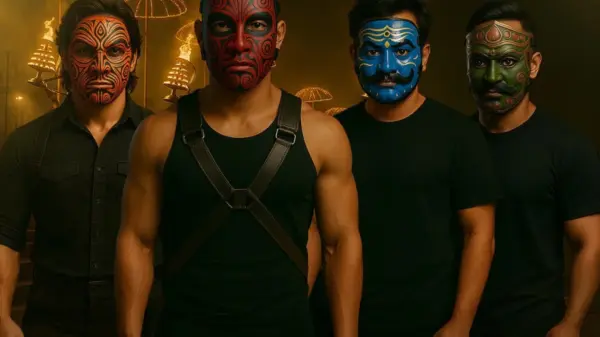
That might be the best way to understand this record. For all its chaos, the broken bass and found sounds and noise pushed past its limit, RAWBONED, is made by someone who spent years being boxed in as just a producer and decided to build his own world instead. “If you want me to be presented as someone in the background, I’m doing a 9 to 5 right now. I don’t want to do that in my art.” Credit also goes to filmmaker Sabrina, who wrote and directed the anthology series that accompanies the EP, giving each trigger a visual life of its own and making the world of RAWBONED, feel that much more complete.
He knows the record isn’t for everyone, and he’s completely at peace with that. “I know for a fact it’s not for everyone. And that’s never the intention.” Either you catch its frequency or you don’t, and both, by design, are fine.