












Recently, a video made the rounds online — of a man playing the saxophone, allegedly at a rooftop bar in Beirut, his notes rising above the tension of the ongoing conflict between Iran and Israel. It wasn’t an ordinary moment, but one that resembles non-diegetic music in a movie, a manifestation of impending dystopia and nihilistic approach of people, or perhaps a glint of rebellion. What it can deduce is for you to decide. The point is- in conflict-ridden places, where destruction is still visible, music often becomes a form of resistance breaking through barriers, challenging silence, and giving people both comfort and a powerful voice.
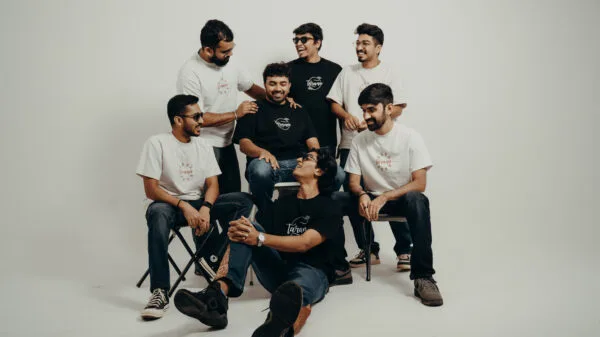
Last month, Imphal-based rock band Meewakching released their 12-track sophomore album, BILDUNGSROMAN, an offering born from the same spirit. In a state scarred by violence and unrest, their music does not just entertain but also carries within it the waft of disquiet.
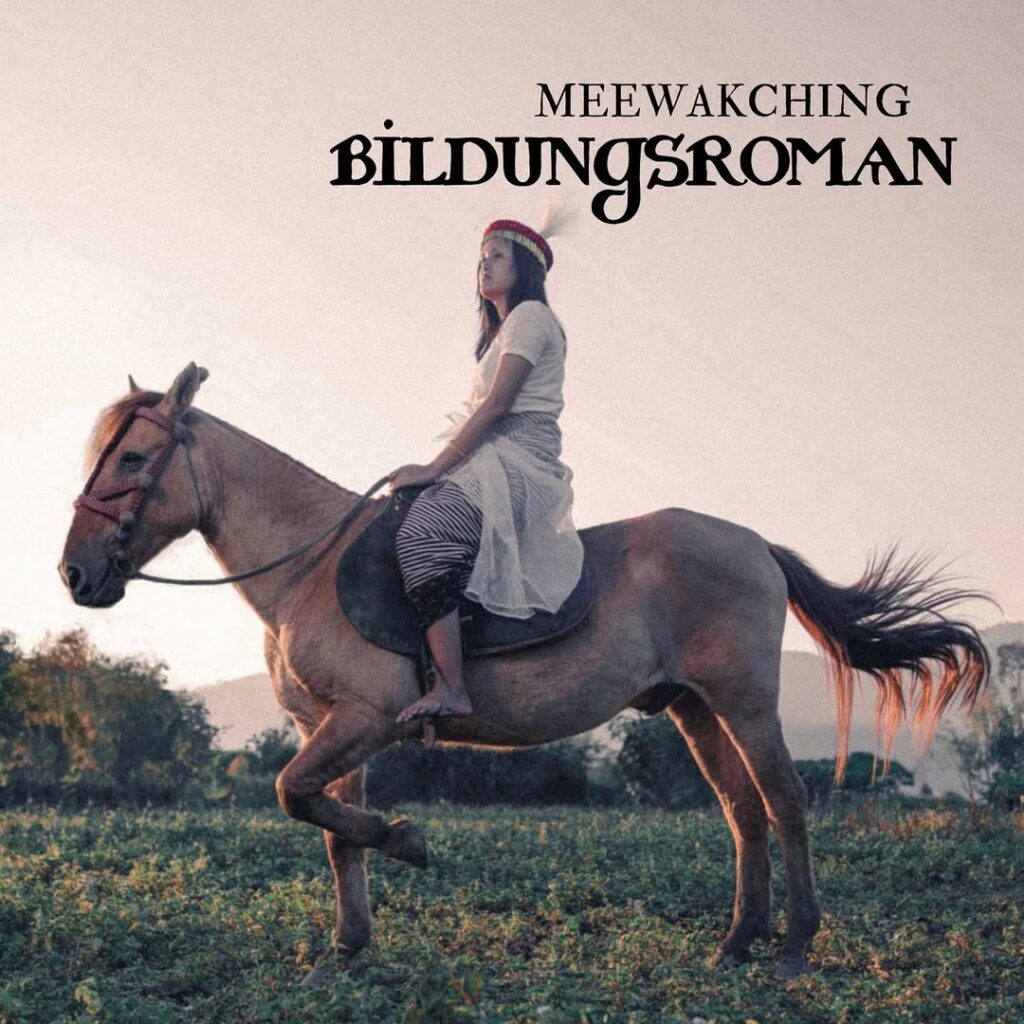
The album starts with an instrumental bearing the same name as the album with a bouncy piano riff and a spacey mellotron woven into an upbeat backbone. If I have to relate it to the title, it felt like it was pretty much in alignment with what it means, which is basically a novel that deals with the formative years of the main character; the first track felt like a reminder of one’s childhood.
From there, the album opens up into what I can infer as a musical journal filled with confessions wrapped in dreamy guitars and honest vocals. Through the songs, BILDUNGSROMAN walks the listener through the messiness of living in a place that never stops reminding you of both its chaos and its beauty, almost like a poetic contradiction.
You feel that right away in tracks like Supermarket(Everytime) and Sly. While Supermarket(Everytime) leans into gentle nostalgia with lyrics about lost innocence, Sly digs deeper into themes of betrayal and emotional weariness. Its gloomy guitar mood and the raw repetition in the lyrics give it a weight that lingers. No surprise then that Sly has already been featured in multiple playlists on Apple Music, a proof that its quiet ache is being heard far and wide.
The band doesn’t stick to one mood, though. For instance, in Anarcho Love Song, they experiment with mixing spoken word and shoegaze textures. And what you get is a protest song that also sounds like a love letter. It’s political and personal at the same time, and somehow, it works.
Then there’s Crabwalking in Imphal, where the band invites a new vibe. It’s groovy with rap verses and place names from the city woven into the lyrics. There’s even a sample of Satyajit Ray talking about East and West, which I believe is a smart nod to local divides within a global context and it feels like a love song to Imphal, the dwelling of Meewakching.
With that said, it’s worth mentioning that the band doesn’t shy away from darker emotions too. For instance, I Can’t Trust, sung in both Manipuri and English, is a slow burn that feels more like a quiet realisation than a full-out cry. It speaks to how exhausting it can be to live in constant doubt of people, of systems, of the future — something I’m sure all of us can relate to. Khallude takes that energy inward with a sonic journey assisted by synths and bass which feels like a late-night introspection that’s both soft and powerful.
As the album moves towards its final moments, it hits hard again. The song Pendeda Ema, Nanggidamak Amuktang Sibase is rooted in Manipuri history, opening with spoken words taken from a play about Thangal General’s last moments before martyrdom. The music swells with dramatic power along with emotional restraint, and it’s one of those songs that successfully wins your attention. Right after that, Eibu Phaganu, Eibu Kaapkanu storms in. It’s urgent, loud, and unapologetically angry and the lyrics call out everything from fake patriotism to inequality, with a punk energy that’s as sharp as it is cathartic.
Even the short interlude, Smoko, has its role to play. It’s calm and almost loopy, like the kind of tune you’d hear in an elevator, giving you a minute to pause and take it all in before the final stretch.
Having said that, BILDUNGSROMAN isn’t without its moments of dissonance. If the album was meant to reflect the idea behind its name with a coming-of-age journey or a linear emotional arc, that intention seems to drift somewhere along the way. The shifts in mood from one track to the next, while interesting on their own, can feel a bit jarring when taken as a whole. It keeps the listener on their toes, yes, but it also leaves you wondering whether the narrative is intentionally fragmented or simply uneven.
Still, maybe that in itself is a statement. Growing up, especially in a place like Manipur, is rarely a smooth, straight line. Maybe this emotional zigzag is the point and truth be told, life in turmoil isn’t neatly packaged, and neither is this album.
In the end, it can be reasoned that in BILDUNGSROMAN, Meewakching isn’t just experimenting with music but also documenting a reality that’s hard to live in and harder to explain to all. This album questions, mourns, and fights back. It slips between English and Manipuri, between post-punk anger and dreamlike calm, and somehow finds its own kind of ephemeral balance akin to any human mind navigating today’s world, where every moment feels like a civil war within. And that’s what I believe can establish a connection with every listener. Because in places where silence is heavy and hope feels fragile, music like this doesn’t just fill space but says something when many cannot.