




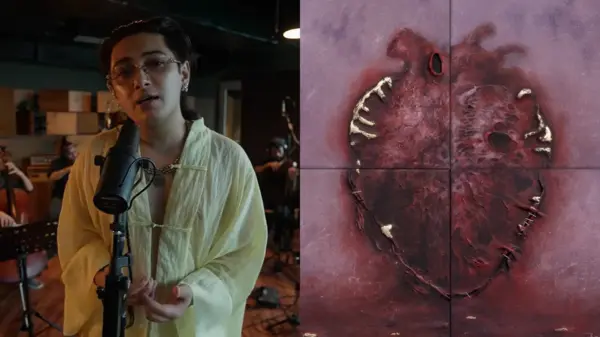












Written, produced and mixed entirely by 20-year-old artist trick/switch over the course of a year and a half, the nine-track album sits somewhere between avant-pop, indie electronica and singer-songwriter storytelling. The artist describes it as “internet music”, a label shaped as much by their upbringing as it is by the album’s approach to sampling. WWE matches, video games, everyday sounds and references to artists like Slowdive and Boards of Canada all find a place within Noizebaby’s world. According to the artist, much of it was made in isolation, during a period when living in headphones felt easier than living outside them.
When speaking about the album, trick/switch described it as “trying to get comfortable in an objectively uncomfortable environment.” That idea follows the album from beginning to end.

As an opener, Hyde introduces several ideas that continue to surface throughout Noizebaby. The song seems caught between self-reproach and the desire to move forward. Lines like “Kid you don’t no one to blame but you” sit alongside “Breaking out I’ll take it”, creating a tension between resignation and resilience. Even the repeated “It’s too late for me now” never feels entirely convincing. By the time “It’s getting cold out here” arrives, it reads less like a statement and more like a silent admission.
Music Videos moves with the unpredictability of thought itself. Malls, therapists, mirrors and disappearing into videos blur together in a way that feels distinctly modern. The line “Won’t see me grow, it’s a video” is particularly striking, hinting at the strange experience of witnessing life through screens while struggling to participate in it. There is a restlessness to the track that mirrors the fragmented way many of us process memory, identity and change.
The title track, “Noizebaby” brings together some of the album’s sharpest observations and most vulnerable moments. Beneath its abrasive textures are questions that feel deeply human: “Cause then who’s gonna dance with me?” and “Cause then who’s gonna look at me?” There is loneliness here, but also a desire for closeness. The song doesn’t seem interested in hiding its contradictions, allowing tenderness and self-doubt to exist side by side.
Named after one of professional wrestling’s most enduring figures, Mick Foley 97.5 FM surrounds itself with imagery of radios, mornings and routines. The repeated act of turning the radio on begins to feel significant over time. Whether it represents nostalgia, distraction or companionship is left open to interpretation. Like much of Noizebaby, the song allows listeners to bring their own experiences into its quieter spaces.
One of the album’s most intimate moments, A Short Dream Before I Close My Eyes lingers in uncertainty. The lyric “Am I worth the space in your troubled head?” feels especially poignant, not because it searches for grand declarations of love, but because it speaks to a fear of becoming a burden to the people we care about. The song sits comfortably within emotional ambiguity, never rushing towards reassurance.
There is a striking contrast at the centre of Girl Everybody Loves You. Some of the album’s darker lyrical imagery exists alongside the repeated promise, “I’ll be your mirror.” The refrain introduces a gentleness that reshapes the way the rest of the song is heard. It becomes an offer of understanding and presence within a track that otherwise grapples with exhaustion and isolation.
Then comes Ananya’s, a spoken-word interlude built around a recording of Ananya Panwar. When speaking about the track, trick/switch shared, “Ananya ka dimaag mujhe kahin daalna tha cause they’ve had a big part to play in this.” He went on to explain that Ananya often says “really beautiful things” and that one day, he simply started recording; they didn’t stop, so that’s how Ananya’s was born. The track carries that same sense of ease. After several songs shaped by internal monologues and restless thoughts, Ananya’s introduces another person’s voice into the album’s world. There is an everyday intimacy to it that feels familiar. It recalls the comfort of having a friend nearby while going about ordinary tasks, listening to them drift from one thought to another simply because you enjoy hearing the way they see the world. The track becomes one of Noizebaby’s warmest moments, gently reminding listeners that companionship can exist in the smallest interactions.
Bye Shreyaan feels unresolved in a way that suits the album’s larger themes. The song moves through panic, bitterness and affection without trying to separate them neatly. The repeated references to “the kid” invite multiple readings, particularly within the context of an album that repeatedly returns to ideas of growing up and carrying earlier versions of ourselves into adulthood. There is grief here, but also acceptance that not everything can be fixed.
As a closing track, Chandeliers as a Means of Killing Oneself revisits many of the album’s recurring ideas through some of its most vivid imagery. The chandelier itself becomes difficult to define. At different moments, it could be read as another person, a memory, addiction or something closer to the self. The repeated question, “Why you so damn high?” takes on new meanings as the song unfolds. By the time “It’s getting cold out here” appears once again, it carries the emotional residue of everything that came before it. The song offers no easy resolution, which feels fitting for an album so invested in uncertainty.
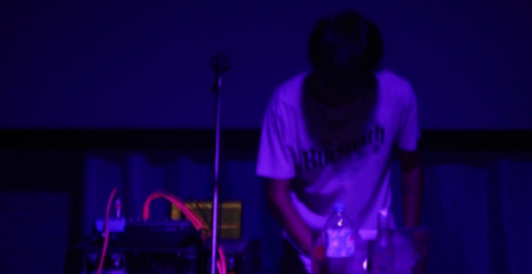
Beyond the album itself, trick/switch has also released music videos filmed and edited with the help of Ananya Panwar, alongside a live apartment performance featuring six tracks from Noizebaby. The performance offers another perspective on the record. Watching these songs performed in the same kind of space they were created in highlights the deeply DIY spirit at the heart of the project.
What makes Noizebaby compelling is not the need to decode every reference or pin down every meaning. It lies in the album’s willingness to sit with discomfort while still reaching for connection. Across thirty minutes, trick/switch builds a world filled with noise, humour, sadness and unexpected moments of warmth.
Noizebaby may have been made in isolation, but it rarely feels lonely. Instead, it sounds like someone trying to make sense of growing up while inviting listeners to do the same.