












For the last few years, I have scoured the depths of Indian independent music looking for traces of ideology. It should not be a big ask for the scene, a conglomeration of labels, artists, middlemen and venues all teetering at the edge of meaning — in opposition to the big machine of Bollywood, to have a standpoint, a belief system, even if in dilution. Instead, in the post-truth of the pretend-neoliberal state that it parrots to keep its conscience clean in inactivity, all I have found has been – predictably – vacuousness. The last slew of political records had made their appearance in event of the CAA-NRC protests, with a gradual disappearance of the same into the deep end of neutrality once the sticks of power grew into sharper weaponry. Some hope resurfaced every once in a while, when the state’s victimized made music out of their lived experience — but dissent, in general, had stopped being in the air — with the profitability of centrism not escaping the lines of vision of those in the business.

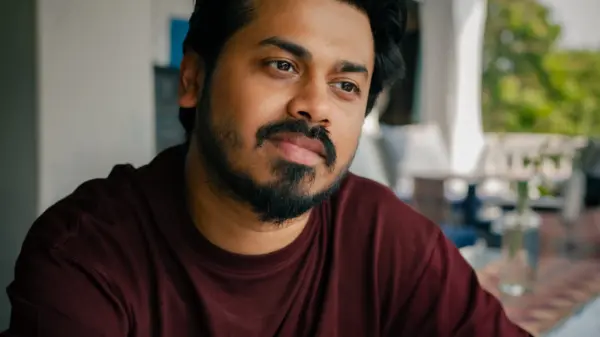
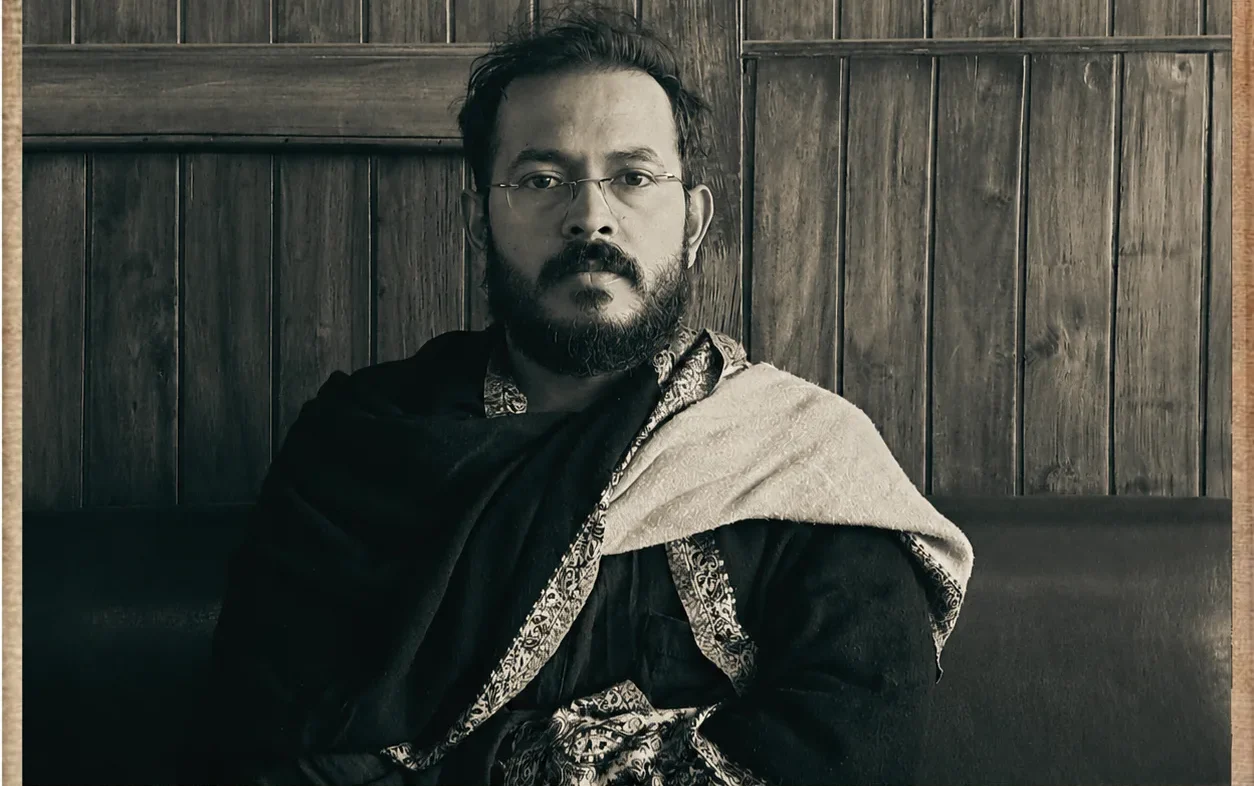
All of this is to say, perhaps, thank god for Deepak Peace. Hamlet Zinda Hai arrives at a juncture in the stratosphere of Indian politics when there again, is a wave of rage, and the timing is interesting — but it should be noted that the artist is not a momentary ideologue. Two tracks in and the listener surmises that there is a sustained core of thought. This is a lyric-forward record, Deepak places the weight of his words on simple yet potent arrangements, usually a piano, a sitar or the strumming of an acoustic guitar. It helps, because the singer-songwriter wants you to listen, and not have himself subsumed by the weight of accompaniment.
A look at the tracklist helps you identify exactly where the artist places himself in the political compass – there is Falestine, Qaidi No. 626714 – an obvious homage to Umar Khalid and the plight of the politically incarcerated, and Maa Ko Jail Ke Khat, standing out in plain sight. The nod to Hamlet, and the continued usage of his iconography is interesting — because of the interspersing of the Shakespearean with the rise of the right-wing in India, and secondly, because the last time Hamlet was thought about in a context that was Indian was perhaps Haider, which offered a more humanitarian and nuanced understanding of Kashmir’s politics than any of Bollywood’s offerings ever since.

Falestine, one of my personal favorites, uses the “From the river to the sea” slogans and creates an intertwined history of land rights movements — connecting Palestinian activism to that of Bastar and Somalia, and it is encouraging to hear “humaari zameen” in a song that is not relentlessly patriotic, and echoes years of people’s resistance against imperialism and its bull-horned charging at attempted occupation. The song also features an excerpt of an incredible sitar solo by Varun Nimbolkar, which creates a good break from the constant usage of the acoustic guitar — which while pairing well with the lyrics, sometimes grows the risk of being a tad too repetitive.
There are points in the album where Deepak Peace is sardonic, happy, hopeful, and sometimes even pleading to the consciences of those continuously comfortable in a state of doing and saying nothing – for example, in Qaidi No. 626714. The folk-style guitar places the track into the global tradition of dissent music flowing through Latin America to Europe and now, to India. I am also particularly partial to Aapka Gussa Bhi, where the artist is at his most laidback, where he is not white-knuckling his own rage. “A love song about trying to comfort and win back a loved one”, this track urges to “Let it go” or “Jaane do”.
The titular Hamlet Zinda Hai has a wonderful piano intro by Juilee Sakhare, adding to the dramatic gravitas of its core. The artist sings at his lower register, and it is supposed to be the most impactful track on the album – with Deepak’s crescendo-ing vocals, a 7 minute length, and the obvious statement on the persistence of hope through the fear of rising right-wing rhetoric in the country. For the most part, it is — and the artistry on this record is unquestionable when it comes to songwriting. However — in my opinion, the artist’s best moments are when he releases the tension, letting the rhythm come across in ebbs and flows. Tamasha, more tongue-in-cheek, unclenched, is a song about “the absurdities of life- political, personal, historical, and cultural. Inspired by Ghalib’s famous couplet, ‘Hota hai shab-o-roz tamasha mere aage.’” The artist embodies the spirit of an all-seeing, all-humoring poet finding the whimsy in the turning of every cog of life – no matter how deadening to all – and this is not new, you have heard this in Indian music time and time again, but it works – perhaps because Deepak Peace knows what he is doing, and because he really commits. For one, he is not pretending – which relinquishes his music from the risk of sounding engineered.
The album ends with Sab Aajao, a collective call to action for the working class to build a “new (smart) city”. There is a brief historiographic exercise that the artist engages in – where he narrates the regular course of action in the industrial, oligarchical state. While he is at his most sarcastic on this number, I am left with feeling hope – perhaps because Deepak Peace does not engage in the art of subtlety. He calls a spade a spade and even ventures to strike a couple of blows with it, unapologetically.
I have always, consistently, believed that most hope can be found with the expression of discontent. Radical optimism, always, finds its roots in the expression of dissent that is not an archaeological sojourn – one should not have to go through the hoops of decoding a hint of support that could possibly be anti-fascist. Deepak Peace’s work here is a source of relief. He does away with all ruses of being perceived progressive in favor of being openly dissident. One can only hope that Hamlet Zinda Hai does not get reduced to an artifact the listener comes back to, wondering at the insistence of the presence of a spine. One can only hope that people take this music and let it sprout something in their atrium walls – something that lets us rage against the dying of the light.