




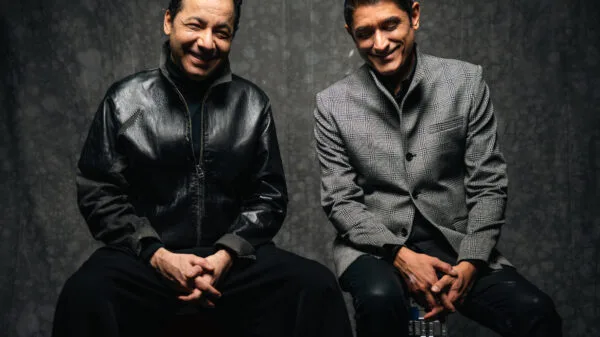













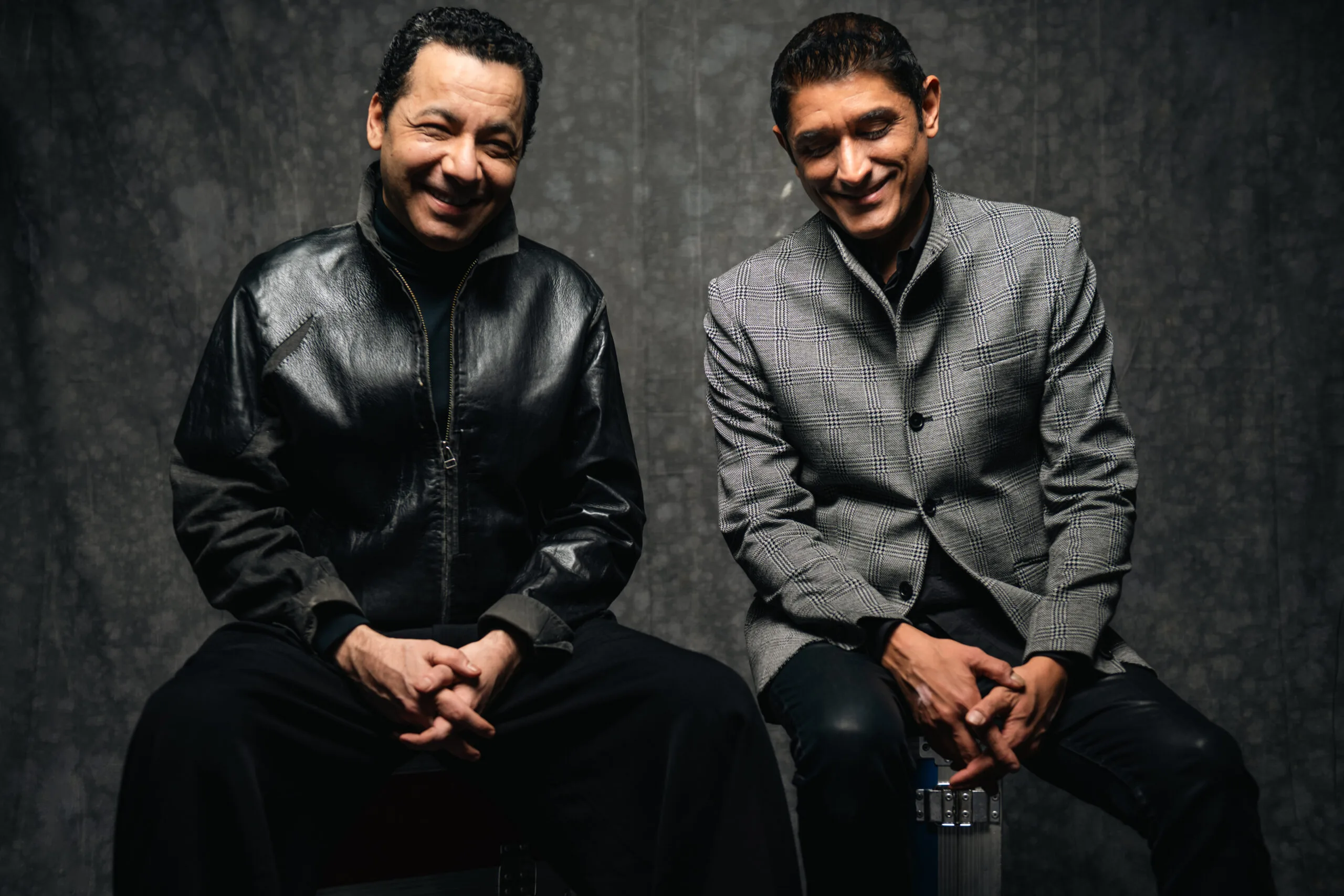

Midival Punditz are no strangers to the indie music scene with a healthy chunk of their experiments growing to define the larger music landscape – even Bollywood. Through the 2000s the duo dictated the trajectory of electronic music in India, as a balancing weight to traditional Indian Classical and Folk. The outfit continues to carry forward that story into their newest album ‘Love and Machines’. Though far more polished than their initial offerings, the Delhi based outfit’s essence, can still be felt in this latest addition to their catalog. Midival Punditz has always been known to carve out interesting bridges between traditional and modern sonic worlds. Their debut eponymous album could almost be termed as a break out album for the risk and vision, the body of work holds. More obvious now, the duo started out with relatively formless experiments that simply viewed India’s sonic landscape through the lens of electronic music and cutting edge production. In other words they traced out the possibility of electronic music being a legitimate Indian style rather than a gimmick making guest appearances on the Indian Palette.
‘Love and Machines’ is a natural progression of their discoveries, in that the form of the music is a lot more defined – following standard songwriting structures. This isn’t necessarily a bad thing and I will go on to say that it’s almost natural to want to explore the bounds of this traditional structure through styles that are largely considered effervescent or ephemeral. The album also relies on the duo’s trusted taste in sounds that have been well established through all their previous work and refuses to give into the fast paced trendy catchiness most songs fall prey to today. They’ve intentionally maintained a gentle pace that can be appreciated by listeners of all ages. Being a sucker for modern electronic dirt I was initially turned off by the slowness of the album but gradually grew to realise that it’s actually a good thing. The mild aftertaste of the album leaves you with room to breathe instead of a bout of overstimulation. It’s important to realise that Midival Punditz isn’t going for the rampant auditory debauchery that much of our age has grown accustomed to hearing. They’re steadfast in their vision whether you like it or not.

Structure, isn’t necessarily missing from their previous work. In fact we really begin seeing some defined architecture as far back as their 2009 album ‘Hello, Hello’ and even in ‘Light’. However there definitely seems to be heavier intention behind the sectional changes of ‘Love and Machines’ as compared to the previous albums where the sections changed due to the weight of the songwriting, naturally rolling over in to the next. This can be inferred from the average track lengths in the aforementioned albums, with each section being indulgent and taking its time to bring in the next. In comparison ‘Love and Machines’ is more compressed, but not hurried. Songs in this album place a heavier emphasis on the the vocals, outlining themselves snuggly around them. There are however smaller parts every now and then that call back to the more fleeting forms of their earlier stuff. Songs like ‘Jogi’ & ‘Rangeeli’ is where this is most apparent. While the vocals largely drive the track forward there are sections where the balance is upturned. ‘Panihara’ & ‘Koyalia’ are more reliant on the danceability and the vocals definitely play a more ambient role. Still, the way the vocal parts have been written, are so much more defined and largely, the songs are tethered to the space they occupy. Malini Awasthi’s voice really lends itself to the open atmospheric feel of ‘Koyalia’ & ‘Jogi’. Similar to Hansika Pareek on ‘Panihara’. Sukanya Chattopadhyay on the other hand invokes a warmer tone that feels more anchored and aligns more naturally with groove.
Another great quality about this album is the approachability of the songs. Both albums preceding this, explored more unconventional musical ideas and slightly obscure production choices. Overall it did make both ‘Hello Hello’ and ‘Light’ relatively difficult listens. Even in the duo’s first two albums, the songs felt like a collection of brushstrokes but here they feel more like completed and carefully composed paintings. The track ‘Pukaar’ is a perfect example of this because of the highly experimental treatment of Subrat Sharma’s voice and yet the song relies on it as not just a central motif but as driving the composition towards completion. The experiment is no longer shrouded in mystery but is used as a medium to communicate familiarity. This allows for far more obtuse tracks like ‘Novum’ & ‘Encrypted’ to be contemplated and consumed despite their non-lyrical nature. While the vocalists such as Papon, Hansika Pareek and Malini Awasthi have been long standing and essential aspects of the Midival Punditz universe, the synths and the production on this record have also undergone a bit of change since their last LP.
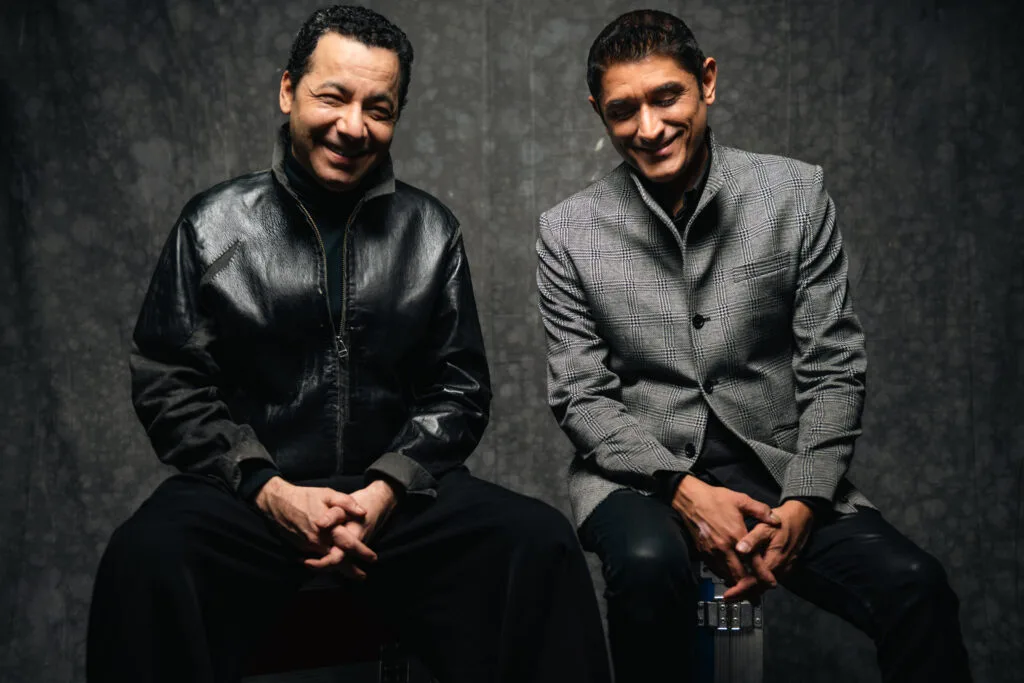
Sonically, ‘Love and Machines’ takes after a lot of the experimentation of their first two albums. The duo while making Indian Classical and Folk the crown jewel of the record, hasn’t shied away from the electronic bit. The production on the album is crisp and in terms of style explores a wide variety of electronic sub genres as solid foundations. The opening track ‘Dafatan’ featuring Shruti Pathak is an example of their iconic minimalism and melodic production being adorned by the vocal contribution. In fact, the use of electronic sounds has been purely need based in this LP. There isn’t any composition that seeks to contrast simply because they can. The simplicity of the tracks. ‘Na Jaaney Kyun’ & ‘Sakhi’ featuring Papon and Shubha Mudgal respectively, showcase the simplicity of the vocalists delivery and structure, resting on the laurels of electronic sounds that don’t overpower or thwart them. But, that doesn’t mean the album doesn’t have it’s fair share of high energy compositions. ‘Pukaar’, ‘Encrypted’ and ‘Kajariya’ really take advantage of electronic music as a flexible medium and warp the contributions of the Indian vocalists in o the duos signature sonic universe.
As someone who is always on the lookout for music that is unorthodox, I must say I enjoyed this album. The contribution of legends like Shubha Mudgal, Papon, Malini Awasthi & Hansika Pareek among others are integral to the duo’s sonic personality and they really DO make the album what it is. The relatively calm pace of ‘Love and Machines’ is another aspect I have deep respect for. However considering the span of the duo’s career and the sheer number of releases they have under their belt, I would be lying if I said I wasn’t hoping for something more ground breaking. While I adore all the songs over here and don’t have any gripes musically or production wise, I missed some of that carefree energy that their debut album exudes. I would’ve loved to hear their take on atonality, an undeniable aspect of electronic music today. The existence of tracks like ‘Encrypted’ and ‘Novum’ are also evidence that there was a possibility of including more obtuse compositions. I for one would’ve been a lot more interested to listen to them. However, that also poses the question, if everyone’s doing atonal music then who’s there to hold the fort for melodic stuff?
‘Love and Machines’ is a solid album especially for new listeners. The ease of the album is a great segue into the more obtuse pieces of their catalog Every contribution in this body is meaningful even if it was flipped or warped. There is a devoted energy that surrounds this album and at the end of the day it isn’t about what anybody else thinks. Its about Midival Punditz, love & machines.
Listen to ‘Love and Machines’ on Spotify & Apple Music.