















British-born and New York-raised, Karsh Kale is a defining figure in global electronic fusion who has spent the last 25 years acting as a musical bridge between worlds. He scored the massive Bollywood hit Gully Boy and composed the soundtrack for Karthik Calling Karthik. Microsoft even used his tracks as sample music in Windows Vista.
He has collaborated with icons like Sting, U2, Norah Jones, and Herbie Hancock. It is impossible to box his music into a single category. In his songs, you’ll hear the rigorous precision of Indian classical music, the grit of rock, the depth of jazz, and the limitless textures of electronica.
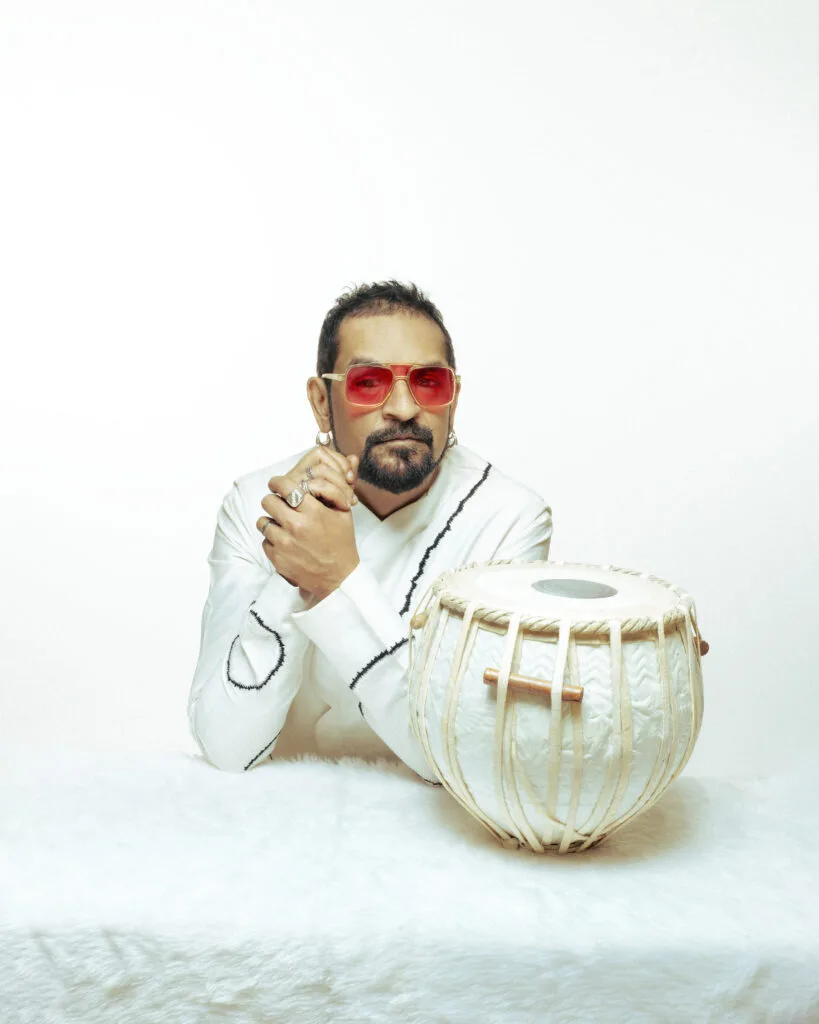
After a ten-year wait, the Asian Massive pioneer returns with a new solo project titled Dust. To find fresh inspiration and reconnect with his childlike creativity, Karsh created 28 artworks and used them as visual prompts to compose the music. He translated those paintings into piano melodies before building out his signature electronic soundscapes.
The resulting album chronicles his storied life. Expect a truly genre bending music experience alongside his own vocal performances and a profound tribute to Ustad Zakir Hussain. Without further ado, let us explore this expansive musical world of Karsh Kale.
The album opens with the glaring soundscape of “Night Turns”. Subtle distorted tabla textures set against electric guitar-laden grooves deliver a power-packed beginning. Featuring John Shannon, Ankur Tewari, Ajay Prasanna, and Benny Dayal, the track is loosely inspired by the 90s cult vampire film The Lost Boys. It uses ambient rock and electronics to evoke a sense of nostalgia while keeping the production completely modern.
“Stranger Than Darkness” begins with a soaring vocal run before stark electronics take over. The layered bansuri and meticulous tabla rhythms keep the beats light. It carries a spiritual disco vibe, anchored by Pavithra Chari’s rich vocals and the subconscious hook, “We’ve assumed control.”
“The Maze” has a vocal-led indie vibe, featuring Max ZT on hammered dulcimer alongside Ajay Prasanna and Neel Adhikari. The lyrics are deeply poetic with some soothing flute layers. You will be blown away by how such a complex arrangement can sound so incredibly light and apt.
The title track, “Dust,” leans into a shimmering pop aesthetic with melodic pianos and Purbayan Chatterjee’s mesmerizing sitar. The lyrics draw you inward before the vibe shifts around the two-minute mark, introducing tabla and driving electronic beats. It is a brilliant display of playing traditional acoustics on modern production. The sitar weaves smoothly into an ephemeral, feel-good atmosphere that fuses indie pop, classical, and subtle Bollywood undertones.
Easily the most anticipated track, “Tabla Beat Scientist” pays tribute to Karsh’s guru, the legendary Ustad Zakir Hussain. Opening with a symphonic sweep courtesy of the Budapest Symphonic Orchestra, it transitions seamlessly into complex tabla beats and electronica. Featuring Salim Merchant and Purbayan Chatterjee, the track blends a massive variety of instrumentation into a cohesive, heavenly vibe.
“The Nest” serves as the interlude. It begins with a beautiful morning melody on bansuri along with the sounds of chirping birds. It is a brief but highly effective sonic palate cleanser that in a way alleviates the mind.
Opening with soothing piano melodies, “In An Hour” features Neel Adhikari and Sabir Khan riding a steady, groovy beat. Within the first minute, Karsh manipulates a spectrum of sounds to shift the atmosphere into something magical and slightly jazzy. The lyrics explore transformation, mirrored by the track’s cyclical ups and downs. It incorporates multiple production styles while remaining fully consistent with the overall theme.
“Guidance” leans heavily into a lo-fi aesthetic with santoor tones, guitar leads, and simple electronic beats to create a deep sense of relief. Featuring Max ZT, Alam Khan, Salim Merchant, and Damini Bhatla, the ensemble delivers a soothing listening experience that eventually fades out on a slightly serious note, acting as a teaser for the final act.
“Time Stretcher” is a funky, upbeat, tabla-driven track that easily crosses into pop territory. It highlights exactly how well Karsh executes experimental fusion. Two distinct musical worlds come together here, yet there is never a moment that feels forced or out of place. It is a wildly fun groove that you can lose yourself in.
Returning to the calming resonance of the bansuri, “Lift Me Up” expresses a profound sense of isolation and also a call for help. The production incorporates everyday sounds and the electronics feel incredibly organic. As we reach the climax, the track becomes deeply immersive, ending on a powerful moment of rising above oneself and finding clarity.
The final track, “Heroes,” delivers an immersive techno vibe featuring the multimedia electronic artist Komorebi. It is a striking closer that pulls you into a mood that is simultaneously introspective and bursting with life. Hearing the bansuri played against heavy electronic beats is a distinct sonic signature that only a producer like Karsh Kale could pull off with such authenticity.