










The last male mating call of the extinct bird Kauaʻi ʻōʻō was recorded in 1987. The album begins here…
You can hear the pauses in the call, pauses that were meant to be filled by a partner. It was meant to be a duet. He kept calling, waiting for a response that never came. The last female had already disappeared in the early 1980s.
Kauaʻi ʻōʻō begins with the same sample used in the first song and here is where the story seeps in as if almost in a novel – a troupe from beginning followed up to become the focal point – this call of Kauaʻi ʻōʻō’ is the adjoint – the climax – the reality – the loss – the spiritual center of the LP.
Na Gul Na Gulistan is almost a memoir with a spiritual echo. There’s loss but there’s redemption as well. Life is meaningless. Yet there is hope.
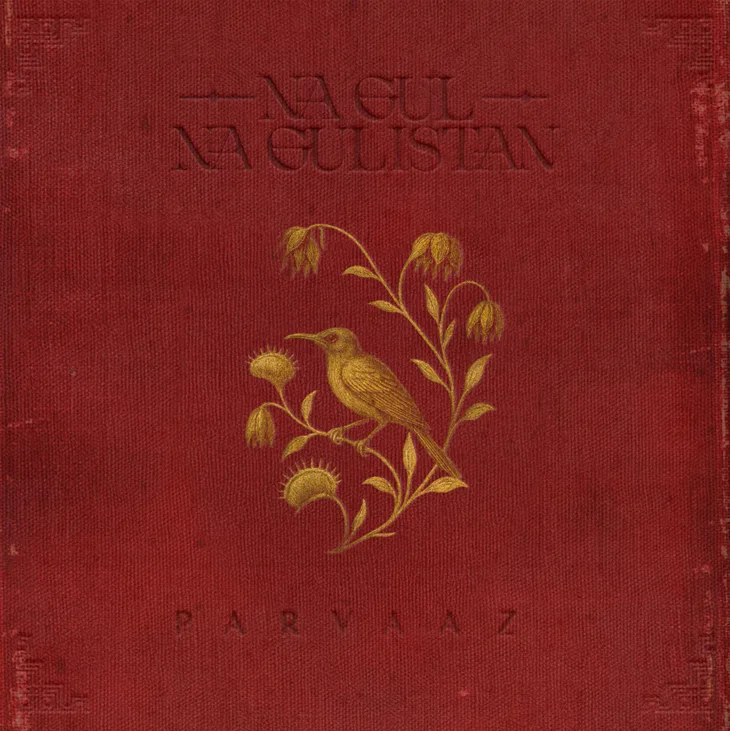
There’s an ambiguity at play which only adds spark to the story. Each song is so full of intention that the album needs to be heard top to bottom or not at all.
Shohrat ki laash peh
Khud ki talaash kyun
There is almost a spiritual crisis at play on the lyrics. A weeping over an existential haunting but a hope still over what may eventually come to be.
Amid fame’s carcass
I keep seeking purpose
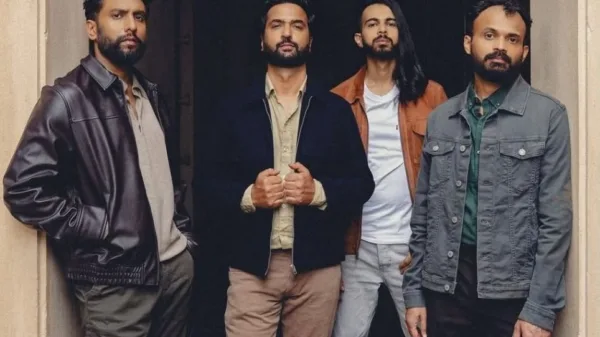
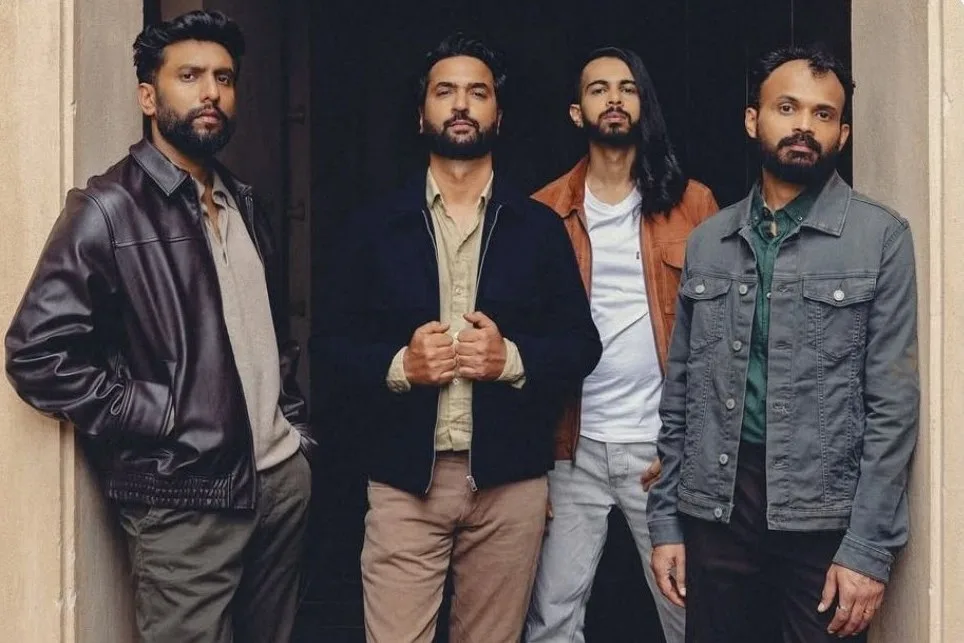
There is a beauty to sad songs. ‘We only make serious music. We aren’t serious people at all.’ All the bandmembers laugh as Khalid breaks a little character. The musicians turn out to be such simple yet strong characters.
The lyrics stretch to the humanity of being, and the call of that Kauaʻi ʻōʻō is a metaphor – a multilayered metaphor that peels off and becomes something different on each listen – a lover, a past, a party, a former partner, anything.
The transition from Zor-o-Zar to Khwabgah is smooth and seamless. The songs mix perfectly as if wrapping each other in an embrace.
The whole album is but the call of that last of a progeny – towards someone gone already. After the album ends the call of the Kauaʻi ʻōʻō’ can still be heard…
Why 5 years? Why was the wait so long?
Once the pandemic hit, our previous guitar player, Mir Kashif left and so when we came back we recorded Na Gul, Na Gulistan and it had had been mastered and everything. We were supposed to release it as a single, but due to some reasons we couldn’t put it out, which became a blessing in disguise. We had a meeting and decided that we should go back to what we do best and to release an album.
All of this process was happening when we were touring as well. We were playing gigs here and there and coming back and recording these tracks. We weren’t in a hurry. We wanted to be satisfied first with ourselves, with what we do, and then put it out.
What themes bind the album together?
The theme for the album is just where the world is going at the moment to be honest. If we look at the title track, Na Gul Na Gulistan, it is about a person who has lost hope, lost trust within himself and around what is happening in the world. There is also a tinge of hope, which is quite divine. It is very fragile, very fleeting, which is often lost. I feel like, in terms of writing, this is the most vulnerable and reflective writing that we have done.
How has the sound changed over time?
Some songs were previously made, not structurally or arrangement-wise, but the ideas were there. Na Gul was there. We didn’t want it to sound similar to the previous albums. We wanted to do something new. We also wanted to be rooted to the sound that is a signature ‘Parvaaz sound’. Bringing a lot of synths and keys is what we hear on this album. That was a heavy influence.
We want to explore with different sorts of music. Perhaps in the next album, we’ll experiment with something else. It excites us.
The core sort of stays because that is what we do. Of course there will be similarities of what we used to do. There are some new elements which keep coming in, we keep doing whatever comes in to our mind.
Why were there no Kashmiri songs on this?
There wasn’t any specific reason for that. It just didn’t come. When I start singing in Kashmiri for a particular tune, it comes automatically and organically. These times with tunes that they composed, it didn’t feel like they needed me to sing in Kashmiri. That wasn’t intentional, that we didn’t want to put any Kashmiri track in it. It just happened.
What are your inspirations? What kind of music did you grow up listening?
Well, in terms of sonic inspiration, everyone has their own musical taste. I think the biggest influence has been Floyd.
Back in the days, when Kashif was part of the band, we would sit and listen to the albums all throughout and that has been a good influence on us. That kind of bonds the whole band, you know? We do love the music. But at the same time, if you actually listen to the album, there are a lot of other influences as well, there is a Radiohead influence, there is a lot more. The prominent thing that really stands out for the people, is Floyd. I think we’ll take it as a compliment.
One way of thinking about it is language, which it is fused with. If it was in English, we’d be called wannabes, attempting to replicate that, right? We’d suck at it. Fusing the language, the thought, those lyrics which are poetry and bringing Kashmiri and Urdu to that style. We’re essentially doing fusion. We know what works for us, and what we like
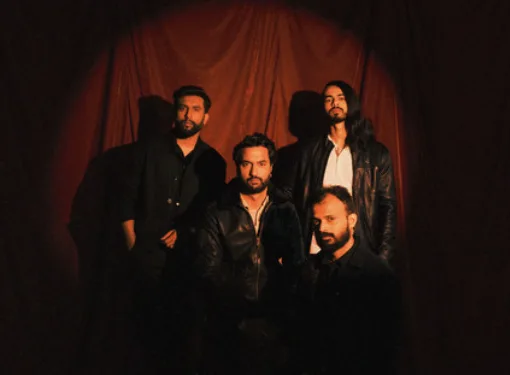
Lyrically, I hear politics, I hear existentialism. Are you guys influenced by the political situations of the country? What allows you to delve in this darkness that is explored in the sound?
We are all aware of what’s happening in the world. Writing about love songs — there are many people doing that at the moment. We want to talk about certain things which we are close to and we feel are deeply connected to us.
Politically, I mean I think we all do watch the news and we all know what is happening, not just in Kashmir, but all over the world.
One has to be aware of what is happening in and around. You cannot be ignorant. If you are ignorant or say things like politics does not matter, if you are doing that, then you are a silent supporter.
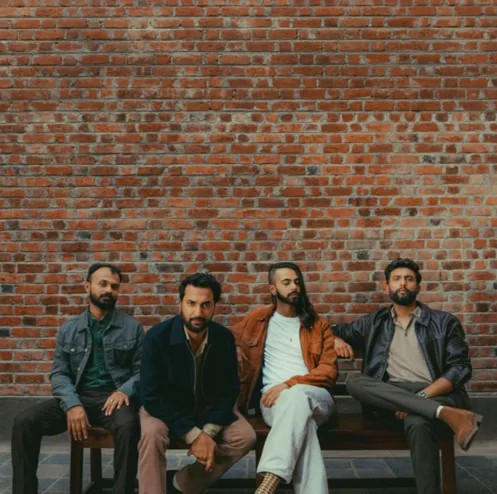
Is it hard being a serious band?
The attention span of people is really low at the moment. Nobody wants to listen to longer songs. There are so many artists who come up with better or easier melodies which can be very catchy. If you ask me, it is a bit difficult to pierce the chaos that is the algorithm.
There will be people who want to give more time to understanding our music, and we will always cater to them.
What happens on Instagram nowadays, is that if there is a special hook in your song, you put that out, and if that works, people make reels and then your song is a hit.
We don’t look at music like that. Some songs have a hook, some songs don’t have a hook at all, it’s not verse-chorus-chorus sort of writing.
So many times, I know of the songs through reels, but I’ve no idea who the artist is or how the song starts or ends. I only know the chorus, and this is kind of really sad.
Not just us, there are other people who are making great music in this country, they’re making amazing music, but they don’t have the audience for it. We have to make a certain sort of music, otherwise everyone will make the same 30 second reel sort of sound. What shall we do then?
What are your favorites in the indie scene?
Gauley Bhai, Tajdar Junaid and Blackstratblues…
Are there any plans to release physical media?
Yes, vinyl is coming for Na Gul Na Gulistan… it’s already in the works. Once we start touring, it’ll be out. It’s coming from another country, so it’ll take a while. Before the tour kicks in, we’ll have the vinyl in our hands.
What’s one thing that you want listeners to understand about Parvaaz that they’re completely missing?
I think if you listen to the album from top to bottom you will realize it is like a story. People have their favorite, they say we’ll skip a song, but then to listen to it as an experience, you must hear the entire thing.