



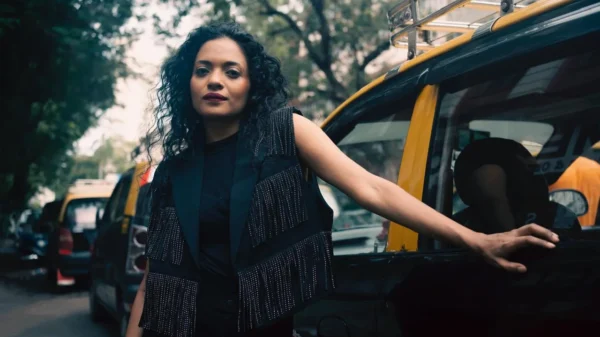
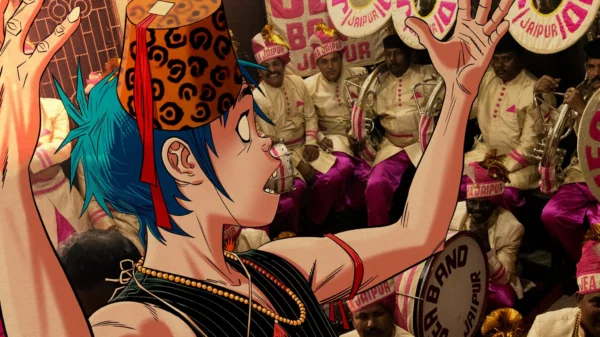
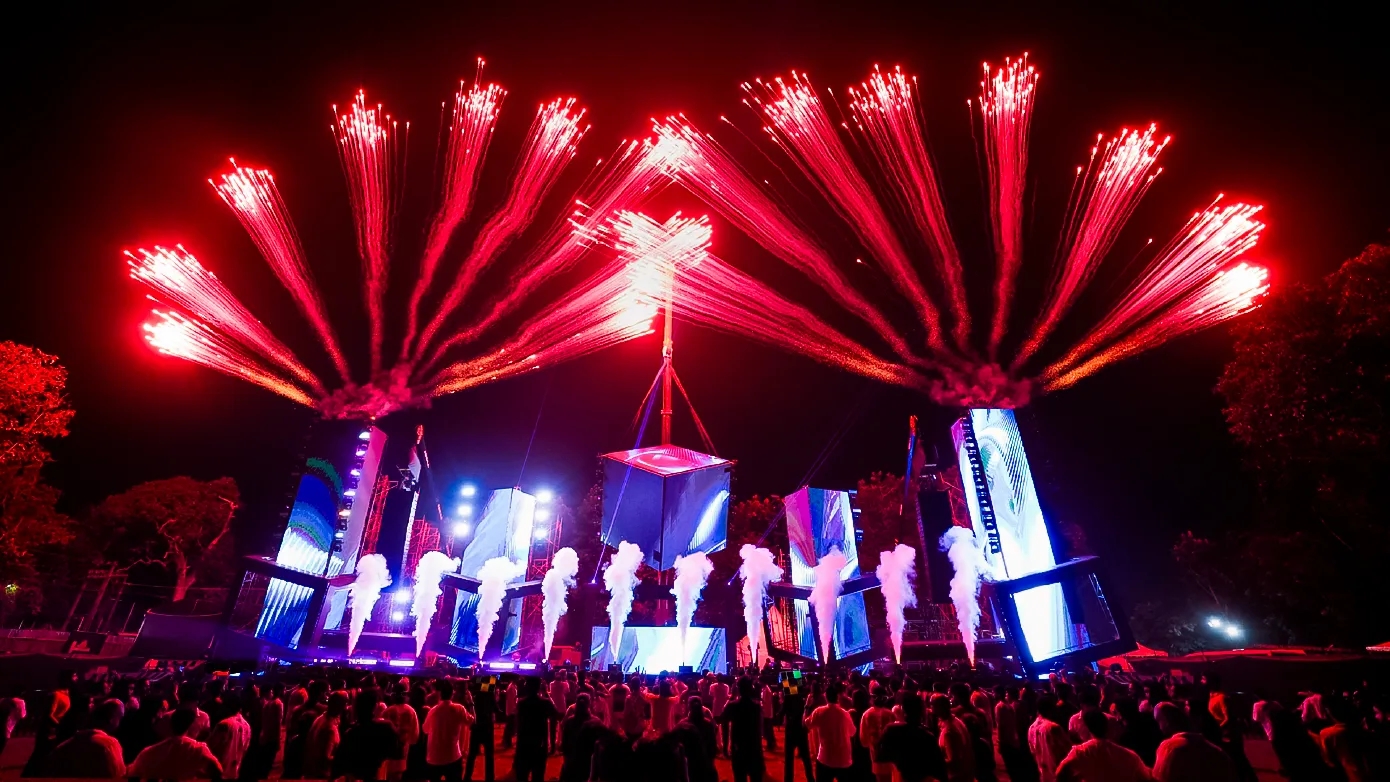

As Kerala’s biggest electronic music festival Kappa CULTR returns to Kochi from 20th to 22nd February, the 3rd edition of the festival proves it is more focused on culture than ever before. With a lineup boasting of international and Indian electronic artists, the festival intently expands its experience to more than just music. From interactive art and experimental fashion to arcade gaming, the festival has something for a diverse attendance. We got in touch with Mayura Shreymas Kumar, Founder, Kappa CULTR & Director, Digital Business, Mathrubhumi Printing & Publishing Co Ltd and Devika Shreyams Kumar, Festival Founder, & Director, Operations, Mathrubhumi Printing & Publishing Co Ltd, to understand their vision, the thought process and curational intent behind Kappa CULTR.
Kappa CULTR describes itself as “same same but different.” What does that idea mean to you personally, and how does it guide your decisions as a festival directors?
“Same same but different” is about evolving without losing identity. The core of CULTR doesn’t change- it’s about bringing different communities under one roof. It’s a space where everyone, regardless of who they are, comes to feel free and have fun. This is the “same”. But each edition of CULTR has to deliver a different experience. It has to bring about a different energy, different conversations.
CULTR isn’t positioned as just a music festival, but a cultural movement. What kind of experiences are you planning to integrate into the festival besides music?
Over the past two years, Kappa CULTR has carved out a space where the best of electronic music, food, art, and culture converge. Our collaborations across multiple platforms have allowed us to offer audiences enriching and diverse experiences — and this year, we’re taking it even further with a series of on-ground activations that bring these elements to life.
Art: We’ve partnered with House of Glow, Chuvar Picture, and Pachhakuth to transform empty spaces into vibrant, immersive stories. Festival-goers will witness live art painting and engage in collaborative creative experiences, making art an experience they can see, feel, and participate in.
Food: Culinary exploration takes center stage with the renowned food content creator Alex Jo Scaria, who will curate over 30 food stalls featuring a variety of world cuisines. Highlights include European-inspired dishes spanning Portuguese, Dutch, Mexican, and American flavors, giving audiences a global taste adventure.
Fashion: In collaboration with homegrown talent Strada Sutairu, we’ll offer exclusive Kappa CULTR merchandise, alongside interactive experiences like jewelry making, live jacket painting, and outfit customization — letting attendees make bold, personal style statements.
Gaming & Experiential Zones: The Versus Gaming Arcade brings arcade and console culture to life with a dedicated gaming zone designed for immersive, interactive play. In addition, we’re co-creating an experimental zone with Eru .Play x Kahbrew, featuring balance and flow activities like slacklining, unicycling, poi spinning, and balance board challenges. A brew bar running throughout the day ensures the energy stays high and vibes remain alive.
This year, Kappa CULTR isn’t just a festival — it’s a multi-sensory cultural playground, where music, art, food, fashion, and play intersect to create an experience that audiences can fully engage with, participate in, and remember.
Bolgatty Palace is a striking and unconventional venue. How does the location influence the way you think about sound, staging, and the overall festival experience?
Bolgatty has history, texture, silence, and scale. But the golf course adds a completely different dimension — it’s open, expansive, surrounded by water and greenery. Sound travels differently. Light behaves differently. So we design accordingly. We think about:
How the stage sits within the horizon instead of dominating it.
How to create intimacy in a large open field
How to protect the landscape while building infrastructure
It forces restraint. It forces intention. It’s about temporarily transforming the space while respecting its character and then leaving it as we found it. That sensitivity becomes part of the CULTR identity.
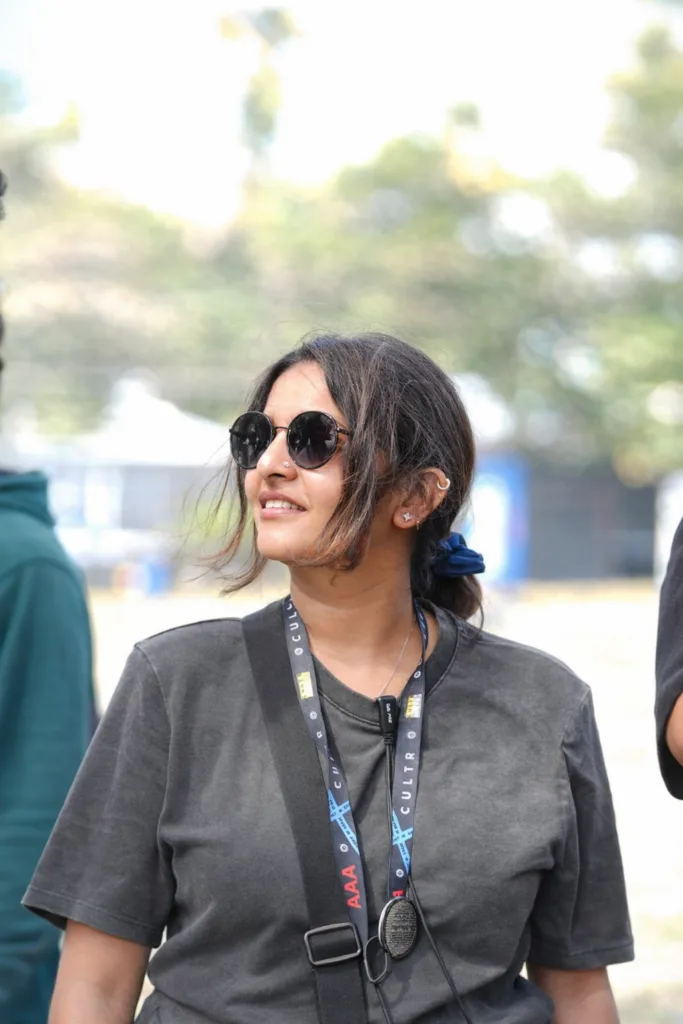
Over two editions, CULTR has grown to over 12,000 attendees and a massive digital footprint. How do you balance scale with intimacy, especially for a festival rooted in intention and authenticity?
Balancing scale with intimacy is one of the defining challenges for any growing cultural platform — especially one rooted in intention, authenticity, and community. What’s powerful about Kappa CULTR is that its growth doesn’t have to dilute its essence; it can actually amplify it — if designed intentionally. As its founder I’ve always believed that growth should feel like expansion — not dilution. With Kappa CULTR, the intention was never to become the biggest room in the city. It was to become the most meaningful one. The fact that we’ve grown to over 12,000 attendees and built a strong digital presence is a reflection of resonance, not strategy alone.
For us, scale is infrastructure. Intimacy is design.
We balance the two by being extremely intentional about what we amplify. Every lineup decision, every brand collaboration, every spatial layout is filtered through one question: does this deepen culture, or just decorate it? If it doesn’t serve the community authentically, it doesn’t belong — no matter how big the opportunity.
We also design for layers. Even within a large festival footprint, we create moments that feel personal — workshops, creative exchanges, artist conversations, fashion drops that feel discovered rather than advertised. When someone attends CULTR, we want them to feel seen, not processed.
Digitally, we approach storytelling the same way. It’s not about broadcasting noise; it’s about documenting energy. We spotlight community voices as much as headliners, because the culture isn’t built on stages alone — it’s built in the crowd.
Growth has given us reach. Intention keeps us grounded.
If we ever have to choose between being bigger and being honest, we’ll choose honesty. Because CULTR isn’t just an event — it’s a reflection of a community that values depth over hype, and authenticity over scale.
Electronic music can sometimes feel alienating to newer audiences. What steps do you take to ensure CULTR remains accessible without diluting its underground ethos?
Electronic music can feel intimidating if you don’t know the codes — the subgenres, the DJs, the etiquette. It’s essence is to lower the barrier to entry without lowering the standard.
For us, accessibility doesn’t mean softening the sound. It means widening the doorway.
First, we focus on education through experience. Our programming is layered — we’ll place emerging artists alongside more established names so newer audiences have a familiar anchor while discovering something deeper. We also build context around the music through conversations, digital storytelling, and curated content that unpacks genre history and influences. When people understand where the sound comes from, they connect to it more confidently.
Second, we design the environment intentionally. Electronic culture thrives on intimacy — lighting, staging, sound quality, spatial flow. If someone feels physically comfortable and emotionally safe in a space, they’re more open to unfamiliar sounds. Our job is to create an atmosphere that feels inviting, not exclusionary.
Community is another key piece. We collaborate with collectives and cultural voices who already hold trust within different scenes. That way, new audiences don’t feel like outsiders stepping into a closed circle — they feel like they’ve been invited in by someone they relate to.
Most importantly, we protect the underground ethos by staying curator-led, not trend-led. We don’t book artists to chase algorithms. We book artists who are shaping culture. The depth stays intact because the intention stays intact.
Accessibility, to me, is about guidance — not compromise. We’re not diluting the culture to make it easier. We’re building bridges so more people can experience it fully, and eventually become contributors to it themselves.
The lineup spans global headliners and deeply rooted Indian artists. What does your curation process look like when bringing international techno into conversation with regional and Indian electronic sounds?
For us, curation is less about booking names and more about building dialogue. When we bring global techno artists into the same space as regional and Indian electronic talent, the goal isn’t contrast — it’s conversation. We look for sonic alignment before we look at geography. If an international headliner and an Indian artist share a similar philosophy around rhythm, texture, or energy, that’s where the programming begins.
We spend a lot of time researching local and regional scenes — understanding who’s pushing boundaries, who’s building community, who’s evolving traditional influences into contemporary electronic forms. Indian electronic music isn’t a supporting act; it’s a narrative force. The global artists are invited to sit within that narrative, not overshadow it.
Sequencing is also key. We think carefully about stage flow — how a regional act might open with deeper, rooted sounds before a global techno artist escalates the energy, or how an international set might transition into an Indian artist who reinterprets that intensity through a local lens. The audience shouldn’t feel a divide. It should feel like one evolving story.
Ultimately, the process is intentional and curator-led. We’re not chasing passports or algorithms — we’re crafting a sonic ecosystem. When done right, the lineup doesn’t feel international versus local. It feels interconnected — a shared language spoken with different accents.


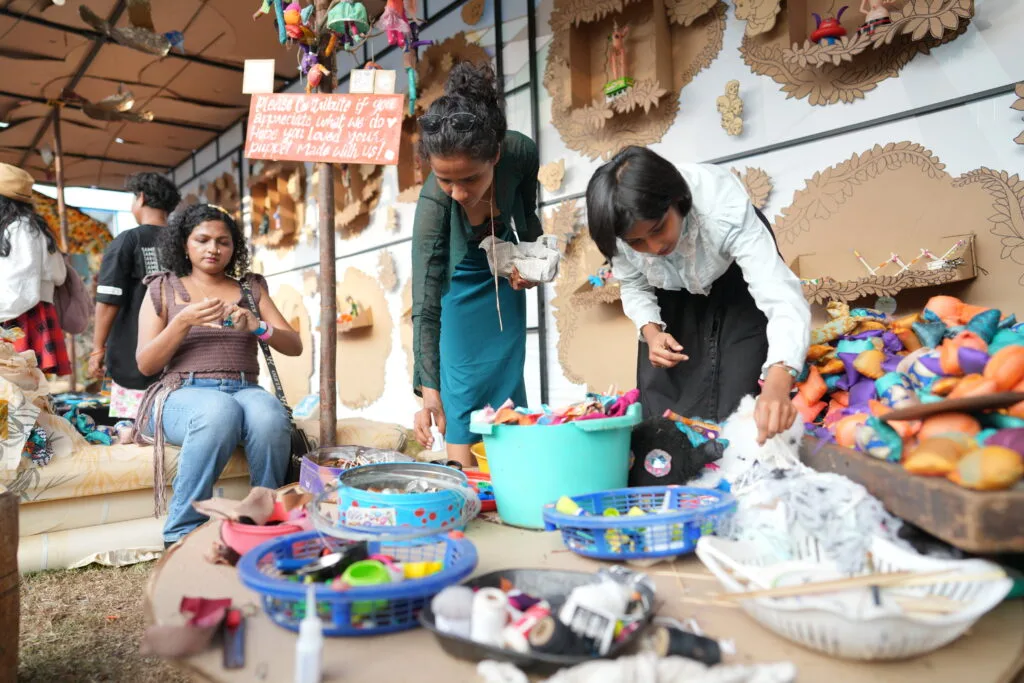

CULTR places strong emphasis on participation—not just attendance. How do experiences like games, movement, and interactive art help build a deeper sense of community at the festival?
At Kappa CULTR, we’ve never seen people as attendees — we see them as participants.
Music creates atmosphere, but participation creates belonging. When you introduce games, movement-based experiences, and interactive art, you shift people from passive consumption into active contribution. That shift changes everything.
Games break social barriers. Strangers who might never speak on a dancefloor suddenly collaborate, compete, laugh, and connect. Movement workshops — whether it’s BMXing, skateboarding, or Slackline— invite people to express themselves physically, not just spectate. Interactive art allows the audience to literally leave a mark on the space. When someone contributes to a mural or installation, they feel ownership. The festival becomes partly theirs.
These experiences also slow people down. Not every meaningful moment happens in front of a stage. Sometimes community is built in the in-between spaces — while painting, playing, learning, or exploring. Those shared micro-moments often create stronger memories than a headline set.
Participation reinforces our core ethos: culture isn’t something you watch. It’s something you shape. By designing the festival as a living, collaborative environment, we deepen connection — not just to the music, but to each other.
Edition 3 is described as an evolution, not an iteration. What did you consciously choose to rethink or discard while shaping this year’s festival?
With Edition III, we made a very clear internal decision: growth alone isn’t evolution. Evolution requires editing.
We consciously stepped back and asked what felt habitual rather than intentional. Anything that felt like we were repeating it because it worked — not because it still meant something — was put under review.
One of the first things we rethought was density. Bigger doesn’t automatically mean better. We refined the programming so that every stage, collaboration, and experience had space to breathe. Instead of adding more, we focused on sharpening what was already strong
Instead of asking, “What worked last year?” we asked, “What feels honest now?” Anything that didn’t align with that was left behind.
In a crowded festival landscape, many events chase trends. How does CULTR resist becoming formulaic while still staying culturally relevant year after year?
The festival has always worked on intention. We don’t chase trends — we track culture. There’s a difference.
Staying relevant isn’t about copying what’s popular this month; it’s about listening to the communities that are shaping the future. Every lineup, collaboration, and experience is filtered through the question: does this deepen the culture, or just decorate it?
We also prioritize emerging voices alongside established ones, and we let the audience discover rather than be told what matters. By curating thoughtfully and staying curator-led, not algorithm-led, the festival evolves organically without ever feeling like a template. Relevance grows from authenticity, not repetition.
Looking ahead, what do you hope someone takes away from their first CULTR experience—not just as a festival-goer, but as a person engaging with culture?
When someone experiences Kappa CULTR for the first time, I hope they leave with more than memories of music or visuals. I want them to feel part of a living culture — to recognize that culture isn’t just observed, it’s shaped.
I hope they feel curiosity awakened, perspectives expanded, and a sense of belonging to something bigger than themselves. Whether through music, art, or interaction, the festival is designed to spark connection — with others, with ideas, and with their own creative impulse.
Ultimately, my hope is that a first-time attendee will feel inspired to explore culture actively, to see themselves as part of the story, and to carry that energy beyond the event. The goal is for CULTR to spark a sense of ownership, creativity, and belonging that lasts long after the lights go down.