

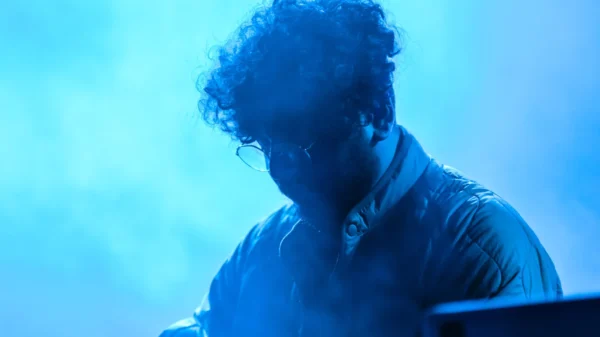
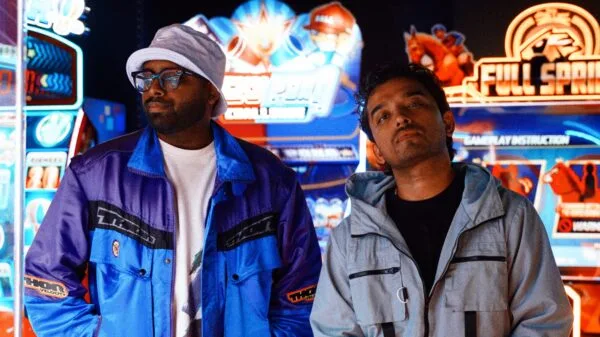
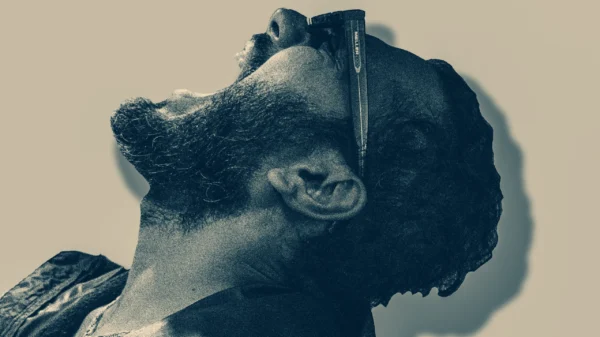
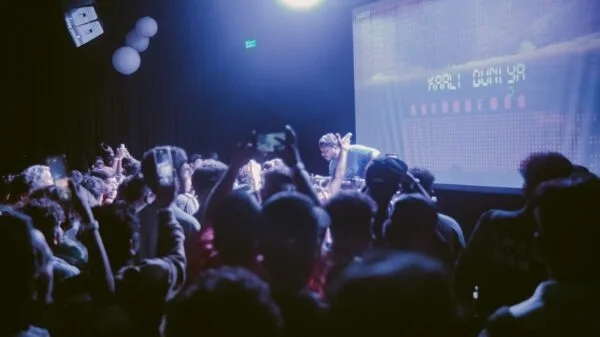



WTF! No, I don’t mean to delineate a moment of disgust or surprise. To be honest, it’s not a moment, or is it? (winks) Apologies, I was simply messing around. You know, words can be fun and so can the world of music. Cutting it short, what I mean is a moment that led to my introduction to FENGa through his album WTF!
Hailing from the beautiful Northeastern state of India, Mizoram, where hills paint works of struggle and serenity, FENGa is a promising talent who has kept his roots strongly tied to the sheer joy of experimentation and to where he comes from. With the hip-hop scene in India growing, he has a part to play, and his music is a clear indication that he is not here to waste time, but to claim it.
Here’s a conversation on his music and journey.
1. For someone discovering your music for the first time, how would you describe the world of FENGa?
A sound travelling through space and time accepting the journey as it is. I give my best to make it beautiful and timeless, for me, for the people I love, and most importantly for those who believed in my music and in me enough to take it further. It’s about setting a standard, creating a blueprint, and leaving something that can live on with the next generations. That’s the best way I can articulate it.
2. Growing up in Mizoram, what sounds, stories, or emotions shaped you before music became serious?
If I’m not wrong, a lot of Mizo songs carry a sense of yearning or grieving over love. But as I grew older, diving into older catalogues like Vulmawi and ZODI really shaped my taste and palette. They tapped into a wider range of emotions, which I feel is very human. I went on to sample them on my album WTF!, where they became a main foundation of the project, playing an important role in the story I’m telling. They’re the canvas to my paint.
3. In BAEDAWNG!, you sampled the 1980 Vulmawi classic “Bei a Dawng Lua E.” What inspired you to bridge that 1980s Mizo sound with contemporary hip-hop?
In BAEDAWNG!, I sampled ZODI’s “Hmangaihna Khingbai” before the beat switch, and Vulmawi’s “Bei a Dawng Lua E” as the switch itself.
If we look at the world of hip-hop, every zip code has its own sound, Atlanta got theirs, New Orleans got theirs, New York got theirs, and so on. I wanted a sound that felt unique and exotic to my zip code, and I couldn’t think of a better way than bringing back the sonic DNA of my culture from the past with a touch of my own to birth something new for my people.
I hope it inspires the next generation to dig deep into the past to create something even better, a sound that we, as Mizo people, can call our own.
4. Do you feel a responsibility to preserve Mizo musical history for a younger generation through your work?
Yes, I want to push it as far as I can. I’m proud to be Mizo, and I’m proud of the music we’ve made. I want my people to go back and explore older catalogues, because they’re unique to their time and can never be replicated. The stories, the way they articulated, the texture of the sound, how they engineered the records, its cultural heritage, and I truly believe its value is only going up. Once that’s understood, I think every new artist will try to get their hands on to sample. I want younger artists to experiment. I want sampling from past and present records to be legally accessible, so it can enrich the music industry here instead of limiting it.
At the same time, I feel the coming generations need better platforms and stronger business systems to sustain themselves to push music for more noble and profound reasons, instead of it being treated as “just a hobby.” I’ve seen too many talented musicians hang their boots because they see no promised land. So the question becomes: who builds the foundation, if not me, if not us, the present generation? There’s a lot more I want to elaborate, but I’ll save it for another time.
5. Is WTF! completely autobiographical or is it also a response to the world around you?
Both. It’s rooted in real experiences and inspired by memories that were once lived in this life of mine. At the same time, those experiences don’t exist alone, they are shaped by the world around me, by people, places, and moments. WTF! sits in that space between the personal and the external.
6. Have you ever felt a pressure to make music that ‘performs’ well on algorithms, and how do you resist or adapt to that as an independent artist?
I let God take the lead. The music doesn’t come from me alone, it comes from a higher power. My job is to tune into that frequency, work on myself, and be a channel worthy of receiving the message, a voice that speaks to the people. I know I cuss and rap reckless at times, but I can’t deny that there’s something bigger guiding me through it all.
As an independent artist, I’m aware of how algorithms work and the pressure to make things “perform.” I respect that side of the game, but I don’t let it dictate the music I make. If the music is genuine and coming from the heart, I am content, and then I adapt how I present or release it, not the other way around. I trust the music to lead me exactly where I need to be.
7. Do you feel there’s still a tendency to box NE artists into a “regional” category rather than seeing them as part of the larger hip hop movement?
Yes, I think that still exists. I feel a lot of it comes down to language and racial barriers, which can limit relatability for a wider Indian audience and, in turn, affect how support and fan bases grow. But I don’t see that as a dead end, nothing is impossible.
I’m a firm believer that if something carries generational talent, the world will eventually find it. That belief keeps me focused on the daily work needed to achieve the goals I’ve set for myself. One step at a time.

8. Do you see yourself staying completely DIY, or evolving the model as your music grows?
I’ll definitely evolve. I don’t want to stick to the same model or the same sound for too long. I want to spend my freedom of expression in music and creativity to the fullest. The DIY approach I’m on right now is mostly out of necessity, not a limitation.
The long-term goal is to orchestrate my own symphony, while still being hands-on, chopping, mixing, and arranging, but alongside the best artists, musicians, engineers, and experts from all around the world. God willing.
9. What can listeners expect from you next?
I think expectation is the first step toward disappointment, so I don’t want to leave hints or spoilers while I’m still working on my Picasso or Basquiat. The curtains will drop when the paint is dry.
10. What advice would you give young artists trying to break into the wider Indian music scene?
I honestly feel like I’m still on that journey myself, so the only advice I can give is what I try to live by.
Be you. Explore, broaden your palette, experiment and diversify your tastes, there’s beauty waiting in places that haven’t been expressed yet.
You are unique in whatever you express. Finding a sound and a voice that genuinely feels like you takes time. So be patient, take your time, and when it’s ready, be unapologetic and come out with a bang!