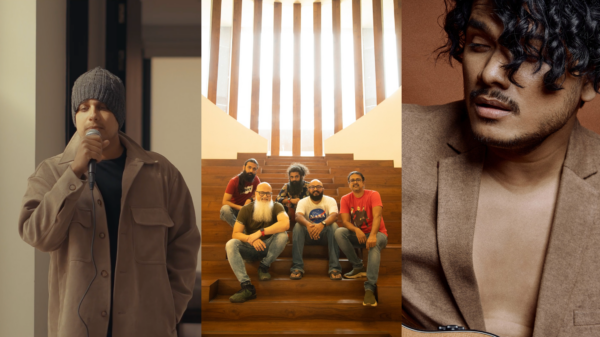



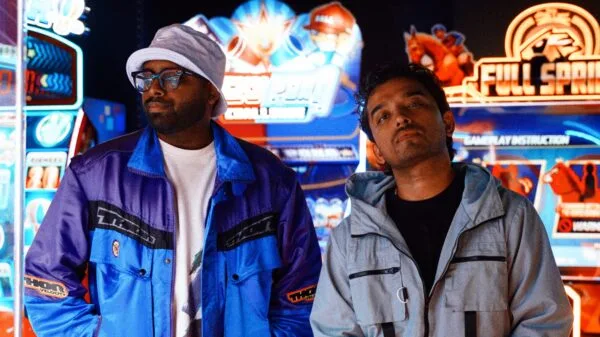
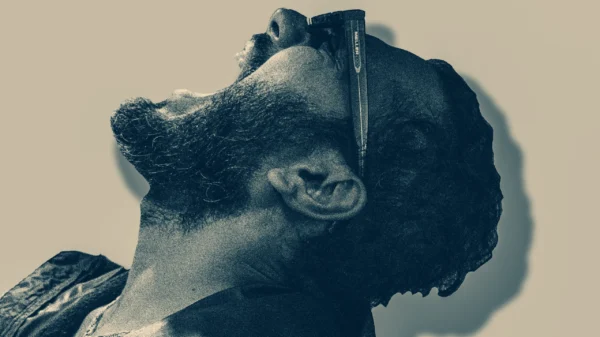
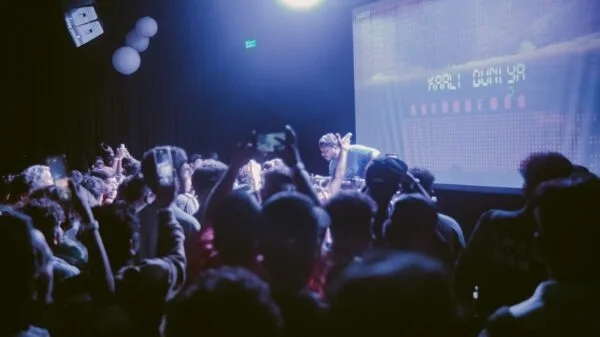
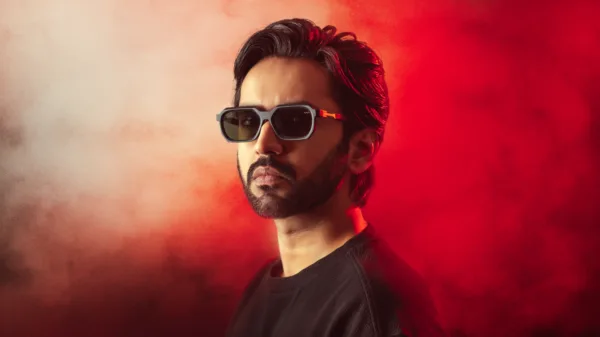






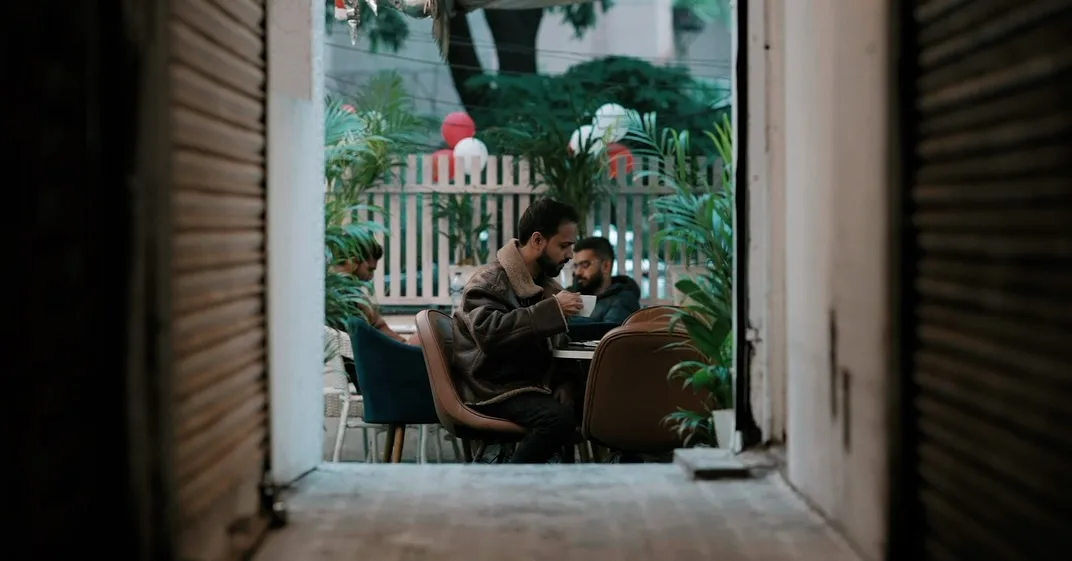

Alok Ranjan Srivastava (Hashtag Jazbaat) is a singer-songwriter and lyricist carving out a unique space in both the independent scene and the commercial landscape. While his contributions to Bandish Bandits, Gullak, and Modern Love Mumbai have established his commercial presence, it is in his independent work where his voice finds its most potent form. Beyond film, his long-term creative partnership with composer and producer Siddharth Pandit, spanning the Azaad Sangeet project and now this 2025 EP, has carved a unique sonic space for his own artistry.
In a landscape of decorated poetry, Alok Ranjan Srivastava chooses the weight of his own experience, documenting a raw emotional state.
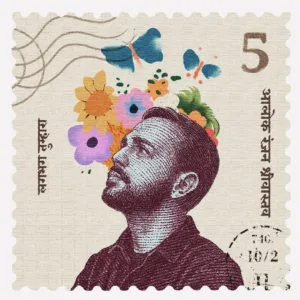
Alok Ranjan Srivastava’s ‘Lagbhag Tumhara’ is his third album, where he explores the experience of love, as a journey of thoughts. In a landscape of decorated poetry, Alok Ranjan Srivastava chooses the weight of his own experience, documenting a raw emotional state over the urge to write big words that get lost in translation. The album also explores the idea of love as a very personal experience, outlining a relationship and how it progresses. The songs progress through the album, as if you were travelling through your own mind, digging through words and memories, choosing the most honest ones and putting them down in a letter.
The album balances several aspects of modern songwriting together — the thought, the cohesiveness and the sound. I often find myself connecting my experiences to the poetry here, and I think that’s when the album becomes a part of the listener’s playlist. We are shaped by our challenges, wins, and experiences and if we zoom out, it’s all connected by a fine thread of relatability. Using the right words to reach to the right people becomes of absolutely important then.
Alok emphasizes his belief that we are simply vessels. By being in the right place and the right mindset, we allow the Universe to whisper its secrets; our artistic duty is to remain attentive. Art’s purpose can be anything, but it is always says something.
Alok Ranjan Srivastava’s ‘Lagbhag Tumhara’ is also a journey from shyness and humility, to fearless expression.
It’s a humble acceptance of reality. It’s an emotional ride that we the listeners go through as we get inside Alok’s mind palace. The album is a 5-track journey, a personal take on one’s own experience in love. There is a conscious effort here to let the narrative speak for itself by never once mentioning ‘Pyaar.’ This choice turns the album into a journey of observation rather than assumption. Alok maps the terrain of confusion and the gap between desire and destiny without ever reaching for a hollow label. It’s a humble approach to songwriting that prioritises the weight of the story over the convenience of the word.
‘…dekhte hue inhe, umr guzaari jaaye toh, accha ho…‘
The album starts with ‘Taramandal’. Musically, the song paints the entire night sky on a small canvas, with lush chords, and strings section; sending waves of nostalgia.
The song serves as an expression of those initial thoughts and feelings when you first start falling for someone. Often, the more unsure you are, the more indirect you become—and that is where the metaphor of Taramandal is born. It compares the person’s face to the poet’s favourite stars in the sky. From there, the track transforms through various layers of imagery as Alok guides us through verses that attempt to decode the meaning behind his mysterious hook.
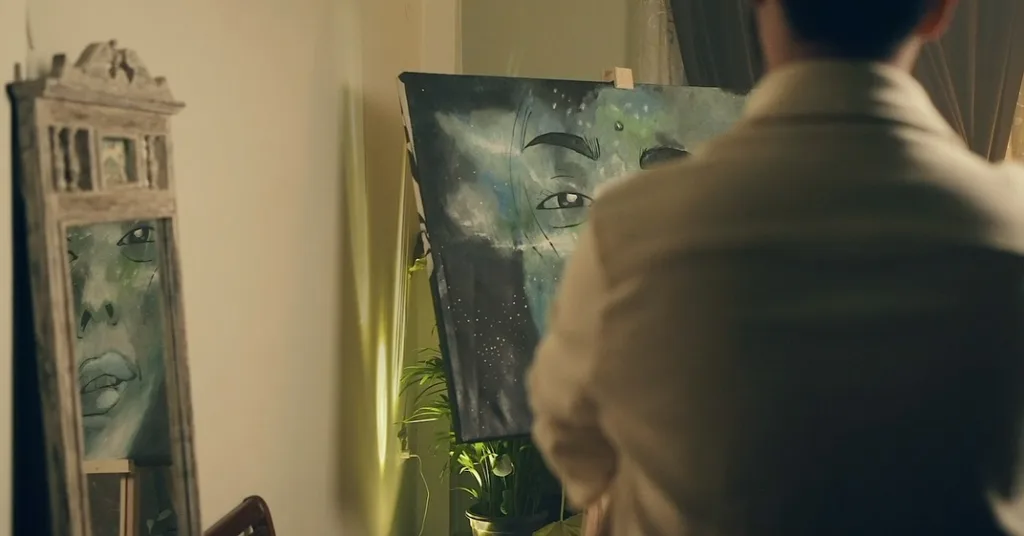
Alok brings his raw self to this song, painting with his words. The poetry hides a lot of anxious emotions behind this innocent song. Taramandal, as a song is just a suggestion of love, implying the writer’s fondness for what they see in their lover. To them, the beauty of the entire cosmos has no place in his heart – only a few set of stars matter. This type of expression never forces anything, just lingers on barely hinting at a possibility.
The poetry in this album does not shy away from the use of english or colloquial words. Alok draws metaphors, using english at points to convey his most-honest self. In his opinion, when used the correct way, these words from our daily life add to the experience of listening and understanding the music. It’s a statement about raw expression over poetry that fits the stereotypes and moulds of poetry.
‘tumse milna, julna, khulna, ghulna kya hai? is duniya me behtar, inki tulna kya hai?’
When I sit and listen to this song from inside an auto, I can see the world unwind, I often see our memories together, in flashes, as my thoughts fade between the world and my memories.
‘Milna Julna’ is about those remembering those moments that constantly tell me that my love for you is true.
‘Kya hai geeton mein tumhein utaarna…dil ka hilna-dulna kya hai?’
The song’s instrumental heartbeat is this piano groove from Siddharth Pandit – it’s like listening to your own mental tick-tock, in anticipation — in anxiety of love! The strings tie everything together with emotive swells and plucks, creating a larger than life sound. Alok’s expression of love takes on to braver territories, from light hinting at his feelings, to direct existential questions like ‘What is it that I feel?’ This is what the album is about — the writer’s honest efforts at describing his own experience through a relationship – writing his feelings down, in words and preserving this letter as a memory to cherish.

During the course of releasing the singles, Alok felt he had reached a point where it just felt like he was forcing it. This attempt towards maintaining honest expression over beautiful words is what made him decide to give it a break, and he focussed on wrapping up other projects and collaborations.
In my personal research, in the history of Indian cinema for eg. there have been poetic giants like Sahir Ludhiyanvi, Majrooh Sultanpuri etc. On the other hand, I remember that most of my personal favourites have been written by ‘Shailendra’. Javed Akhtar once mentioned that we might have had many poets, but we’ve had only one ‘geetkaar’ – Shailendra. Not comparing, but this made me wonder about what’s the difference? Big words don’t always equate to better expression, and honesty is anyway the entire point of expressing something I feel.
‘…maana tumko sard-dil hi mile hain aaj tak, maana thodi barf jaisi yeh duniya ho gayi…’
It’s an internal struggle turned vocal, onto paper, and into sound.
Igloo has my favorite starting words from the album. There’s a lot of truth in this song, about the world, and about the human need for connection.
The writer highlights the criticality of companionship, addressing his concerns in the most reasonable ways. Through the process, he outlines the harsh reality of the world, socio-economical tensions, and the pity direction the world is taking. The song screams URGENCY! because it is a question is of extreme importance to the writer. TO BE, OR NOT TO BE. and then WHY NOT? and even more WHY?
‘..dhundh mazhab ki hai gehri, doobta jaaye jahaan. tez ole gir rahe hain, nokeeli zubaan se. sard behti hai hawaayein, jhooth ke makaan se…
Suddenly, the very personal questions become larger than life – talking world issues, politics, society — the harsh winds of what we call normal life today. We’re all trying to survive on hope, and the song really touches on that human angle. It’s a downward spiral with each statement from Alok piercing through the poetry, highlighting the many reasons this world wouldn’t be as good, as it is with you.
Panditjee’s production brings the drama through his arrangement, serving as the background score to this beautiful section.
There’s an honesty; more than poetry when Alok writes. He strays away from merely decorating the lines when the message inside doesn’t really feel right to him. That’s something to learn when it comes to poetry and songwriting today.
‘jab Hum boodhe honge, kitne adhoore honge?’
The song is about dreaming, and then having to let go of that dream. Alok’s lyricism outlines a relationship, imagining a future without someone you used to know too well. It will be a long silent afternoon, and we’ll be listening to old songs, surviving with just a memory from good times. The song is about regretting, in retrospection — a very common human emotion.
The beautiful arrangement in this song softens the blow of the words. Siddharth Pandit’s playing creates nostalgia through chords and arpeggios, helping create the warmth for a soft landing of a harsher truth. Nostalgia gives way to imagination and suddenly you’re caught in a dream that could have been, only if this could be.
‘…Lagbhag Tumhara’
The last part of this journey ‘Prempatra’ is Alok’s voice – without any embellishments. It’s like a final address from a lover where he explains the connection, behind all these metaphors and expressions of love, not to a random reader, but directly to the subject of his affection. For the final time, Alok puts forth his feelings, keeping all expectations aside. Siddharth Pandit’s soundscape creates a vacuum of sorts, putting all the focus on the words here.
“Agar meri ye aakankshayen tumhe thoda zyada lag rahi hon… to upar ka likha sab bhool jaana.”

The poet in Alok is ready to trade the Galaxy, the Igloo, and Forever for “Ek cup chai” with their lover. This defines “Lagbhag.” He is willing to settle for the smallest unit of time with her.
Alok has preserved this experience through this album on love, that not for once uses the word ‘pyaar’ or any of its synonyms. For the one time he uses ‘prem’ once, it is only to articulate his small request.
There definitely are some analytical points to the album here. The use of foreign words in contemporary poetry has its roots in the greatest writers of our generation. There is a conscious choice to express the themes in a way that focuses on effective communication rather than ornamenting the song. The ornamentation that exists in the form of Siddharth Pandit’s minimal and striking production, elevates the poetry without crowding it. It also imparts the color and atmosphere of each song very subtly, while accenting the right points of drama when needed.
The themes of the songs, being as personal they are, are also universal. Innately, Alok’s writing focuses on the bigger picture of the story, rather than just the craft of words, and I think that’s when expression really travels far and long, and the songs become a permanent part of your life.
In the end, Alok’s writing leaves us with something better than a ‘beautiful’ song: he leaves us with the truth. Because once all the poetry is stripped away, that raw, stinging honesty is the only thing that actually travels.