

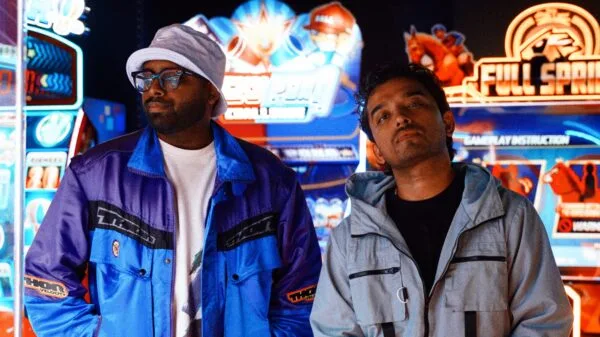



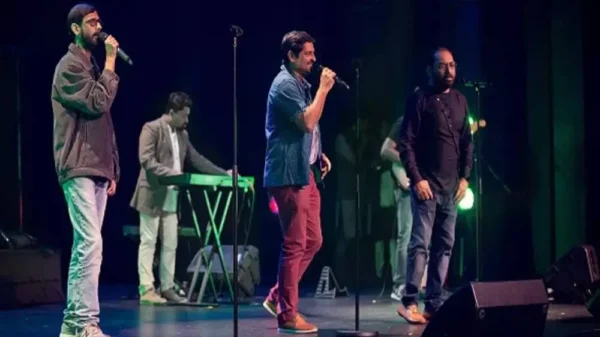
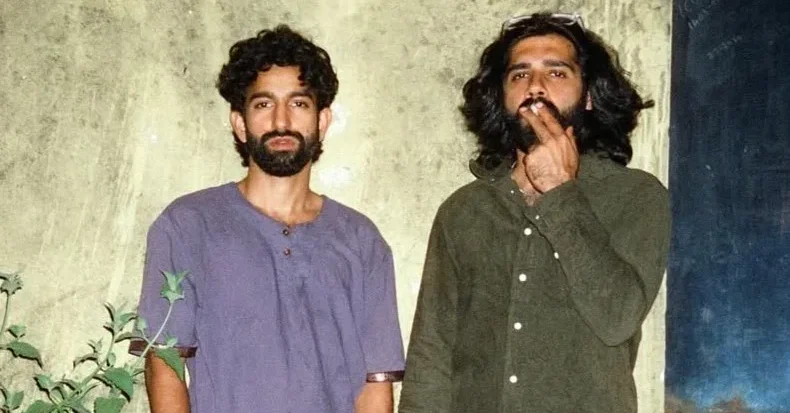

Run it’s the Kid was one of those cult underground bands that all the music nerds knew of but never has the band ever been as popular as they’re now after resurfacing from the dens of hiatus and obscurity after a decade.
Their debut is one of those records with an unflinching appetite for dealing with vulnerability and loss. The music is perfect for the finale of a favorite show.
The band is one of the best that ever came out from the country and their recent singles prove it.
In this interview with us the band talks about their cult eponymous debut to the magic of childhood, nostalgia and falling out of love… They breakdown some of their lyrics as well as talk about legacy and the liminal space between the end of something and the beginning of a new thing…
Tell me about the name of the band? What does it signify? How did you come up with it?
Shantanu: It’s just a random combination of words we came up with. It’s not meant to signify anything. Maybe there is meaning but we aren’t qualified to say anything about that, we are only middlemen. Actually I would love to know what it means to you?
Your music feels like coming back to a lost toy or an old book. What is the magic of childhood that an artist keeps trying to go back to in art?
Dhruv: I guess it’s curiosity and a sense of wonder. A way of feeling and experiencing as opposed to judging and criticizing. When you’re young you’re free, not bound by strong opinions. It’s tough to keep that alive as you grow older but the two of us seem to have no problem being children sometimes.
Tell me about the song ‘Forgetting How To Swim’? What inspired it? Please give a breakdown of the lyrics and what they mean for you. Share the story behind the song.
Shantanu: It’s about falling out of love. The melody, meter and words came all together while I was on a 12-day trek in Uttarakhand somewhere. I didn’t have any instrument on me so I was just humming it to myself over and over like a spaz. I put guitar to it as soon as I got back and took it to bhols and we finished it.
‘Love we’re made from Porcelain’ makes me cry a little. I heard it years ago and was introduced to it by an old friend who influenced a lot of my music taste while growing up. It was the first song by an Indian artist that I truly liked.
The first album still feels fresh, almost too early for its time. Tell me what inspired it? What were you guys trying to sound like?
Dhruv: Thank you! We’re so glad you like it. It’s also one of our favourites from the 1st album.
I don’t think we’ve ever had a discussion about what we should sound like. We work on music and refine it till we create something that feels right – that is our sound. In the early days we just ended up making a sort of waltz-esque music. It stuck for that album but we moved on from it, trying to reach other places in the future. The only important thing is to stay true to what moves us and bring it to the music we make.
What inspires the songwriting?
Shantanu: I really don’t know what inspires the songwriting, if I knew that I’d switch it on all the time and have an ocean of songs.
What are your favourite songs ever?
Dhruv: That is the hardest question known to man…
What’s the favourite part about performing live?
Dhruv: The end of the set. And when people sing along. But that’s just me. I think Shantanu might like it or something.
The Velvet Underground’s first album sold only ten thousand copies but each of those ten thousand listeners ended up forming a band. This quote attributed to Brian Eno supersedes legacy over popularity. What is more important – legacy or fame?
Dhruv: Nowadays any released music is pretty much immortalised just by being on the internet. Unless the internet breaks down. A part of our legacy would be having people listen to our music and follow it a number of years down the line. As long as the music remains online and people listen to it and share it, our legacy is taken care of. So we’re not specifically concerned with that. I guess what is important for us is to make a livelihood based on our music that rewards the time and effort we have put into it and allows us to live a good life. If fame follows in some manner, rest assured we’ll gracefully accept it.
You guys released your self-titled in 2016, inspired a cult following and disappeared. Why was the hiatus so long?
Dhruv: Being a band is pretty tough. Life gets in the way, and it’s difficult to get everyone to come around and be present during the music making process and everything else that needs to be done around it. Consequentially In the last 10 years, we went from being 4-members to just 2-members. The hiatus was essentially us figuring out how we can keep making music despite everything else. It took us a while but we got there. Hopefully we don’t take that long to work on and release the next work of art.
Couldn’t keep it
Even if I tried
Can you believe it
I spent half of my life
Tryna believe in
What I know to be a lie
And as I pay the fine
I find that
Nothing is easy
Nothing’s okay
Tell me about these lines from ‘Rubble’?
Dhruv: Rubble is a song about the liminal space between the end of something and the beginning of a new thing. There is loss of control and shattering of perception, but there is freedom in that knowledge. There is pessimism but also a hope for something different and better. These are realisations awaiting action.
How is Run it’s the Kid different from all your other parallel projects?
Dhruv: Since Run it’s the kid is a combined effort between Shantanu and me, both of our individual sensibilities end up contributing to the way the music sounds.
We don’t try too hard to make it different from our other projects, rather it ends up being different because the synthesis of our personal styles creates something which is not just him or me, but a greater whole. That whole is unique and could only come about with both of us being a part of it.
What’s next?
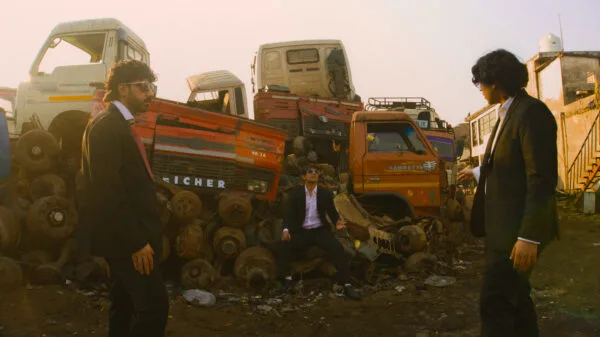
Dhruv: We hope to take our new album “Abracadabra” on the road so we can spread it far and wide. We’re also working on a short film of sorts, parts of which have already been released as a lead-up to this album.
What’s the most beautiful part about being an artist?
Dhruv: The uncertainty and the risk…