




My mother and I have a very few things in common, especially when it comes to how we have spent our days in the wilderness of institutions offering higher education. My mother, disciplined, committed to her education, and reserved, who has spent her entire life in the same city is separated from me by a chasm marked by my many moves, my grating penchant for displaying my sense of humor, and my lack of routine. However, one of my favorite memories, and which now perhaps read as one of those moments you cling on to forever, is when she would get back from work — and I would regale her with all the music videos I found interesting, as she commented good-naturedly about every detail she found interesting. Granted, these were mostly of the K-pop variety that I showed her — it tethered us together in a way that almost seems incandescent to me. My mother and I have starkly different tastes in what we listen to for leisure — and in spite of her startling patience, she never developed a taste for the electronica, and I never turned to 70s Bengali pop with anything other than boredom. One band ties us together, though, in spite of our raging differences : the band Chandrabindoo.
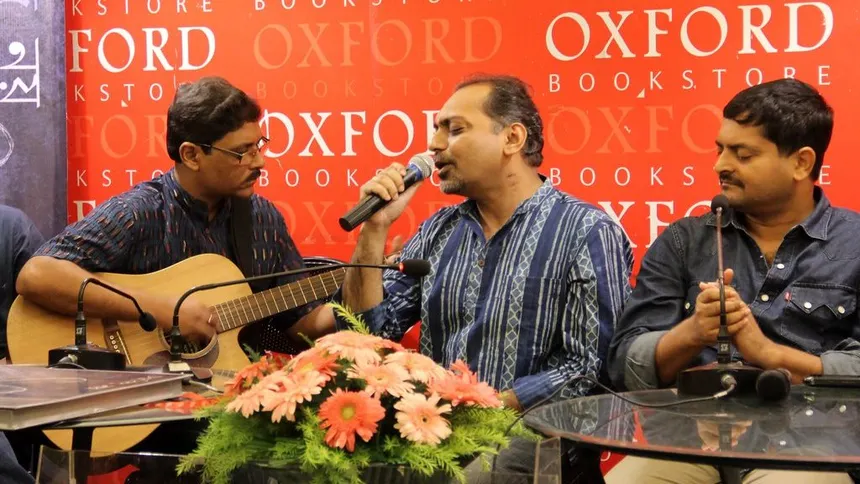
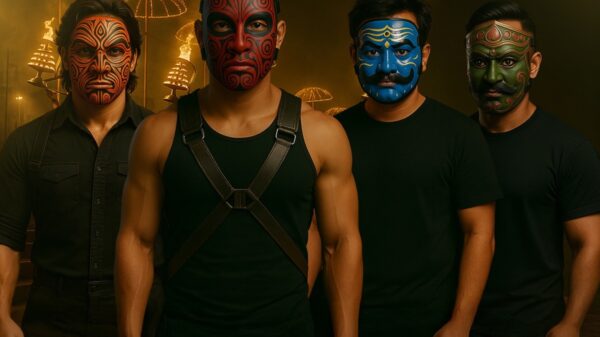
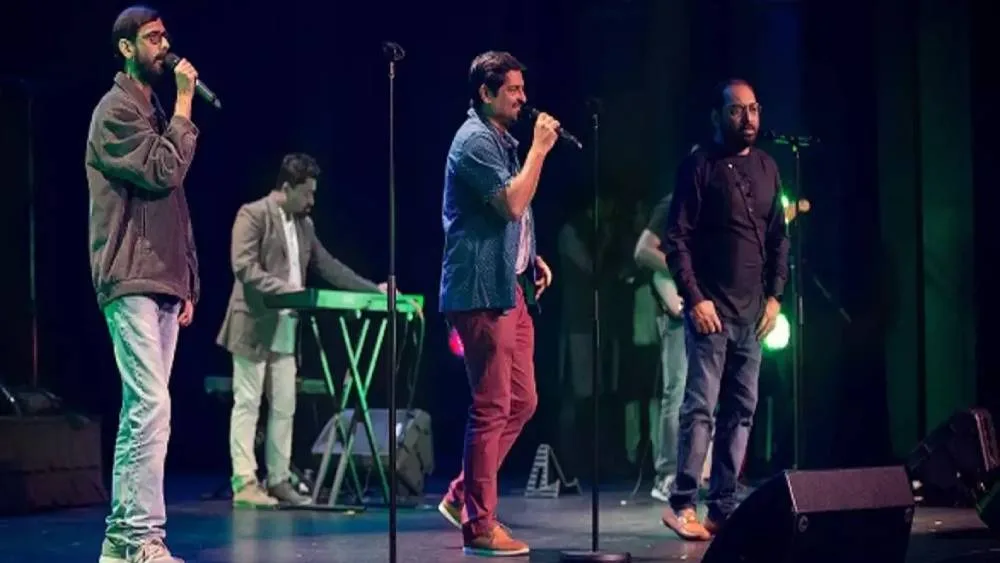
A common favorite when it comes to Bengali bands, Chandrabindoo had laid their foundation down when Ma was in college — regaling students at fests with relatable, cheery music with tongue-in-cheek references to politics in West Bengal and the pleasures and perils of young love. I had had Chandrabindoo play on my father’s VCR for years until the cassette tapes rolled up into knots, and they were one of the very few bands whose entire discography was carried by me to my streaming playlists from the Sundays in our family bedroom. Recently, however, Ma and I discovered something — that in spite of every way we do not mirror each other, the one Chandrabindoo album we have listened to the least is the same one: Chaw.
Loosely translated to Let’s Go, this 40 minute, 10 song long record strikes a kind of balance. While a number of their records either zero in on romantic numbers or sociopolitical satire, this one manages to stand on two simultaneous boats, without overturning either. One of my favorite tracks, Bhindeshi Tara (Foreign Star), which has Anindya Chatterjee, primary frontman in his usual persona of a 90s specific loser-loverboy archetype that was a pop-culture favorite, especially then — sung on a simple acoustic guitar and a light saxophone swimming in and out, has lyrics that went on to acquire a cult like status among their fanbase and beyond. The album also features Dudh Na Khele (trans. If You Don’t Drink Milk?), which uses the Bengali colloquialistic almost-proverb used by primarily mothers — where if you do not drink milk, you would not grow up to be a “good boy” [something that has constantly followed me around as a child, in spite of my constant urging that I was not bound by these rules, considering I was evidently not a boy]. The percussion line is the kind you would specifically find in pop-rock bands in the late 90s, coupled with the light funk air that they generally maintain across their sound.
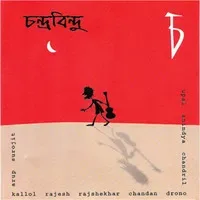
Banbhashi, which takes a folk-rock approach to narrativizing the dreadful state of the economy and democracy (leading one to infer that it never really changes in India) with a catchy bass layer and a guitar solo that commits to your memory the terrible nature of the then present with an onslaught of flooding metaphors.
If you are familiar with Chandrabindoo and their history — you would know that they have never really changed their sound once they got it down. It has expanded, become more polished, changed in lyrical content — but the sonics are mostly breezy, pleasant to the ear, and certainly not maximalist. They have borrowed from funk, rock and the blues, and engineered a kind of soundbed uniquely specific to them — which characterizes the easygoing way they choose to tell every story, even when it comes to grieving. Chaw, one of their earliest albums, shows you the kind of process that they have undergone, where their satire is still rough around the edges, and the arrangements are more or less simple — the kind that granted the middle class, usually “bhadralok” strata brethren (including my parents) a kind of familiarity in song that they passed on as nostalgia of the simpler days — to me. It has always been the perfect semi-intelligentsia serving — the kind of music you could discuss over tea, appreciating the wit and the candour.
It has been decades since Chaw was released into the world, and it changed the way indie bands made music in West Bengal for a good decade, at least. Lately, I have been going back to Bhalo Lage Na — placed 8th on the tracklist, where Chatterjee croons the words “Doesn’t Feel Good” multiple times to insinuate a languid sense of discomfort, the kind you power through, with much chagrin everyday — to get myself to feel less tired. Things have not been feeling that good, truly. Bhalo Lage Na Je, shottyi.