


















From bansuri virtuosos to studio engineers, the album draws on a deep network of Indian collaborators.
Scan the tracklist of Gorillaz’s ninth studio album, The Mountain, and the eye lands on names it already knows. Black Thought. Johnny Marr. Asha Bhosle. Anoushka Shankar. Asha Puthli. These are the collaborators the headlines reach for, the ones that generate the retweets and the instant recognition. But linger a little longer on those liner notes and another story begins to emerge, one that moves from the ghats of Varanasi to a brass band that has been playing Rajasthani weddings since 1936, to a choir recorded on the banks of the Ganges.
The connection between Gorillaz and India runs deeper than a studio collaboration.
For Damon Albarn, that relationship stretches back to childhood, when his father introduced him to Ravi Shankar’s recordings. Years later, after both Albarn and Hewlett lost their fathers within days of each other, the band found themselves returning repeatedly to India, journeys that shaped the emotional core of The Mountain. Encounters with grief here felt different. As Hewlett later reflected, it was “like saying goodbye to a friend who’s going to go live in Australia,” painful, but not entirely final.
The album that emerged from those trips carries that feeling throughout. It is an album about grief that, somehow, does not feel like grief; instead it feels like a glass half full take on grief.
The Headline Collaborators

A few of the Indian collaborators on The Mountain are impossible to miss.
One is Asha Bhosle (ashabhosle.com), the legendary playback singer whose voice has shaped Hindi cinema for over seven decades. On the track “The Shadowy Light,” Bhosle sings the Hindi refrain “Majhi Re Majhi,” a line written by lyricist Kausar Munir that asks a boatman to ferry the singer across the river of life. Bhosle said that she was initially hesitant to take part — until she heard the song. “This was not one of those everyday kinds of songs,” she said. “The lyrics held deep meaning, and I felt moved enough to accept this assignment.”
Then there is Anoushka Shankar (anoushkashankar.com), the celebrated sitarist and composer whose work has established her as one of the most influential contemporary voices of the instrument. Her sitar appears across the album, recorded during an immersive day in the studio with Albarn as they moved through the songs together, shaping parts through improvisation and instinct. While the opening track carries a sound many listeners might immediately associate with Indian classical music, Shankar has clarified that the piece is not structured around a traditional raga; instead, her playing brings Indian tonal inflections and improvisational phrasing into the band’s own melodic world.
For Albarn, the collaboration carried a deeper personal resonance. His father had first introduced him to the music of Pandit Ravi Shankar, and improvising alongside Ravi Shankar’s daughter felt unexpectedly meaningful — a moment where a sound that had lingered in his childhood resurfaced decades later in the studio. Albarn has described feeling an immediate creative connection with Anoushka during the session, as though those early musical impressions had shaped the encounter all along.
The record also features Asha Puthli, the Mumbai-born vocalist whose genre-spanning career has moved from 1970s jazz into disco, psychedelic pop and electronic music. After relocating to New York, she became part of the city’s experimental music scene and released a string of cult records, including cosmic disco favourites such as “Space Talk,” “One Night Affair,” and “Moonlight Man.”
On The Mountain, Puthli appears on “The Moon Cave,” bringing that same distinctive vocal presence to one of the album’s most intimate moments. She has described the collaboration as growing out of long conversations with Albarn about grief, loss and what lies beyond death — themes that shaped lyrics written primarily in English with touches of Hindi and Sanskrit.
What The Fans Heard

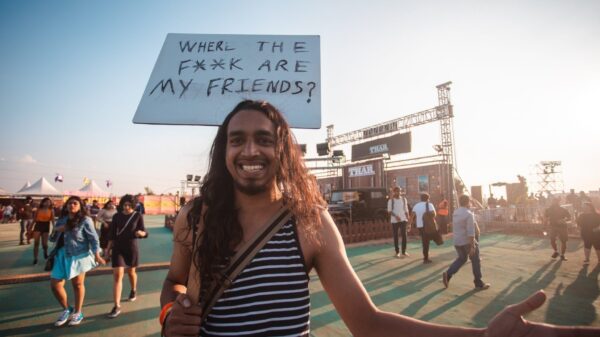
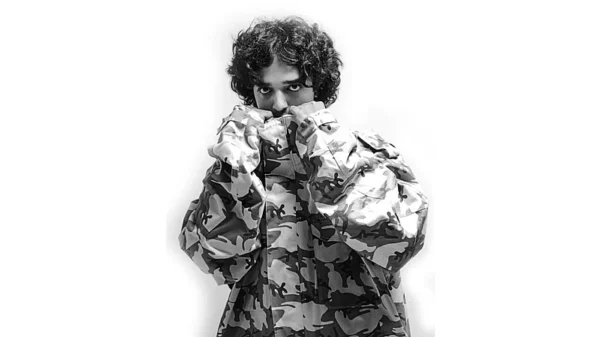
When creator Vinay Pateel (@ohnovinay) posted a video reacting to the title track, “The Mountain,” the comments beneath it began to reveal something about how listeners were experiencing the album.
“As soon as I heard this, I started bawling,” one viewer wrote. “There was this unresolved grief inside me that I could suddenly feel.” Another singled out the flute that threads through the song: “It moved me in a transcendental way.” A third described listening with family and feeling overwhelmed by the memories it stirred. “Everything seemed to blend together in that moment… it brought back so many feelings and memories of friends and family who have passed.”
These are not the responses of listeners encountering Indian music as novelty. They are the responses of people hearing something they recognise — a sonic and emotional vocabulary that belongs to them — amplified on a global record.
And again and again, those reactions circle back to the same sound.
The flute.
Many listeners singled out the bansuri that carries the emotional weight of The Mountain. The musician behind it is Ajay Prasanna, a virtuoso of the North Indian bamboo flute.
And once you start following that thread — once you begin looking past the headline names and into the liner notes — an entire network of Indian musicians, ensembles and engineers begins to appear.
Look closer at the Liner Notes
So who are the musicians, engineers and ensembles behind these sounds?
The answers sit in the album’s credits.
1. Ajay Prasanna — Bansuri
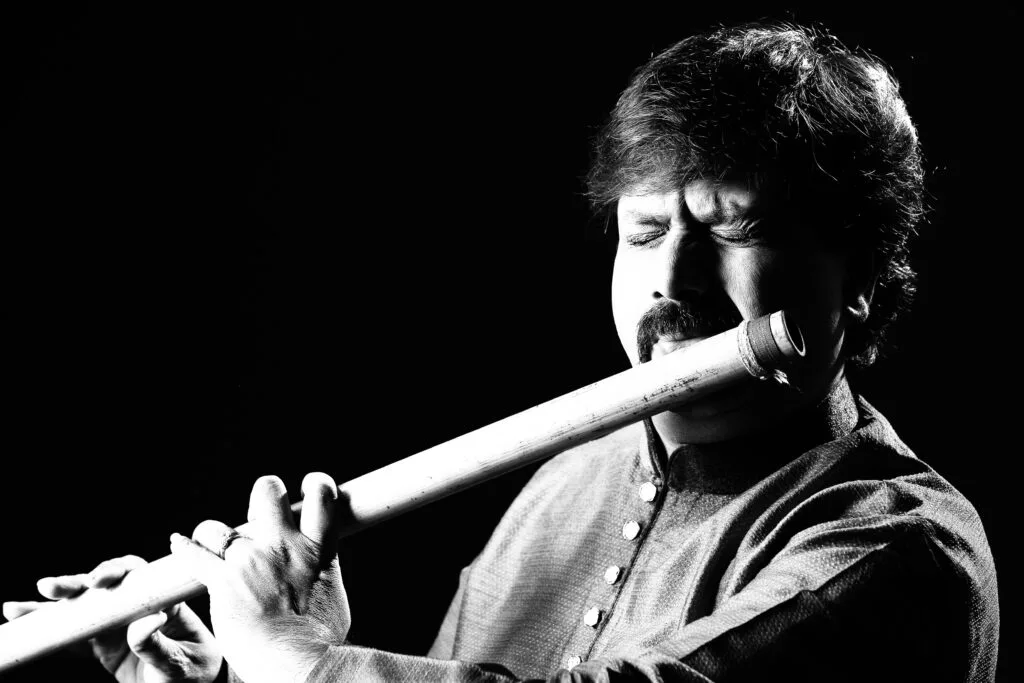
Ajay Prasanna is a Delhi-based bansuri virtuoso from the Banaras Gharana tradition, born in Allahabad into a family of classical musicians. His father, Pandit Bholanath Prasanna, was one of India’s most respected flautists, and Ajay began learning simply by watching his father teach before giving his first public performance at six. Over the years, he has performed with artists including Ravi Shankar, Anoushka Shankar and Sting, and released solo albums such as Introducing Ajay Prasanna: Blissful Bamboo and Music by Mood.
On The Mountain, Prasanna’s bamboo flute threads through several of the album’s most emotionally charged moments, including the title track and “The Shadowy Light.” His bansuri — breathy, searching and often placed at the centre of the arrangement — became one of the sounds listeners repeatedly singled out while reacting to the record online.
Prasanna later told Rolling Stone India that the recording sessions carried an unusual emotional intensity: “They called me to Mumbai after a few months to record more parts, and yet again, I played along as they smiled with tears of joy.”
2. Amaan Ali Bangash & Ayaan Ali Bangash — Sarod
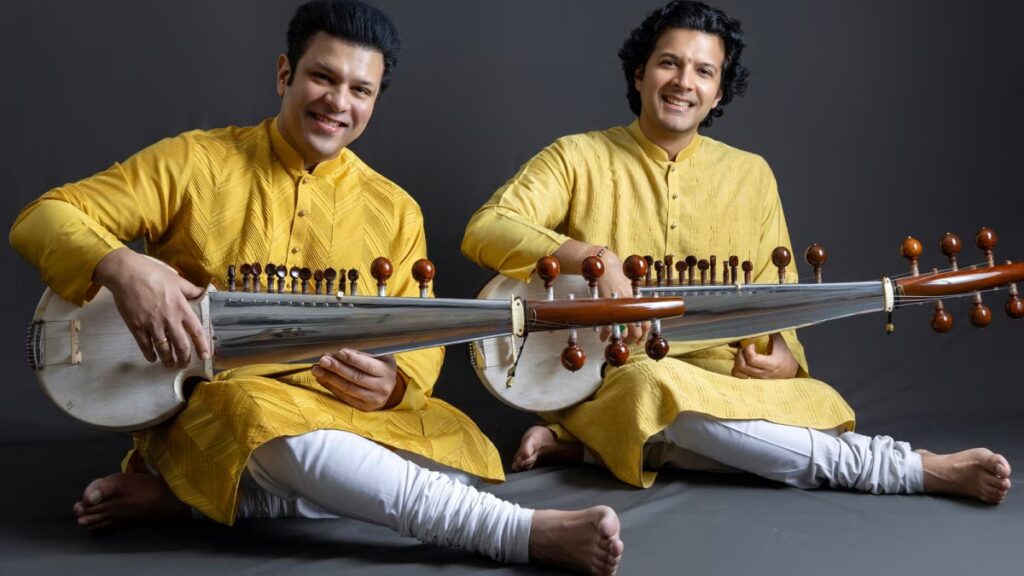
Sarod maestros Amaan Ali Bangashand Ayaan Ali Bangash also appear across The Mountain, bringing the deep, resonant sound of the sarod to tracks including “The Manifesto” and the album’s title track. The brothers, sons of sarod legend Ustad Amjad Ali Khan, recorded their parts during a day-long studio session in Mumbai with Damon Albarn and Jamie Hewlett, describing the atmosphere as open and improvisational as they responded to the band’s evolving ideas in real time.
Beyond the album, the duo continue to explore projects that connect music with larger cultural themes. Grammy Award winners and WWF-India Goodwill Ambassadors, they have frequently used their music to draw attention to environmental and conservation causes. Their recent album, Celebrating Our Tigers, pays tribute to India’s wildlife, with compositions inspired by landscapes such as Jim Corbett, Ranthambore and the Sundarbans. The brothers are also set to perform a special concert dedicated to nature at the Earth Hour Festival 2026 in Delhi-NCR.
3. Bharat Singh — Tabla
Tabla player Bharat Singh provides the rhythmic foundation for “The Manifesto,” one of the most densely layered pieces on The Mountain. His playing sits beneath the sarod, bansuri, choir and brass, anchoring the seven-minute track while responding to the melodic instruments around it. In North Indian classical music, the tabla functions not only as a timekeeper but as a conversational partner to the lead instruments — a role that becomes especially clear in a composition as musically crowded as this one.
4. Viraj Acharya — Percussion
Mumbai-based percussionist and tabla player Viraj Acharya contributes across multiple tracks on The Mountain, including “The Mountain,” “The Moon Cave,” “The Happy Dictator,” “The God of Lying,” “The Empty Dream Machine,” “Delirium,” “The Abacus,” “The Shadowy Light,” and “Casablanca.”
In interviews, Acharya has described the sessions as an opportunity to experiment with rhythmic patterns that brought an Indian percussive sensibility into the album’s broader fusion sound. As much of the record was developed in India, his playing introduces rhythmic structures and improvisational patterns drawn from Indian percussion traditions.
Outside the project, Acharya is also associated with Abhanga Repost, a contemporary folk-fusion collective that reinterprets abhangas — the devotional poetry of Maharashtrian saints such as Sant Tukaram and Sant Dnyaneshwar. By presenting these centuries-old spiritual verses through modern musical arrangements, the group connects the traditional abhanga repertoire with contemporary audiences.
5. Hindu Jea Band Jaipur— Brass Band
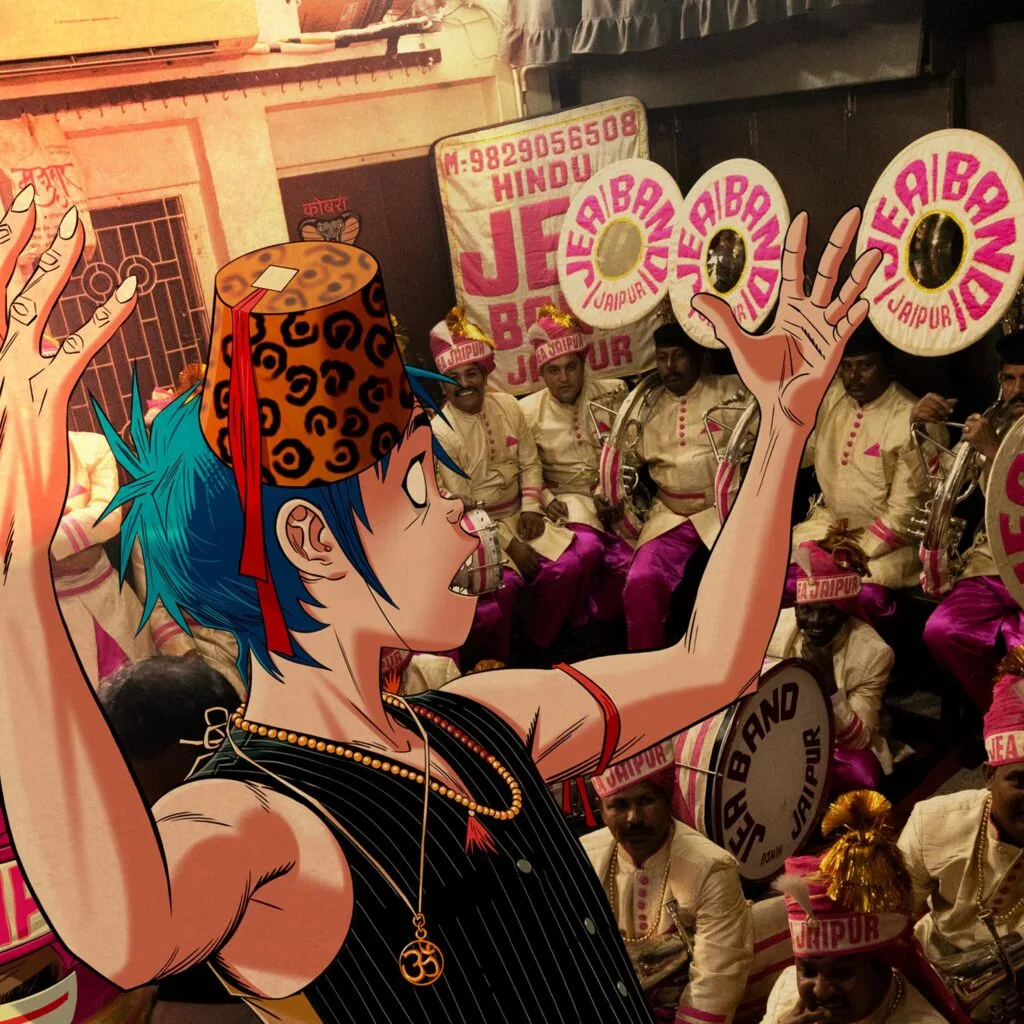
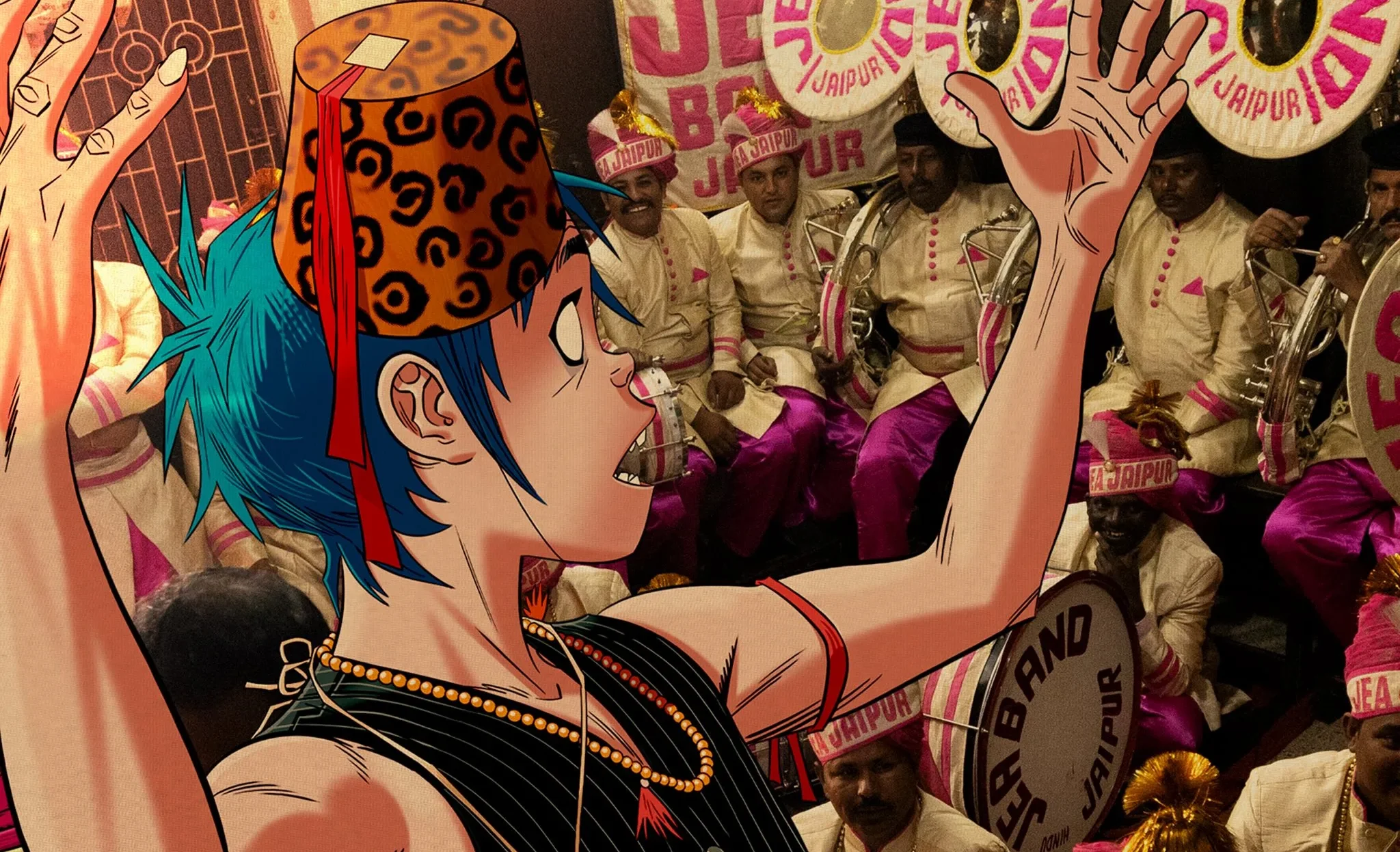
The Hindu Jea Band Jaipur, a traditional brass ensemble with roots dating back to 1936, also features on The Mountain. Founded by Lt. Shri Jea Lal Thadani in Hyderabad before relocating to Jaipur after Partition, the band has long been part of North India’s ceremonial soundscape, performing at weddings, festivals and processions for generations. Their brass arrangements appear on “The Manifesto,” bringing the unmistakable energy of the Indian baraat tradition into the album’s layered production.
The collaboration extends beyond the single. The band also appears on the deluxe edition of the album, performing their own renditions of the title track “The Mountain” and Kishore Kumar’s classic “Meri Sapno Ki Rani.” In the album’s artwork, Gorillaz drummer Russel Hobbs is seen wearing the band’s colours, a small visual nod to the ensemble’s presence on the record.
6. Mountain Choir — led by Vijayaa Shanker
The Mountain Choir, led by vocalist Vijayaa Shanker, appears across several tracks on The Mountain, including “The Mountain,” “The Manifesto,” “The Happy Dictator,” “The Sweet Prince,” and “The Shadowy Light.” The ensemble features vocalists Raja Lakshmi Sanjay, Ritika Sahni, Pari Thakur, Rahul Pandey, Sanskar Vaidya, Vamsee Kotaru, Pulkit Rajvanshi and Vaishnavi Shanker.
Drawn from India’s contemporary vocal and independent music scenes, the singers bring a layered choral texture to the album. Their parts were recorded partly in Haridwar on the banks of the Ganges and partly at Island City Studios in Mumbai, giving the record some of its most expansive moments.
7. Pamela Jain — Vocals

Mumbai-based playback singer Pamela Jain appears on the deluxe edition of The Mountain, providing vocals for the bonus track “Noah’s Descendants.” Born in Bhilai and trained in Indian classical music under Bimalendu Mukherjee and Aaskan Sharma, Jain has built a long career across Indian playback and devotional music. Over the years, she has recorded with composers including A. R. Rahman, Himesh Reshammiya, Pritam and Nadeem–Shravan, lending her voice to actresses such as Rani Mukherjee, Deepika Padukone, Esha Deol, Amisha Patel and Priyanka Chopra.
Beyond film music, she has also sung title tracks for popular television serials including Kumkum and Jodha Akbar, while releasing numerous Gujarati garba albums. Her appearance on the Gorillaz record adds another voice from India’s vast playback tradition to the album’s extended roster of collaborators.
8. Sweety Kapoor — Music Supervisor
The web of Indian collaborators on The Mountain did not assemble itself. Much of that work ran through Sweety Kapoor, who served as music supervisor and consultant for Indian artists on the project. Kapoor has long been a connector between musical worlds: in the 1990s she helped shape London’s Asian Underground scene through events at the Blue Note, and later founded the platform Brown Girl In The Ring while also managing artists including Asha Puthli.
When Damon Albarn brought her into the project, the brief was clear. “I always thought of Gorillaz as being this glorious Trojan horse,” he said in an interview, “which gets you to places that you wouldn’t otherwise reach.” Kapoor’s role was to help that journey lead to the right musicians.
“As music supervisor, your role is in service to the artist’s vision,” Kapoor told Mixmag Asia. “It requires having the knowledge and expertise, and really leaning into the nuances of their vision to best support it.”
On The Mountain, that meant introducing Gorillaz to many of the Indian artists who ultimately shaped the record — helping connect Albarn and Jamie Hewlett with a network of musicians, ensembles and traditions drawn from across India’s musical landscape.
9. Engineers: Adhithya Sivakumar, Ishaan Nimkar, Abhishek Sekhri, Jaspreet Singh & Shaurya Sarin
The sound of The Mountain’s Indian sessions was shaped by a team of engineers whose work bridged studio recording and location-based production across the country. Among them were Adhithya Sivakumar, Ishaan Nimkar, Abhishek Sekhri, Jaspreet Singh, and Shaurya Sarin, whose credits appear across the album’s Indian recording sessions in both engineering and assistant engineering roles.
Mumbai-based Adhithya Sivakumar (adhithyasivakumar.com) holds full engineering credits on several tracks in addition to extensive assistant engineering work across the project. Trained at the True School of Music in Mumbai before graduating from the Studio Engineering program at The Blackbird Academy in Nashville, Sivakumar later returned to India and built his career at Island City Studios, one of Mumbai’s most prominent recording facilities. His portfolio now spans music recordings, film work, podcasts and advertising projects, including productions for Netflix, Disney+ Hotstar, Audible and brands such as Budweiser and PUMA.
Ishaan Nimkar (ishaannimkar.com) is also credited in both engineering and assistant roles on the album. Currently based in London, UK, Nimkar works as a producer and engineer across contemporary Indian music and studio recording environments, reflecting the increasingly hybrid ecosystem of Indian recording today where classical instruments, independent artists and international collaborations frequently intersect.
Several of the assistant engineers on the project are closely connected to Kintsugi Studio in Delhi, one of the spaces where the album’s sessions took place. Abhishek Sekhri (@goya.music) is a Delhi-based composer, mix engineer and founder of Kintsugi Studios, has spent more than a decade working across music, film and brand projects, collaborating with artists such as Kavya Trehan, Mickey Singh and Easy Wanderlings while also composing for films, advertising campaigns and experimental performance projects. As an artist, he releases music under the moniker Goya, blending electronic production, acoustic instrumentation and field recordings.
Working alongside him were Jaspreet Singh (@irawnaqq) and Shaurya Sarin (@shaurya_hal), both associated with Kintsugi Studio and credited with engineering assistance on the project’s sessions.
Capturing instruments such as bansuri, sarod and tabla, particularly in spaces outside conventional studio environments, requires a different set of engineering decisions than recording a typical Western band setup. Many of the album’s Indian sessions took place across Island City Studios in Mumbai, Kintsugi Studio in Delhi, and location recordings in Rajasthan, Varanasi, Haridwar and Rishikesh, where engineers had to contend with ambient sound, natural reverberation and the delicate dynamics of acoustic instruments. Translating those performances into recordings that retain both clarity and atmosphere is a technical challenge as much as a musical one.
The result is an album where those environments remain audible in the final sound — a reminder that the musicians performing the music are only part of the story. The engineers capturing it shape how that music ultimately reaches the listener.

Going Beyond The Sitar Sample
Western music has often flirted with Indian music through fragments of a sitar riff, a tabla loop, a texture borrowed for atmosphere. The Mountain is something different. It was recorded in India with Indian musicians and engineers, a choir assembled near the Ganges, a brass band whose music has filled Rajasthani wedding processions for decades. Asha Bhosle sings in Hindi. Anoushka Shankar is credited as a songwriter.
This is not tourism dressed up as collaboration. It is a record shaped by the musicians, traditions and places that created its sound.
The real story of The Mountain lives in the credits.