




















Anyone familiar with the history of EDM, and by extension, dubstep would be aware of the neoliberal absorption of it, and its consequent perception as an apolitical bubble of sound. It does not take one to be a cultural historian to come to this realization, a slightly skeptical view of the scene lets you in on this truth. The Indian dance-floor is exclusive : it grants its surface to the select upper-class, mostly savarna elite audience who have mastered the art of being a party-goer, and it prefers its music vacuous, untroubling, imported from a context that does not have anyone think much.
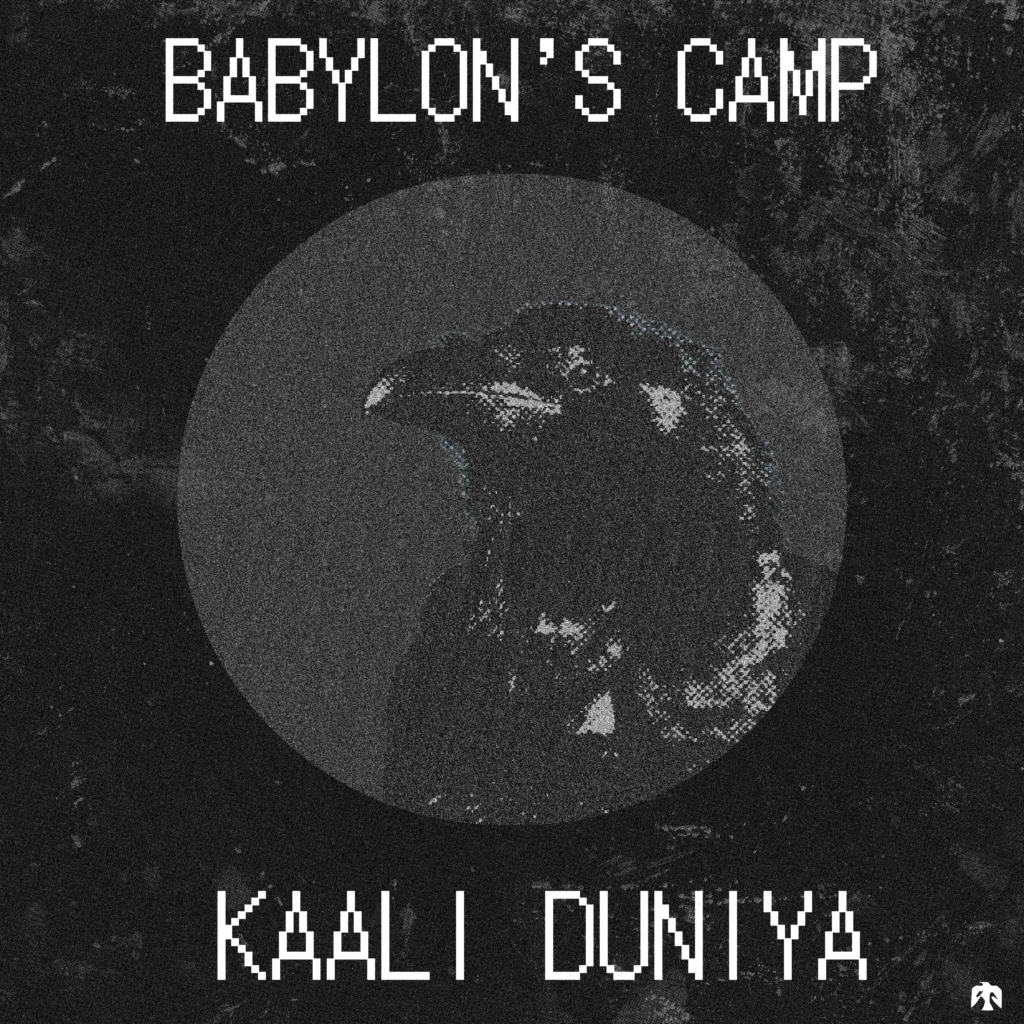
On BABYLON’S CAMP, Kaali Duniya – or Tushar Adhav, who also goes by the moniker Bamboy, offers a 10-track deep dubstep record shaped by lived experience and unfiltered honesty. According to the artist “it confronts the quiet power structures, subtle exclusions, and gatekeeping mechanisms that too often dictate who gets space in the music world. Built on resonant sub-bass, shadowed atmospheres, and rhythms meant for real sound systems, the project captures both the pressure and the perseverance that define life on the margins of a controlled scene.” At its core, Kaali Duniya positions itself at the fulcrum of sonic protest, looping samples that have been placed in the context of satire, jest or reclamation, and on Babylon’s Camp – the artist is intently intimidating in the delivery of his ideologue. For the most part, Adhav is extremely direct in the kind of messaging that he encodes in his music – a critique so in-depth and embodied and clear in his anti-caste politics, his understanding of stylistic integrity in the homogenizing fabric of top-down percolations of genre, and it works tremendously well. The first track, which begins with the cawing of crows, samples a Peter Tosh interview, and begins the descent into a tension around access and the control of space and its publics. The title Gatekeeper Assassinator is brilliant, as it immediately places you into the kind of raging field that the artist is functioning in. Kaali Duniya is more vigilante than mediator, and razor sharp in his insight. A yang to the yin of this track is perhaps Burn The Gates, which has the most cerebral bassline out of all — and a gritty sample for a commandment : “Burn the gates, Kill the gatekeepers.”

Savarna Play, Savarna Dance samples a byte from a The Swaddle video, looping over and over, in sardonic placement — the caste-blindness of the savarna, followed by an incredible beat which is also where one gets to observe how the artist takes from dubstep and soundsystem culture to facilitate the sonics of grimacing irony to satirize the ease of denial of caste by the ones who benefit the most from the same. My Style, which almost seems like a collusion of multiple styles that Adhav associates with himself, with the rhythm and construction being starkly electronic, glitchy –, yet so reminiscent of the playing of the Tamil parai or the Bengali dhak.
One of my favorites from this record, also happens to be the closing track — featuring a sample of a Donisha Prendergast interview, where she explains the concept of Babylon in Rastafari, and its existence as the symbolization of the oppressive, corrupt, and unjust Western, capitalist, and imperialist system — and its now pervasive nature. The Rastafari conception of Babylon is perhaps the stark opposite of Sant Ravidas’ Begumpura, and set in context of the Indian state’s segregational history — you can hear the culmination of the thesis that Kaali Duniya sets out writing.
Listening to this album feels a lot like reading literature, the magnanimity of its sound makes for a kind of referential base stitched together into deep dubstep. The artist plays with space and sound, history and its tellings, and the ever constricting peripheries of the club. The study of the system of sound is something Tushar Adhav has been proficient at, and as Kaali Duniya, he breaks it right down.